THE ADVENTURE COLLECTIVE® · Independent discovery and booking for outdoor travel

Escape Marrakech for a day and trade desert heat for Atlantic wind. This one-day excursion combines a scenic drive, a stop at an Argan women’s cooperative, and several free hours to explore Essaouira’s medina, port, and beaches at your own pace.
Escape Marrakech for a day and trade desert heat for Atlantic wind. This one-day excursion combines a scenic drive, a stop at an Argan women’s cooperative, and several free hours to explore Essaouira’s medina, port, and beaches at your own pace.
The highway peels away from Marrakech’s ochre walls and, after an hour of olive groves and scrub, the Atlantic air finds you first—cool, salty, and insistent. By the time the whitewashed ramparts of Essaouira appear against a low, windy sky, the city’s rhythm has already set in: seagulls wheel, nets crease at the harbor, and the medina’s narrow lanes hum with craftsmen.
Verified experiences and guided adventures in the surrounding area.
Operated by Mext · Essaouira, Marrakesh-Safi
The highway peels away from Marrakech’s ochre walls and, after an hour of olive groves and scrub, the Atlantic air finds you first—cool, salty, and insistent. By the time the whitewashed ramparts of Essaouira appear against a low, windy sky, the city’s rhythm has already set in: seagulls wheel, nets crease at the harbor, and the medina’s narrow lanes hum with craftsmen.
Essaouira’s story is maritime and fortified. Built into a sweep of coast, its Portuguese-era Skala and cannons still face the ocean, and the medina’s grid reflects centuries of trade between Berber, Arab, Jewish, and European communities. The geology is straightforward—coastal limestone and sand blown into wide beaches—yet its winds, shaped by the Canary Current, define local life and the kitesurf culture that feeds the town’s energy.
A visit to an Argan women’s cooperative offers cultural context: argan trees dot the surrounding hills, and traditional hand-pressing techniques have been preserved by Berber women’s groups supporting local economies.
Practical guidance: expect a 10–11 hour day with roughly 3–4 hours of free time in Essaouira. Bring a windproof layer and comfortable shoes for cobbled streets; the harbor and Skala stairs reward a steady pace rather than a rush. Cash is useful for small purchases at the souks and cooperative. If you want seafood, aim for midday when the catch is freshest. Time your photo stops for late afternoon light when the cliffs and ramparts warm and the town slows.
This is a low-impact, accessible coastal exploration—ideal for travelers who want guided logistics without a fixed itinerary.
easy.
10–11 hours.
Minimal fitness required — light walking on cobbles and stairs; suitable for most travelers
The drive takes about 2.5 to 3 hours each way depending on traffic, making the full excursion roughly 10–11 hours including stops.
Lunch is not included; you’ll have free time to choose from seafood stalls, cafés, or restaurants in the medina.
Yes — cooperatives typically sell handmade argan oil and cosmetics; buying supports local women’s groups.
Yes — the tour notes that infants sit on laps; light walking is involved but the pace and length can be adjusted for families.
Essaouira’s medina and fortifications date to the 18th century with earlier Portuguese influences; the port has long been a regional trading hub connecting North Africa and Europe.
Argan forest management and women’s cooperatives help protect local resources; minimize impact by avoiding single-use plastics and supporting certified local producers.
Mext operates guided outdoor trips and adventures with an emphasis on safety, stewardship, and memorable experiences.
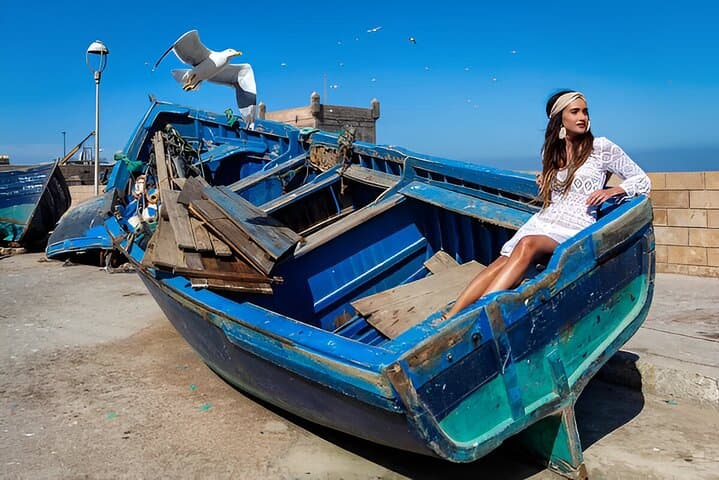

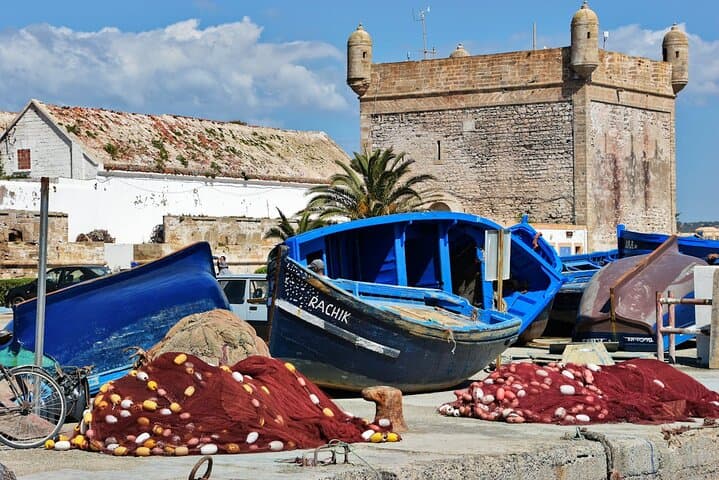

The highway peels away from Marrakech’s ochre walls and, after an hour of olive groves and scrub, the Atlantic air finds you first—cool, salty, and insistent. By the time the whitewashed ramparts of Essaouira appear against a low, windy sky, the city’s rhythm has already set in: seagulls wheel, nets crease at the harbor, and the medina’s narrow lanes hum with craftsmen.
The highway peels away from Marrakech’s ochre walls and, after an hour of olive groves and scrub, the Atlantic air finds you first—cool, salty, and insistent. By the time the whitewashed ramparts of Essaouira appear against a low, windy sky, the city’s rhythm has already set in: seagulls wheel, nets crease at the harbor, and the medina’s narrow lanes hum with craftsmen.
Essaouira’s story is maritime and fortified. Built into a sweep of coast, its Portuguese-era Skala and cannons still face the ocean, and the medina’s grid reflects centuries of trade between Berber, Arab, Jewish, and European communities. The geology is straightforward—coastal limestone and sand blown into wide beaches—yet its winds, shaped by the Canary Current, define local life and the kitesurf culture that feeds the town’s energy.
A visit to an Argan women’s cooperative offers cultural context: argan trees dot the surrounding hills, and traditional hand-pressing techniques have been preserved by Berber women’s groups supporting local economies.
Practical guidance: expect a 10–11 hour day with roughly 3–4 hours of free time in Essaouira. Bring a windproof layer and comfortable shoes for cobbled streets; the harbor and Skala stairs reward a steady pace rather than a rush. Cash is useful for small purchases at the souks and cooperative. If you want seafood, aim for midday when the catch is freshest. Time your photo stops for late afternoon light when the cliffs and ramparts warm and the town slows.
This is a low-impact, accessible coastal exploration—ideal for travelers who want guided logistics without a fixed itinerary.