THE ADVENTURE COLLECTIVE® · Independent discovery and booking for outdoor travel

A full-day road trip from Marrakech to Essaouira that pairs argan forests and goats-in-trees with a walkable UNESCO-listed medina, Portuguese ramparts, and a windswept Atlantic beach. Ideal for travelers who want coastal culture and seafood without overnighting on the coast.
A full-day road trip from Marrakech to Essaouira that pairs argan forests and goats-in-trees with a walkable UNESCO-listed medina, Portuguese ramparts, and a windswept Atlantic beach. Ideal for travelers who want coastal culture and seafood without overnighting on the coast.
You arrive before the town wakes fully: the Atlantic wind pushes across a low, sandy skyline and the fort’s cannons glance seawards like quiet sentries. The road from Marrakech unfurls through the Haouz plains, then narrows into lanes edged by gnarled argan trees where goats clamber into the branches as if testing gravity. Essaouira opens slowly—whitewashed houses, blue shutters, and a compact medina that invites exploration on foot.
Verified experiences and guided adventures in the surrounding area.
Operated by Exploring Atlas Mountains · Essaouira, Marrakech-Safi
You arrive before the town wakes fully: the Atlantic wind pushes across a low, sandy skyline and the fort’s cannons glance seawards like quiet sentries. The road from Marrakech unfurls through the Haouz plains, then narrows into lanes edged by gnarled argan trees where goats clamber into the branches as if testing gravity. Essaouira opens slowly—whitewashed houses, blue shutters, and a compact medina that invites exploration on foot.
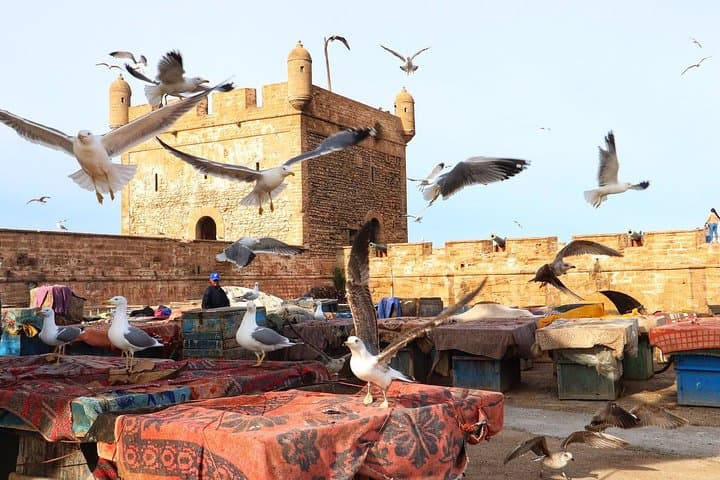
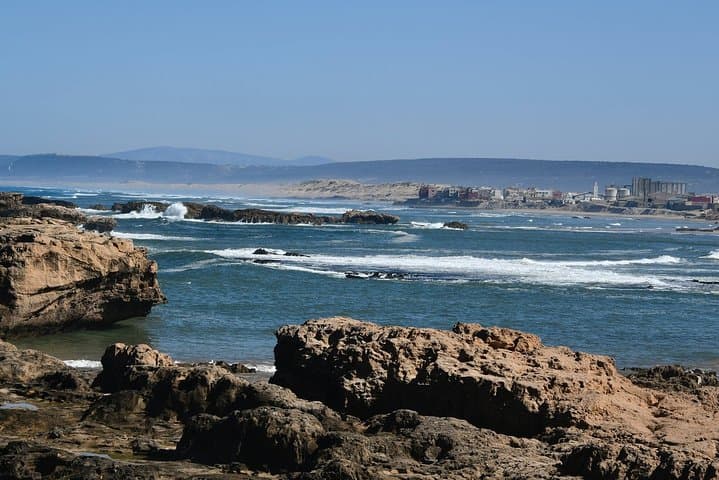
Essaouira’s stone ramparts date to the 18th century, when Portuguese and later Moroccan builders fortified the port. Geologically the coast is Atlantic-swept sand and coastal limestone; the exposed cliffs channel strong winds that make the bay a global kitesurfing stage. Culturally, the town’s mix of Berber, Arab, Jewish and European influences shows in cedar and thuya woodworking, seafood kitchens, and the former Mellah quarter.
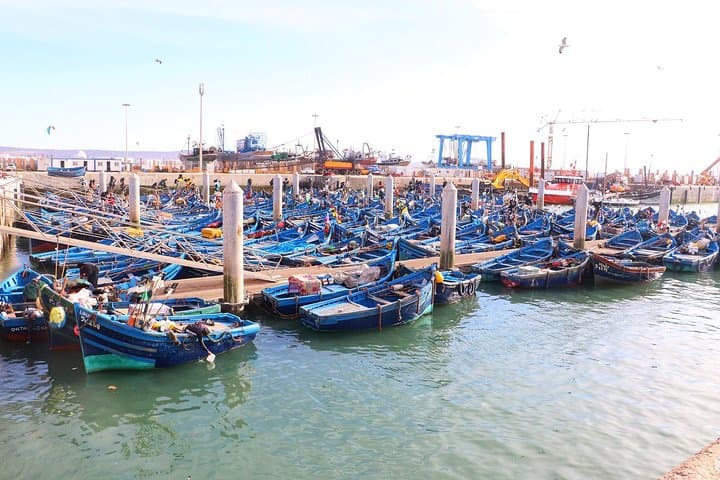
Practically, a day tour covers roughly 2.5–3 hours each way by car, a stop at an argan cooperative, and several hours to walk the harbor, Skala, and medina. Expect cobblestones and stairs, wind that can surprise even on warm days, and lively markets where haggling is normal. Bring cash for small purchases, wear closed-toe shoes for uneven streets, and plan lunch at a harbor-facing café for fresh fish and views of fishermen hauling nets.
Timing: leave early from Marrakech to avoid the hottest hours on the return. If you have limited time in Morocco, this route packs coastal culture, coastal geology, and local craft into a single, satisfying day.
easy.
9–10 hours.
Suitable for travelers comfortable with a full day of driving and moderate walking on uneven cobbles; minimal stamina required.
Expect roughly 2.5–3 hours each way depending on traffic and stops through the Haouz plains and argan forests.
Yes—Essaouira’s medina is compact and more grid-like than other Moroccan medinas, making self-guided exploration straightforward.
Yes—the typical full-day itinerary includes 2–3 hours in Essaouira, enough for a harbor lunch and a walk along the beach or ramparts.
Partial—flat sections and the harbor are accessible, but many medina streets have cobbles and steps; check with your operator about pickup/drop-off points near your riad or hotel.
Essaouira developed as a fortified Atlantic port in the 18th century with Portuguese and later Moroccan military architecture; the medina is a UNESCO World Heritage site for its preserved coastal trade role.
Argan forests are ecologically limited; responsible tourism supports women-run cooperatives and helps fund reforestation and sustainable harvesting practices.
Exploring Atlas Mountains operates guided outdoor trips and adventures with an emphasis on safety, stewardship, and memorable experiences.
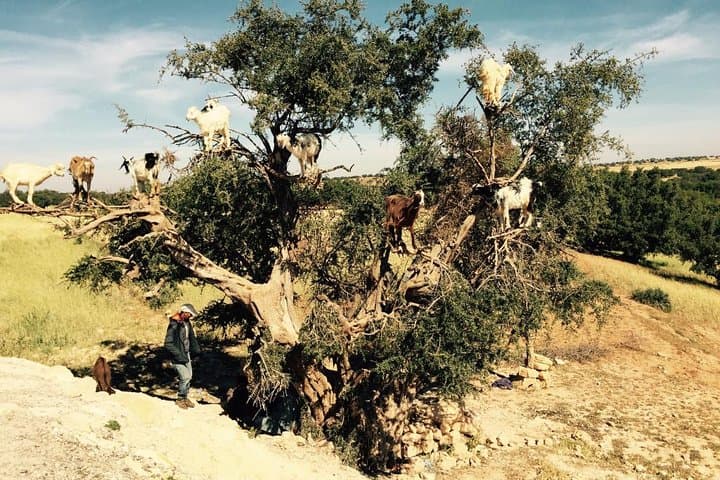
You arrive before the town wakes fully: the Atlantic wind pushes across a low, sandy skyline and the fort’s cannons glance seawards like quiet sentries. The road from Marrakech unfurls through the Haouz plains, then narrows into lanes edged by gnarled argan trees where goats clamber into the branches as if testing gravity. Essaouira opens slowly—whitewashed houses, blue shutters, and a compact medina that invites exploration on foot.
You arrive before the town wakes fully: the Atlantic wind pushes across a low, sandy skyline and the fort’s cannons glance seawards like quiet sentries. The road from Marrakech unfurls through the Haouz plains, then narrows into lanes edged by gnarled argan trees where goats clamber into the branches as if testing gravity. Essaouira opens slowly—whitewashed houses, blue shutters, and a compact medina that invites exploration on foot.
Essaouira’s stone ramparts date to the 18th century, when Portuguese and later Moroccan builders fortified the port. Geologically the coast is Atlantic-swept sand and coastal limestone; the exposed cliffs channel strong winds that make the bay a global kitesurfing stage. Culturally, the town’s mix of Berber, Arab, Jewish and European influences shows in cedar and thuya woodworking, seafood kitchens, and the former Mellah quarter.
Practically, a day tour covers roughly 2.5–3 hours each way by car, a stop at an argan cooperative, and several hours to walk the harbor, Skala, and medina. Expect cobblestones and stairs, wind that can surprise even on warm days, and lively markets where haggling is normal. Bring cash for small purchases, wear closed-toe shoes for uneven streets, and plan lunch at a harbor-facing café for fresh fish and views of fishermen hauling nets.
Timing: leave early from Marrakech to avoid the hottest hours on the return. If you have limited time in Morocco, this route packs coastal culture, coastal geology, and local craft into a single, satisfying day.