THE ADVENTURE COLLECTIVE® · Independent discovery and booking for outdoor travel

Escape Marrakech for a day in the High Atlas: a village hike around Imlil, a waterfall stop, a women’s argan cooperative and a home-cooked Berber lunch. This full-day trip combines easy mountain walking with cultural stops and scenic drives.
Escape Marrakech for a day in the High Atlas: a village hike around Imlil, a waterfall stop, a women’s argan cooperative and a home-cooked Berber lunch. This full-day trip combines easy mountain walking with cultural stops and scenic drives.
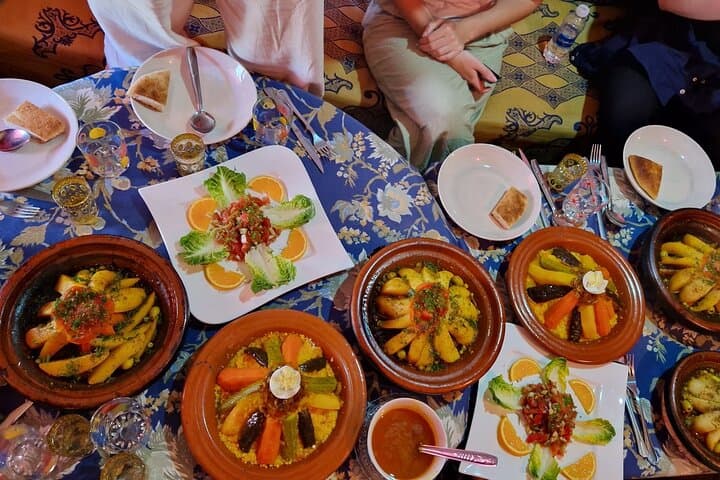
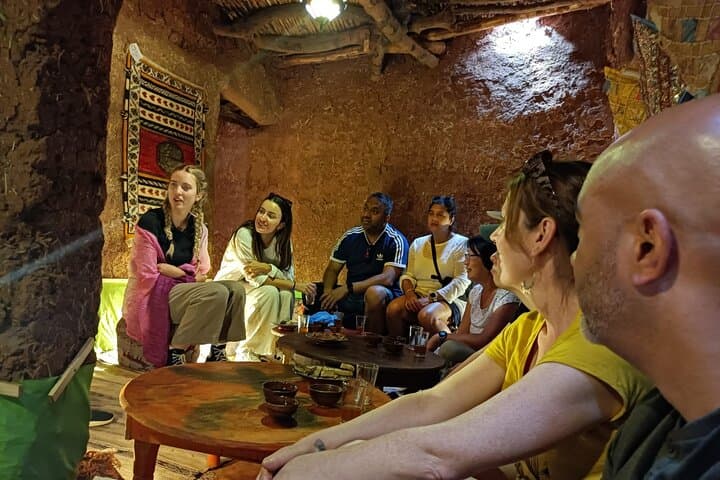
You leave Marrakech behind on a low-slung minibus and the city’s heat peels away as the road climbs into the High Atlas. Ridges rise like folded pages, terraces carving thin green lines into red earth. In the village of Imlil you step out among stone houses and the quiet of mountain air; a mule train and a single camel offer an earthy counterpoint to the distant city noise. A short guided walk threads past irrigation channels and terraced fields, the river daring you closer with every crossing, before a modest waterfall and a family guesthouse where lunch and mint tea await.
Verified experiences and guided adventures in the surrounding area.
Operated by Marrakech activities · Marrakech, Marrakesh-Safi
You leave Marrakech behind on a low-slung minibus and the city’s heat peels away as the road climbs into the High Atlas. Ridges rise like folded pages, terraces carving thin green lines into red earth. In the village of Imlil you step out among stone houses and the quiet of mountain air; a mule train and a single camel offer an earthy counterpoint to the distant city noise. A short guided walk threads past irrigation channels and terraced fields, the river daring you closer with every crossing, before a modest waterfall and a family guesthouse where lunch and mint tea await.
Geology here is straightforward: the High Atlas are the product of African and Eurasian plate uplift, with crystalline peaks and steep valley walls that funnel sudden weather and shape local agriculture. Culturally, you’re in Amazigh (Berber) country—small villages sustain themselves with terraces, seasonal crops and crafts like argan oil, often produced by women’s cooperatives you’ll visit on the route.
Practical guide: the full-day tour runs roughly 7–8 hours, with pickup around 8:30 AM and return by early evening. Expect a 1.5–2 hour village hike on uneven tracks, simple river crossings and short climbs—suitable for most fitness levels but bring steady shoes. Lunch at a Berber guesthouse and bottled water are included; camel ride and a stop at an argan cooperative are typical highlights. Carry cash for small purchases, wear layers for changing mountain temperatures, and give yourself time to move at the local pace—these valleys reward a patient stride more than speed.
moderate.
7–8 hours.
Light to moderate fitness: able to walk 1.5–2 hours on uneven terrain with short elevation changes.
The guided village hike is typically about 1.5–2 hours and can be paced to suit most abilities.
Yes — a traditional home-cooked Berber lunch and mint tea at a family guesthouse are included in the tour price.
Yes — hotel pickup and drop-off in Marrakech are part of the full-day excursion, with an air-conditioned vehicle.
Yes — the tour usually stops at a women’s argan oil cooperative where you can learn the process and purchase products, typically cash-friendly.
Amazigh (Berber) communities have lived in these ranges for centuries, farming terraces and trading goods like argan oil; mountain routes historically linked highland villages with Marrakech markets.
Support small cooperatives and avoid single-use plastics; stay on designated tracks to limit erosion and protect fragile mountain soils.
Marrakech activities operates guided outdoor trips and adventures with an emphasis on safety, stewardship, and memorable experiences.
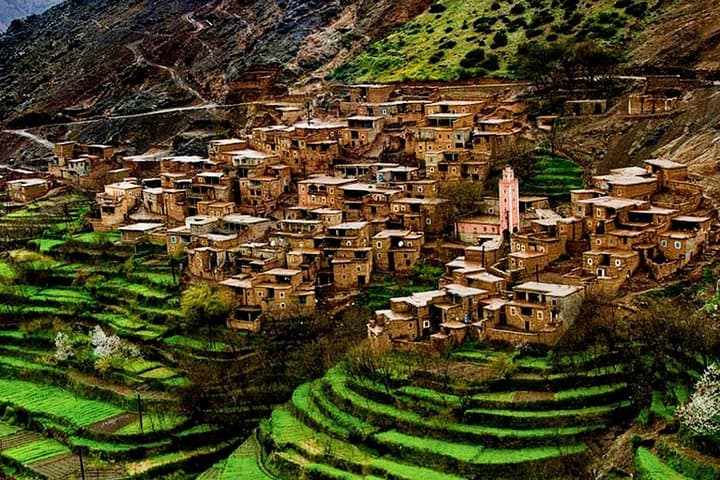
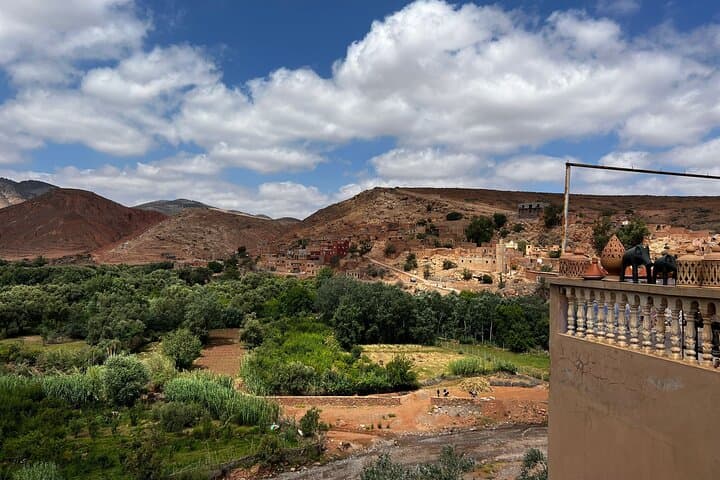
You leave Marrakech behind on a low-slung minibus and the city’s heat peels away as the road climbs into the High Atlas. Ridges rise like folded pages, terraces carving thin green lines into red earth. In the village of Imlil you step out among stone houses and the quiet of mountain air; a mule train and a single camel offer an earthy counterpoint to the distant city noise. A short guided walk threads past irrigation channels and terraced fields, the river daring you closer with every crossing, before a modest waterfall and a family guesthouse where lunch and mint tea await.
You leave Marrakech behind on a low-slung minibus and the city’s heat peels away as the road climbs into the High Atlas. Ridges rise like folded pages, terraces carving thin green lines into red earth. In the village of Imlil you step out among stone houses and the quiet of mountain air; a mule train and a single camel offer an earthy counterpoint to the distant city noise. A short guided walk threads past irrigation channels and terraced fields, the river daring you closer with every crossing, before a modest waterfall and a family guesthouse where lunch and mint tea await.
Geology here is straightforward: the High Atlas are the product of African and Eurasian plate uplift, with crystalline peaks and steep valley walls that funnel sudden weather and shape local agriculture. Culturally, you’re in Amazigh (Berber) country—small villages sustain themselves with terraces, seasonal crops and crafts like argan oil, often produced by women’s cooperatives you’ll visit on the route.
Practical guide: the full-day tour runs roughly 7–8 hours, with pickup around 8:30 AM and return by early evening. Expect a 1.5–2 hour village hike on uneven tracks, simple river crossings and short climbs—suitable for most fitness levels but bring steady shoes. Lunch at a Berber guesthouse and bottled water are included; camel ride and a stop at an argan cooperative are typical highlights. Carry cash for small purchases, wear layers for changing mountain temperatures, and give yourself time to move at the local pace—these valleys reward a patient stride more than speed.