THE ADVENTURE COLLECTIVE® · Independent discovery and booking for outdoor travel

Board a short train from Lyon and spend a half-day exploring Vienne’s Roman theatre, temple ruins and riverside streets. This guided outing blends archaeology, local cafés and easy walking along the Rhône.
Board a short train from Lyon and spend a half-day exploring Vienne’s Roman theatre, temple ruins and riverside streets. This guided outing blends archaeology, local cafés and easy walking along the Rhône.
The train eases out of Lyon and the city glass softens into river fields; within an hour the Rhône’s low slopes and terracotta roofs announce Vienne. Step off the carriage and you’re met by stone streets that still remember Roman feet — columns standing like punctuation marks against a sky that leans over the river.
Verified experiences and guided adventures in the surrounding area.
Operated by Viva Brussels · Vienne, Auvergne-Rhône-Alpes
The train eases out of Lyon and the city glass softens into river fields; within an hour the Rhône’s low slopes and terracotta roofs announce Vienne. Step off the carriage and you’re met by stone streets that still remember Roman feet — columns standing like punctuation marks against a sky that leans over the river.
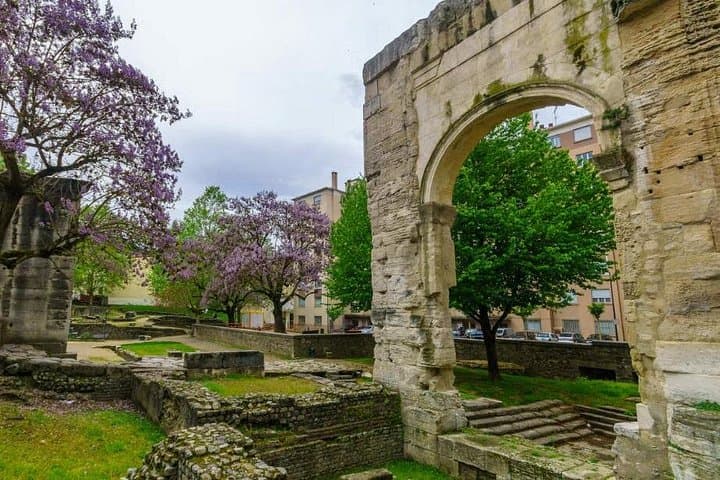
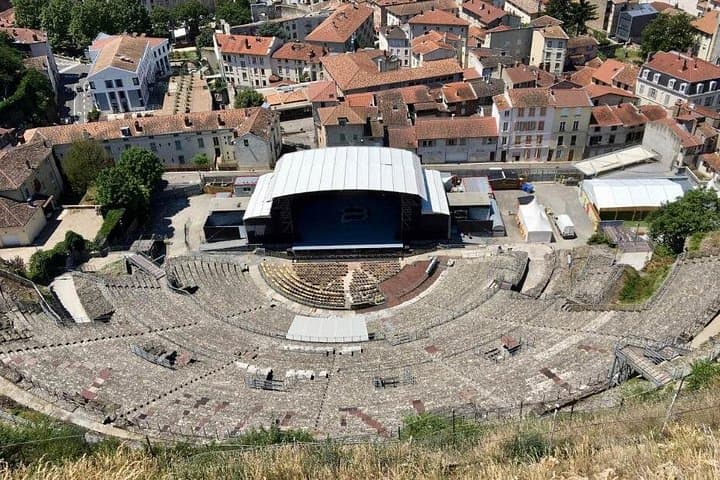
Vienne was a major Gallic-Roman hub: its theatre and temple of Augustus and Livia date to the 1st century and are among Europe’s best-preserved civic remains. The town sits where the Dauphiné hills give way to the Rhône floodplain; limestone outcrops and alluvial terraces shaped how Romans placed their forum and theatre, orienting civic life toward the river and the road network that linked Gaul to Italy.
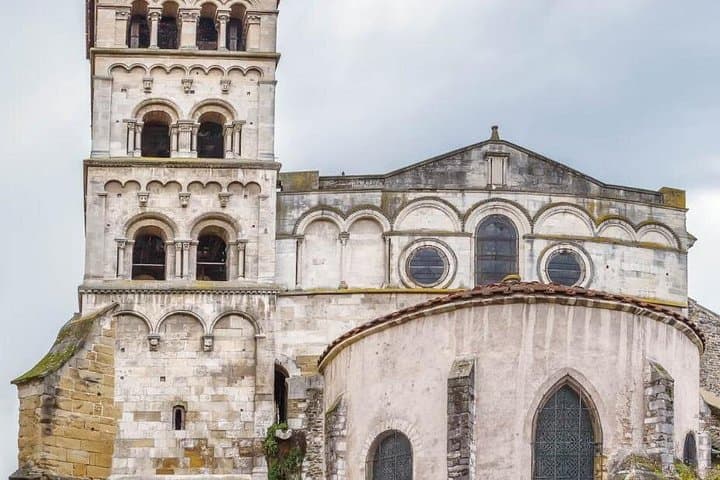
Walking through medieval lanes between Roman fragments, you’ll pass a cathedral with crypts that layer Christian and earlier urban histories, then settle on a terrace where locals sip café and the river seems to dare you to linger. Guides translate inscriptions, point out reused blocks and explain how stones moved through centuries of rebuilding.
Practical edge: this is a full half-day outing — expect roughly five hours from Lyon with a mix of flat streets and ancient stepways. Wear supportive shoes (cobbles and theatre seating are unforgiving), bring a refillable water bottle, and budget time for a lunch break on a sunny terrace. Trains run frequently from Lyon Part-Dieu; the tour includes round-trip tickets and English/Spanish guide commentary. Accessibility is generally good for main sites, but ask ahead about mobility needs for the theatre slope.
This trip pairs architectural curiosity with an easy, riverside pace — ideal for history-minded travelers who want a compact, walkable slice of Roman Gaul.
easy.
5–6 hours.
Suitable for travelers who can walk 2–4 miles at a gentle pace and manage short flights of steps.
The meeting point is Lyon Part-Dieu station; the tour returns there after the afternoon train back from Vienne.
Main sites and transport are advertised as wheelchair accessible, but some ancient slopes in the theatre area are uneven — contact the operator ahead to confirm specific needs.
No — the itinerary includes free time for lunch in Vienne’s terraces and cafés; bring cash for small vendors.
Guides provide commentary in English and Spanish as noted in the tour inclusions.
Vienne rose to prominence under Roman rule as a regional capital with an impressive theatre and temple complex that anchored civic life on the Rhône.
Sites are fragile; stick to marked paths, avoid climbing ruins, and support local preservation by patronizing official guides and entrance-led visits.
Viva Brussels operates guided outdoor trips and adventures with an emphasis on safety, stewardship, and memorable experiences.
The train eases out of Lyon and the city glass softens into river fields; within an hour the Rhône’s low slopes and terracotta roofs announce Vienne. Step off the carriage and you’re met by stone streets that still remember Roman feet — columns standing like punctuation marks against a sky that leans over the river.
The train eases out of Lyon and the city glass softens into river fields; within an hour the Rhône’s low slopes and terracotta roofs announce Vienne. Step off the carriage and you’re met by stone streets that still remember Roman feet — columns standing like punctuation marks against a sky that leans over the river.
Vienne was a major Gallic-Roman hub: its theatre and temple of Augustus and Livia date to the 1st century and are among Europe’s best-preserved civic remains. The town sits where the Dauphiné hills give way to the Rhône floodplain; limestone outcrops and alluvial terraces shaped how Romans placed their forum and theatre, orienting civic life toward the river and the road network that linked Gaul to Italy.
Walking through medieval lanes between Roman fragments, you’ll pass a cathedral with crypts that layer Christian and earlier urban histories, then settle on a terrace where locals sip café and the river seems to dare you to linger. Guides translate inscriptions, point out reused blocks and explain how stones moved through centuries of rebuilding.
Practical edge: this is a full half-day outing — expect roughly five hours from Lyon with a mix of flat streets and ancient stepways. Wear supportive shoes (cobbles and theatre seating are unforgiving), bring a refillable water bottle, and budget time for a lunch break on a sunny terrace. Trains run frequently from Lyon Part-Dieu; the tour includes round-trip tickets and English/Spanish guide commentary. Accessibility is generally good for main sites, but ask ahead about mobility needs for the theatre slope.
This trip pairs architectural curiosity with an easy, riverside pace — ideal for history-minded travelers who want a compact, walkable slice of Roman Gaul.