THE ADVENTURE COLLECTIVE® · Independent discovery and booking for outdoor travel

Leave Hurghada before dawn and arrive at the Giza Plateau to stand before the Great Pyramid, the Sphinx, and the newest home for Egypt’s treasures—the Grand Egyptian Museum. This full‑day coach tour pairs iconic sights with a papyrus workshop visit and practical, guided interpretation.
Leave Hurghada before dawn and arrive at the Giza Plateau to stand before the Great Pyramid, the Sphinx, and the newest home for Egypt’s treasures—the Grand Egyptian Museum. This full‑day coach tour pairs iconic sights with a papyrus workshop visit and practical, guided interpretation.
You step onto a cool, air‑conditioned coach before dawn in Hurghada and watch the hotel lights shrink as the desert unfurls — dunes and scrub that dare you to slow down. The road eats miles; the horizon sharpens and, hours later, the three pyramids rise from the sand like geometric islands. Standing on the plateau, the desert wind nudges you toward the stones, and the Great Pyramid’s blunt geometry feels both ancient and unapologetically present.
Verified experiences and guided adventures in the surrounding area.
Operated by Esso Tours · Giza, Giza Governorate
You step onto a cool, air‑conditioned coach before dawn in Hurghada and watch the hotel lights shrink as the desert unfurls — dunes and scrub that dare you to slow down. The road eats miles; the horizon sharpens and, hours later, the three pyramids rise from the sand like geometric islands. Standing on the plateau, the desert wind nudges you toward the stones, and the Great Pyramid’s blunt geometry feels both ancient and unapologetically present.
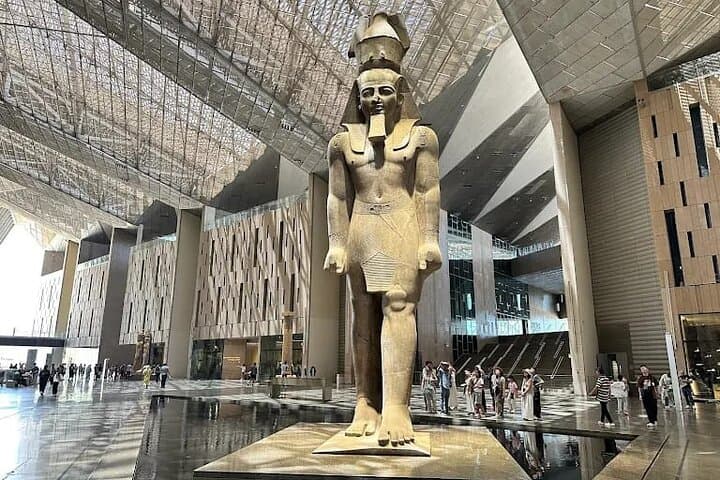
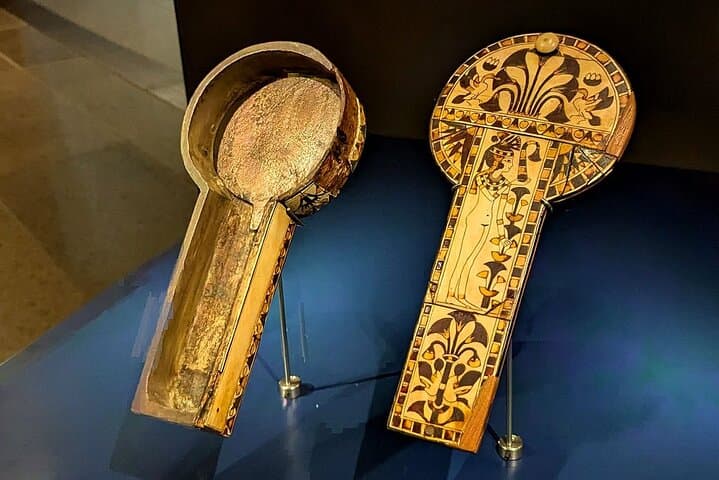
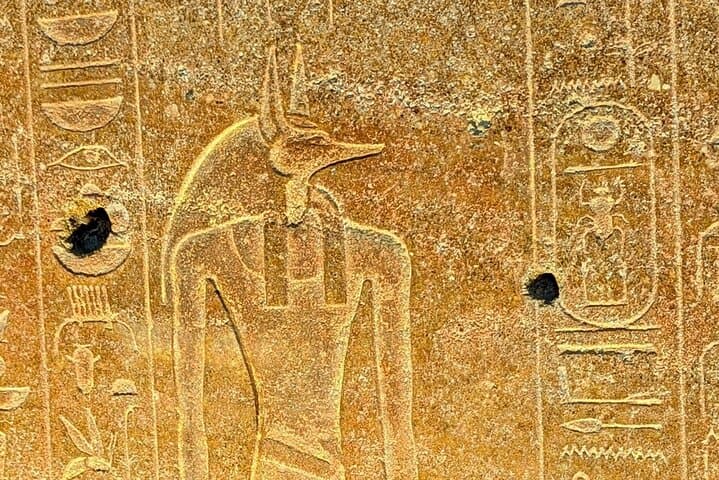
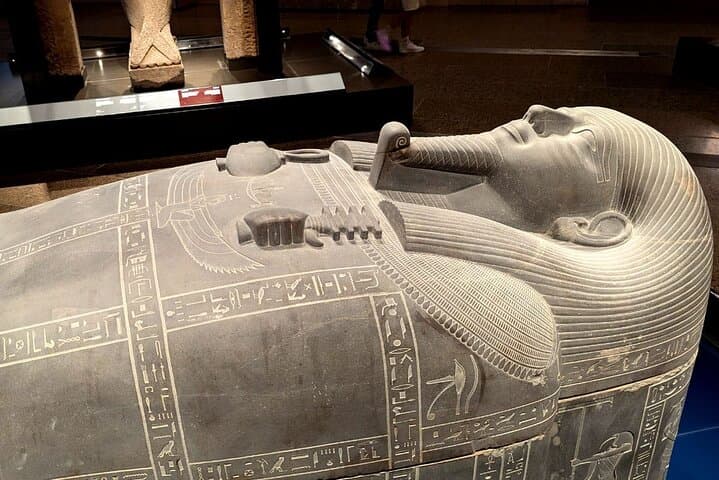
This route links modern Hurghada to the deepest roots of pharaonic history. The Giza Plateau is carved from Eocene limestone; its monuments date to the Fourth Dynasty, roughly 4,500 years ago. Nearby, the Sphinx keeps watch with a human face and leonine body — a cultural icon that has witnessed millennia of change. The Grand Egyptian Museum, a recent colossal repository for royal artifacts including the full Tutankhamun assemblage, reframes those objects in spacious galleries and modern conservation practice. A short visit to a papyrus workshop shows the continuous craft traditions that carried written culture across the Nile.
Practically: this is a long coach day—expect an early start and up to ~21 hours total. The walking is easy but often on uneven, sandy ground; comfortable shoes, sun protection, and plenty of water are essential. Museum admissions, Sphinx and pyramid area visits, and lunch are included. Bring your passport, a small amount of cash for souvenirs and tips, and patience for security lines. Plan to stay with the group schedule; the real reward is the scale of the monuments and the slow, sunlit way history reveals itself.
easy.
21 hours.
Suitable for travelers of average fitness; walking is mostly moderate but on uneven, sandy ground.
Total itinerary time is listed around 21 hours including transit; expect roughly 6+ hours each way by coach and several hours of touring in Cairo.
Yes — the tour lists admission to the Grand Egyptian Museum, the Giza Plateau (pyramids), and the Sphinx as included, plus lunch and a papyrus workshop visit.
Infants must sit on an adult’s lap; the tour is labeled physically easy, but be prepared for long travel times and limited facilities for young children on the plateau.
Pickup and drop‑off from Hurghada hotels are offered as optional services; confirm your pickup point when booking.
The Giza Plateau monuments date to Egypt’s Fourth Dynasty (~c. 2600 BCE); the Grand Egyptian Museum consolidates and displays artifacts including the complete tomb assemblage of Tutankhamun.
Visitor management around fragile stones is increasingly strict—stay on marked paths, avoid touching carved surfaces, and support local conservation efforts by following guide instructions.
Esso Tours operates guided outdoor trips and adventures with an emphasis on safety, stewardship, and memorable experiences.
You step onto a cool, air‑conditioned coach before dawn in Hurghada and watch the hotel lights shrink as the desert unfurls — dunes and scrub that dare you to slow down. The road eats miles; the horizon sharpens and, hours later, the three pyramids rise from the sand like geometric islands. Standing on the plateau, the desert wind nudges you toward the stones, and the Great Pyramid’s blunt geometry feels both ancient and unapologetically present.
You step onto a cool, air‑conditioned coach before dawn in Hurghada and watch the hotel lights shrink as the desert unfurls — dunes and scrub that dare you to slow down. The road eats miles; the horizon sharpens and, hours later, the three pyramids rise from the sand like geometric islands. Standing on the plateau, the desert wind nudges you toward the stones, and the Great Pyramid’s blunt geometry feels both ancient and unapologetically present.
This route links modern Hurghada to the deepest roots of pharaonic history. The Giza Plateau is carved from Eocene limestone; its monuments date to the Fourth Dynasty, roughly 4,500 years ago. Nearby, the Sphinx keeps watch with a human face and leonine body — a cultural icon that has witnessed millennia of change. The Grand Egyptian Museum, a recent colossal repository for royal artifacts including the full Tutankhamun assemblage, reframes those objects in spacious galleries and modern conservation practice. A short visit to a papyrus workshop shows the continuous craft traditions that carried written culture across the Nile.
Practically: this is a long coach day—expect an early start and up to ~21 hours total. The walking is easy but often on uneven, sandy ground; comfortable shoes, sun protection, and plenty of water are essential. Museum admissions, Sphinx and pyramid area visits, and lunch are included. Bring your passport, a small amount of cash for souvenirs and tips, and patience for security lines. Plan to stay with the group schedule; the real reward is the scale of the monuments and the slow, sunlit way history reveals itself.