THE ADVENTURE COLLECTIVE® · Independent discovery and booking for outdoor travel

A full-day private flight-and-transfer tour from Hurghada that pairs the Giza pyramids with the Egyptian Museum and the bustling Khan el-Khalili bazaar. Expect a 12-hour day of outdoor walking, museum corridors, and market bargaining with all logistics handled.
A full-day private flight-and-transfer tour from Hurghada that pairs the Giza pyramids with the Egyptian Museum and the bustling Khan el-Khalili bazaar. Expect a 12-hour day of outdoor walking, museum corridors, and market bargaining with all logistics handled.
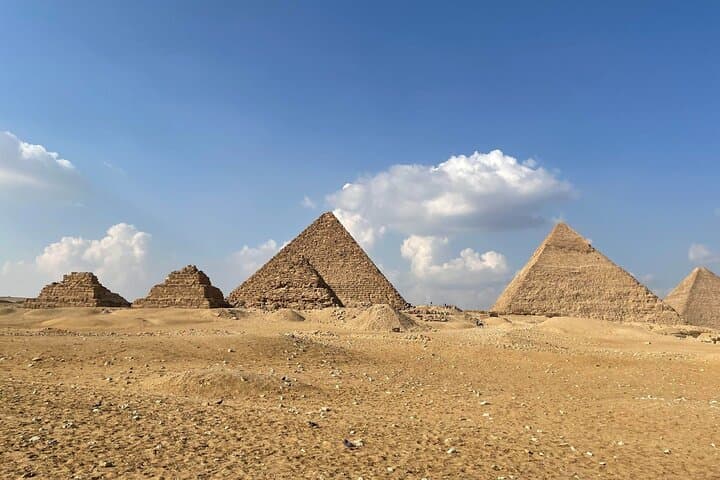
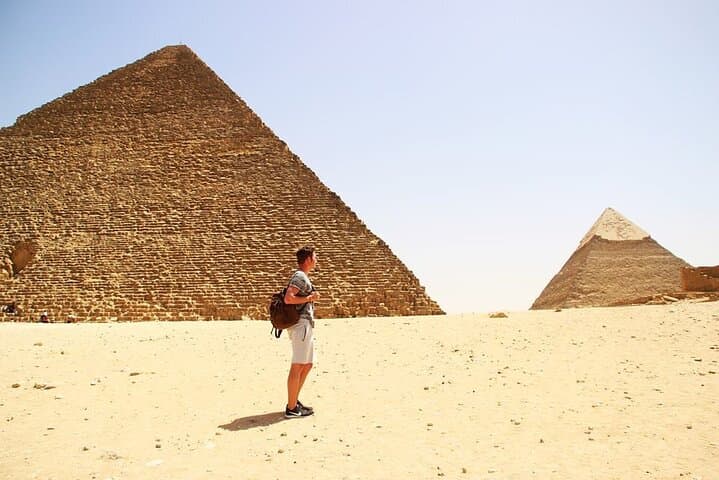
You arrive at Cairo just after sunrise, the desert light hardening the edges of the Giza Plateau as the Great Pyramid rises like a crafted cliff. The air smells faintly of sand and diesel; the Sphinx watches traffic drift past like a patient animal. A private guide moves you through the crowds, translating inscriptions of stone into the human stories behind them.
Verified experiences and guided adventures in the surrounding area.
Operated by Egipto Excursiones · Cairo, Cairo Governorate
You arrive at Cairo just after sunrise, the desert light hardening the edges of the Giza Plateau as the Great Pyramid rises like a crafted cliff. The air smells faintly of sand and diesel; the Sphinx watches traffic drift past like a patient animal. A private guide moves you through the crowds, translating inscriptions of stone into the human stories behind them.
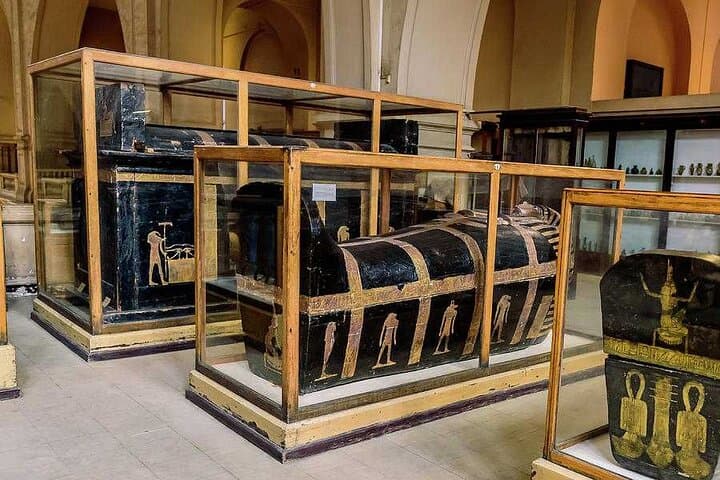
The plateau itself is geology and geometry—layers of Eocene limestone hewn into funerary architecture during Egypt’s Fourth Dynasty. Khufu’s pyramid still reads as an engineering challenge; Khafre’s causeway shepherds your eye toward the Sphinx, whose human gaze dares you to measure time in millennia. In the Egyptian Museum, plaster cases and gilded masks catalogue royal life, while Khan el-Khalili offers a different education: markets shaped by Mamluk-era trade routes, calloused hands carving brass and copper for modern travellers.
Practically, this is a long day: you’ll transfer from Hurghada by included return flight, move between sites in a private air-conditioned vehicle, and cover large open spaces on foot and on uneven surfaces. Expect sun, dust, and short, intense walking stints around monuments and crowded museum rooms. Bring a printed passport or digital copy for entry, dress modestly for museum and street etiquette, and plan for security screening and lines despite included entrance fees. The pace is curated but brisk—good boots, sun protection, and an early start make the difference between seeing the monuments and actually experiencing them.
easy.
12 hours.
Suitable for travelers in average physical condition; involves several short walks, standing, and stair/climb navigation at monument sites.
The tour lists entrance fees for the mentioned sites and a return flight from Hurghada to Cairo as included; confirm specific ticket options at booking.
You’ll walk on uneven outdoor terrain around the pyramids and through museum galleries—expect several 15–30 minute walking stints with stops in between.
Visa requirements depend on your nationality—check Egyptian entry rules before travel and ensure your passport has adequate validity.
The operator notes it’s not recommended for those with serious back, heart problems, or pregnancy due to walking, security checks, and uneven surfaces.
The Giza Plateau monuments date to Egypt’s Fourth Dynasty (c. 2600–2500 BCE); the Egyptian Museum houses large collections from Pharaonic Egypt assembled in the early 20th century.
High visitor numbers strain fragile stone and museum artifacts—stick to designated paths, avoid touching ancient masonry, and follow guide instructions to reduce impact.
Egipto Excursiones operates guided outdoor trips and adventures with an emphasis on safety, stewardship, and memorable experiences.

You arrive at Cairo just after sunrise, the desert light hardening the edges of the Giza Plateau as the Great Pyramid rises like a crafted cliff. The air smells faintly of sand and diesel; the Sphinx watches traffic drift past like a patient animal. A private guide moves you through the crowds, translating inscriptions of stone into the human stories behind them.
You arrive at Cairo just after sunrise, the desert light hardening the edges of the Giza Plateau as the Great Pyramid rises like a crafted cliff. The air smells faintly of sand and diesel; the Sphinx watches traffic drift past like a patient animal. A private guide moves you through the crowds, translating inscriptions of stone into the human stories behind them.
The plateau itself is geology and geometry—layers of Eocene limestone hewn into funerary architecture during Egypt’s Fourth Dynasty. Khufu’s pyramid still reads as an engineering challenge; Khafre’s causeway shepherds your eye toward the Sphinx, whose human gaze dares you to measure time in millennia. In the Egyptian Museum, plaster cases and gilded masks catalogue royal life, while Khan el-Khalili offers a different education: markets shaped by Mamluk-era trade routes, calloused hands carving brass and copper for modern travellers.
Practically, this is a long day: you’ll transfer from Hurghada by included return flight, move between sites in a private air-conditioned vehicle, and cover large open spaces on foot and on uneven surfaces. Expect sun, dust, and short, intense walking stints around monuments and crowded museum rooms. Bring a printed passport or digital copy for entry, dress modestly for museum and street etiquette, and plan for security screening and lines despite included entrance fees. The pace is curated but brisk—good boots, sun protection, and an early start make the difference between seeing the monuments and actually experiencing them.