THE ADVENTURE COLLECTIVE® · Independent discovery and booking for outdoor travel

Leave Hurghada before sunrise for a long, unforgettable day at Cairo’s greatest antiquities: the Grand Egyptian Museum, the Giza Pyramids, and the Great Sphinx. Expect long coach travel, guided context from an Egyptologist, and immersive history framed by modern museum design.
Leave Hurghada before sunrise for a long, unforgettable day at Cairo’s greatest antiquities: the Grand Egyptian Museum, the Giza Pyramids, and the Great Sphinx. Expect long coach travel, guided context from an Egyptologist, and immersive history framed by modern museum design.
The bus eases out of Hurghada at dawn and the Red Sea’s blue gives way to the flat, ochre sweep of the Western Desert. By midmorning the skyline changes—low modern Cairo rises, then the distant triangles of Giza puncture the horizon. Standing on the plateau, the wind seems to push stories into your face: stone blocks stacked with millennia of intent, a lion-bodied guardian watching the plain.
Verified experiences and guided adventures in the surrounding area.
Operated by Get Your Trip · Giza, Giza Governorate
The bus eases out of Hurghada at dawn and the Red Sea’s blue gives way to the flat, ochre sweep of the Western Desert. By midmorning the skyline changes—low modern Cairo rises, then the distant triangles of Giza puncture the horizon. Standing on the plateau, the wind seems to push stories into your face: stone blocks stacked with millennia of intent, a lion-bodied guardian watching the plain.
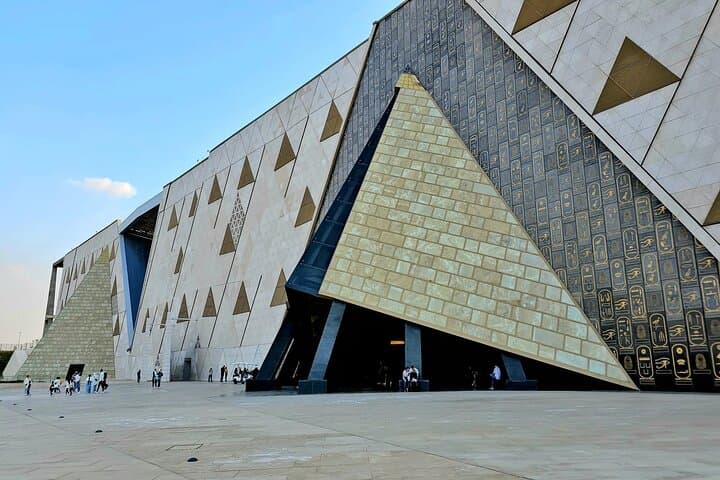
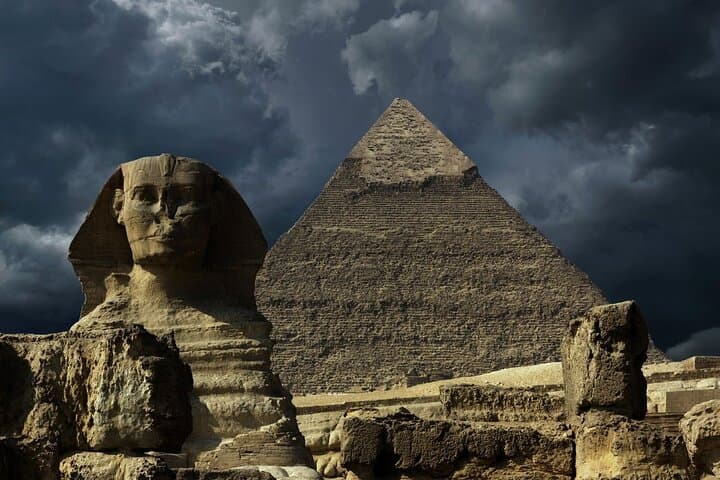
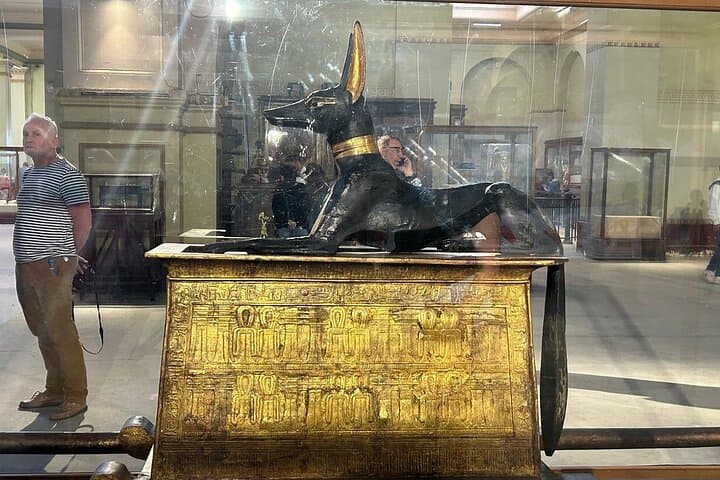
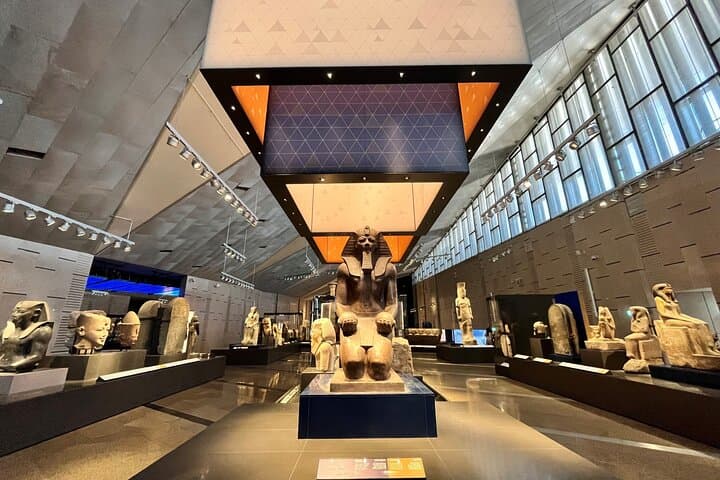
This is a day built around contrasts. The Grand Egyptian Museum—opened recently as a single, climate-controlled stage for tens of thousands of artifacts—frames pharaonic craftsmanship in glass and light. Outside, the three Giza pyramids (Khufu, Khafre, Menkaure) date to the Old Kingdom, c. 2600–2500 BCE, demonstrating raw engineering and the Nile-fed economy that raised them. The Sphinx, cut from the bedrock and reshaped through ages, links royal portraiture with sacred animal power.
Local culture threads through the visit: papyrus making demonstrations, vendors selling citrus and coffee, and small workshops where artisans reproduce funerary techniques. Geologically, the plateau is limestone bedrock hewn into monumental form—its erosion patterns reveal both time and human intervention.
Practical edge: this is a long day—expect ~6 hours each way by coach and 4–6 hours on site. Bring sun protection, comfortable shoes for uneven limestone, and patience for security and crowds. Plan for early starts to catch cooler light at the pyramids and allocate time for the museum’s main galleries and the papyrus workshop. Hydrate, carry small change for photos and tips, and keep to designated paths to support conservation.
easy.
20–22 hours.
Suitable for travelers of average fitness; requires long periods of standing and walking on uneven ground.
Expect approximately 6 hours each way by air-conditioned coach with short rest stops—plan for a full 20–22 hour day.
The tour includes entry to the New Grand Egyptian Museum and Giza Plateau sites as listed, but optional extras (inside pyramid entry) may not be included.
The tour is marketed as suitable for all fitness levels, but the long coach ride and uneven terrain at outdoor sites can be challenging; contact the operator about specific mobility needs.
Yes—most itineraries include a stop at a papyrus workshop where artisans demonstrate techniques and items are available for purchase.
The Great Pyramid of Khufu dates to around 2560 BCE and is the only surviving structure of the ancient Seven Wonders; the plateau reflects millennia of funerary practice and Nile-based state power.
Stay on marked paths, avoid climbing monuments, and follow guide instructions—visitor pressure and urban pollution are ongoing preservation concerns at Giza.
Get Your Trip operates guided outdoor trips and adventures with an emphasis on safety, stewardship, and memorable experiences.
The bus eases out of Hurghada at dawn and the Red Sea’s blue gives way to the flat, ochre sweep of the Western Desert. By midmorning the skyline changes—low modern Cairo rises, then the distant triangles of Giza puncture the horizon. Standing on the plateau, the wind seems to push stories into your face: stone blocks stacked with millennia of intent, a lion-bodied guardian watching the plain.
The bus eases out of Hurghada at dawn and the Red Sea’s blue gives way to the flat, ochre sweep of the Western Desert. By midmorning the skyline changes—low modern Cairo rises, then the distant triangles of Giza puncture the horizon. Standing on the plateau, the wind seems to push stories into your face: stone blocks stacked with millennia of intent, a lion-bodied guardian watching the plain.
This is a day built around contrasts. The Grand Egyptian Museum—opened recently as a single, climate-controlled stage for tens of thousands of artifacts—frames pharaonic craftsmanship in glass and light. Outside, the three Giza pyramids (Khufu, Khafre, Menkaure) date to the Old Kingdom, c. 2600–2500 BCE, demonstrating raw engineering and the Nile-fed economy that raised them. The Sphinx, cut from the bedrock and reshaped through ages, links royal portraiture with sacred animal power.
Local culture threads through the visit: papyrus making demonstrations, vendors selling citrus and coffee, and small workshops where artisans reproduce funerary techniques. Geologically, the plateau is limestone bedrock hewn into monumental form—its erosion patterns reveal both time and human intervention.
Practical edge: this is a long day—expect ~6 hours each way by coach and 4–6 hours on site. Bring sun protection, comfortable shoes for uneven limestone, and patience for security and crowds. Plan for early starts to catch cooler light at the pyramids and allocate time for the museum’s main galleries and the papyrus workshop. Hydrate, carry small change for photos and tips, and keep to designated paths to support conservation.