THE ADVENTURE COLLECTIVE® · Independent discovery and booking for outdoor travel

Escape Hanoi for a full day of red-streaked incense yards, karst-framed rivers and the ancient temples of Hoa Lu. This one-day excursion mixes cultural craft, slow sampan rides through caves and photo-ready rice fields.
Escape Hanoi for a full day of red-streaked incense yards, karst-framed rivers and the ancient temples of Hoa Lu. This one-day excursion mixes cultural craft, slow sampan rides through caves and photo-ready rice fields.
Dawn breaks over Hanoi as the minivan pulls out of the Old Quarter and the city loosens its grip. Roads flatten into rice plains; buffalo lift their heads like punctuation marks, and the scent of drying incense in Quang Phu Cau greets you before the village appears — bright sticks stacked in geometric rows, women bending in practiced rhythm.
Verified experiences and guided adventures in the surrounding area.
Operated by Authentic NINH BINH · Ninh Binh, Ninh Binh Province
Dawn breaks over Hanoi as the minivan pulls out of the Old Quarter and the city loosens its grip. Roads flatten into rice plains; buffalo lift their heads like punctuation marks, and the scent of drying incense in Quang Phu Cau greets you before the village appears — bright sticks stacked in geometric rows, women bending in practiced rhythm.
Quang Phu Cau’s incense craft has been part of Red River Delta life for generations, an artisan economy interwoven with local worship and seasonal cycles. Further west, Ninh Binh’s karst silhouettes rise abruptly from flat fields — limestone towers shaped by millions of years of rain and river, their caves carved where water dared to push through rock.
At Tam Coc you trade the vehicle for a flat-bottom sampan. The rower propels you through river narrows, under low cave mouths, past rice terraces that frame the water like living steps. Hoa Lu’s temples close the loop: low, sober stone sanctuaries honoring the Dinh and Le dynasties where Vietnam’s early court once consolidated power.
Practicalities: expect a long day (10–12 hours) with moderate walking, multiple short climbs, and extended seated time in boats. Bring sun protection, comfortable shoes for wet banks and temple steps, and a small amount of local currency for market purchases and tips. Water is provided during transfers, but carry a refillable bottle. Photography opportunities are constant—shoot quickly in the villages and stay aware of passing sampans. The route is family-friendly and accessible for most travelers, but those with severe mobility or cardiovascular issues should consider alternatives. This is a sensory day: the river will dare you to slow down; let it.
easy.
10–12 hours.
Suitable for travelers in average physical condition; involves several short walks, standing in boats and getting on/off sampans.
Group tours typically pick up and drop off in Hanoi’s Old Quarter; private bookings can arrange pickup elsewhere in the city.
Yes—sampans are stable but require boarding from low banks; children should be supervised and those with limited mobility may find boarding challenging.
The tour includes a set lunch at a local restaurant and entrance fees listed in the itinerary; check your booking confirmation for specifics.
Dress respectfully: covered shoulders and knees are appreciated at temples; lightweight, modest clothing works best for village visits.
Hoa Lu served as Vietnam’s first imperial capital in the 10th–11th centuries under the Dinh and Early Le rulers, chosen for its defensible karst backdrop and fertile plains.
Tourism pressure can erode riverbanks and disturb nesting birds; support local guides, avoid littering, and respect agricultural land when exploring.
Authentic NINH BINH operates guided outdoor trips and adventures with an emphasis on safety, stewardship, and memorable experiences.
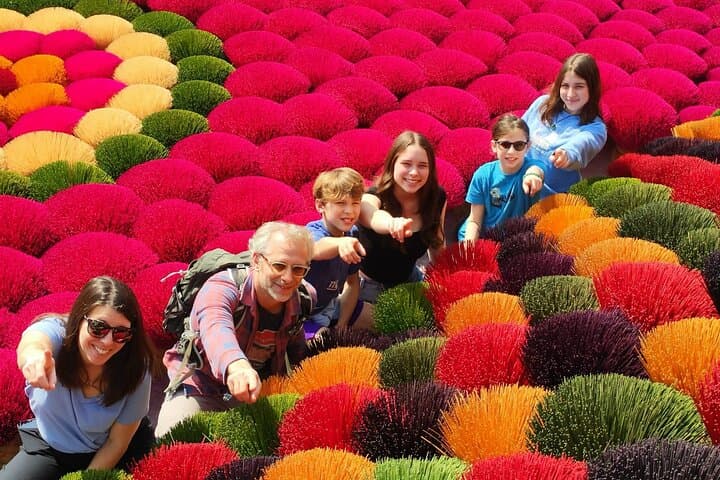


Dawn breaks over Hanoi as the minivan pulls out of the Old Quarter and the city loosens its grip. Roads flatten into rice plains; buffalo lift their heads like punctuation marks, and the scent of drying incense in Quang Phu Cau greets you before the village appears — bright sticks stacked in geometric rows, women bending in practiced rhythm.
Dawn breaks over Hanoi as the minivan pulls out of the Old Quarter and the city loosens its grip. Roads flatten into rice plains; buffalo lift their heads like punctuation marks, and the scent of drying incense in Quang Phu Cau greets you before the village appears — bright sticks stacked in geometric rows, women bending in practiced rhythm.
Quang Phu Cau’s incense craft has been part of Red River Delta life for generations, an artisan economy interwoven with local worship and seasonal cycles. Further west, Ninh Binh’s karst silhouettes rise abruptly from flat fields — limestone towers shaped by millions of years of rain and river, their caves carved where water dared to push through rock.
At Tam Coc you trade the vehicle for a flat-bottom sampan. The rower propels you through river narrows, under low cave mouths, past rice terraces that frame the water like living steps. Hoa Lu’s temples close the loop: low, sober stone sanctuaries honoring the Dinh and Le dynasties where Vietnam’s early court once consolidated power.
Practicalities: expect a long day (10–12 hours) with moderate walking, multiple short climbs, and extended seated time in boats. Bring sun protection, comfortable shoes for wet banks and temple steps, and a small amount of local currency for market purchases and tips. Water is provided during transfers, but carry a refillable bottle. Photography opportunities are constant—shoot quickly in the villages and stay aware of passing sampans. The route is family-friendly and accessible for most travelers, but those with severe mobility or cardiovascular issues should consider alternatives. This is a sensory day: the river will dare you to slow down; let it.