THE ADVENTURE COLLECTIVE® · Independent discovery and booking for outdoor travel

A full-day private tour from Hanoi that combines a sampan ride through Trang An’s water caves, a village bike loop, a visit to Bich Dong pagoda and a steep climb up to Mua Cave’s panoramic viewpoint. Expect varied terrain, local culture, and sweeping karst scenery.
A full-day private tour from Hanoi that combines a sampan ride through Trang An’s water caves, a village bike loop, a visit to Bich Dong pagoda and a steep climb up to Mua Cave’s panoramic viewpoint. Expect varied terrain, local culture, and sweeping karst scenery.
You step out of the van with the city receding behind you and a limestone skyline rising like weathered teeth across flooded rice fields. Morning light spills across the water as local oarsmen guide narrow sampans into shadowy grottoes; the river seems to test your pace, pulling you through caves and past temple mouths as if daring you to look closer.
Verified experiences and guided adventures in the surrounding area.
Operated by Authentic Travel Ho Chi Minh · Ninh Binh, Ninh Bình
You step out of the van with the city receding behind you and a limestone skyline rising like weathered teeth across flooded rice fields. Morning light spills across the water as local oarsmen guide narrow sampans into shadowy grottoes; the river seems to test your pace, pulling you through caves and past temple mouths as if daring you to look closer.
This loop—Trang An, Tam Coc rice flats, Bich Dong pagoda and the climb to Hang Múa—sums up Ninh Binh’s layered history: ancient Buddhist grottoes carved into karst towers and a human landscape shaped around seasonal irrigation. Geology here is straightforward karst: soluble limestone sculpted into cliff faces, tunnels and sinkholes that channel two major river systems. Culturally, villages around Tam Coc keep three-generation household rhythms; visits to family homes reveal rice milling, weaving and a quiet domestic economy that feeds the tourism circuit.
Practically, expect a full day: a 2-hour boat passage, a flat 5–8 km village bike loop, a steep climb to Mua Cave with roughly 500 stone steps to the viewpoint, and short temple walks. Wear sturdy shoes for uneven steps, carry 1–2 liters of water, sun protection and insect repellent. Start early to beat heat and crowds; bring cash for small entrance fees and boat tips. Guides and local rowers offer context and make logistics smooth—use them.
The payoff is immediate: panoramic ridgelines framing water-carved fields, the echo of paddles in a cave, and a summit view that returns you to the scale of the land and the slow work of water on stone.
moderate.
10 hours.
Moderately fit—able to bike 5–8 km on flat country roads, walk temple steps and climb ~500 stone steps to viewpoints.
The tour includes private transfer pick-up and drop-off from hotels in Hanoi’s Old Quarter—confirm pickup address and time when booking.
The climb is steep with many stone steps (roughly several hundred); it’s manageable for most people in good health but takes steady pacing and frequent water breaks.
Yes—the small sampans are stable and rowed by locals, but people with mobility issues should note boarding involves stepping from riverbank into a low boat and may need assistance.
This is a private tour so the guide can tailor the pace and sights within the day’s schedule—discuss preferences at booking or with your guide.
The Trang An landscape holds centuries of human settlement and Buddhist practice; pagodas like Bich Dong have been pilgrimage sites since medieval times and reflect Vietnam’s long syncretic spiritual traditions.
Trang An is a UNESCO natural and cultural site—stay on marked paths, avoid single-use plastics, and follow local guidance to reduce pressure on karst habitats and river systems.
Authentic Travel Ho Chi Minh operates guided outdoor trips and adventures with an emphasis on safety, stewardship, and memorable experiences.


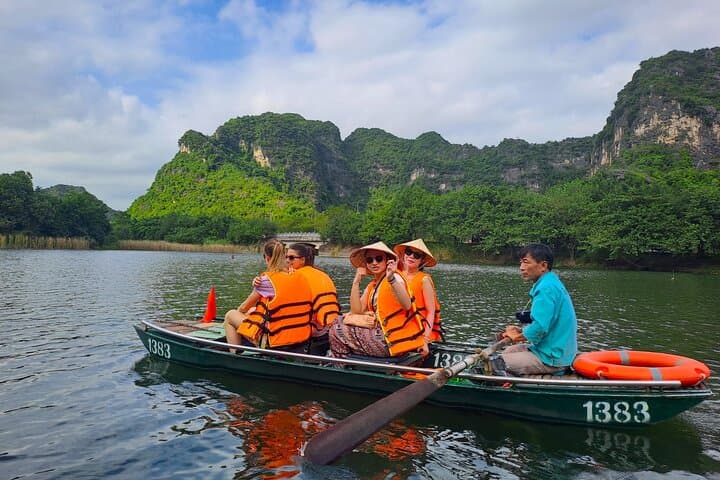

You step out of the van with the city receding behind you and a limestone skyline rising like weathered teeth across flooded rice fields. Morning light spills across the water as local oarsmen guide narrow sampans into shadowy grottoes; the river seems to test your pace, pulling you through caves and past temple mouths as if daring you to look closer.
You step out of the van with the city receding behind you and a limestone skyline rising like weathered teeth across flooded rice fields. Morning light spills across the water as local oarsmen guide narrow sampans into shadowy grottoes; the river seems to test your pace, pulling you through caves and past temple mouths as if daring you to look closer.
This loop—Trang An, Tam Coc rice flats, Bich Dong pagoda and the climb to Hang Múa—sums up Ninh Binh’s layered history: ancient Buddhist grottoes carved into karst towers and a human landscape shaped around seasonal irrigation. Geology here is straightforward karst: soluble limestone sculpted into cliff faces, tunnels and sinkholes that channel two major river systems. Culturally, villages around Tam Coc keep three-generation household rhythms; visits to family homes reveal rice milling, weaving and a quiet domestic economy that feeds the tourism circuit.
Practically, expect a full day: a 2-hour boat passage, a flat 5–8 km village bike loop, a steep climb to Mua Cave with roughly 500 stone steps to the viewpoint, and short temple walks. Wear sturdy shoes for uneven steps, carry 1–2 liters of water, sun protection and insect repellent. Start early to beat heat and crowds; bring cash for small entrance fees and boat tips. Guides and local rowers offer context and make logistics smooth—use them.
The payoff is immediate: panoramic ridgelines framing water-carved fields, the echo of paddles in a cave, and a summit view that returns you to the scale of the land and the slow work of water on stone.