THE ADVENTURE COLLECTIVE® · Independent discovery and booking for outdoor travel

Spend a day exploring Morocco’s layered past on a private drive from Fez to the Roman ruins of Volubilis, the pilgrimage town of Moulay Idriss and the imperial city of Meknes. Expect mosaic floors, narrow alleys, grand gates and 6–7 hours of easy walking and scenic driving.
Spend a day exploring Morocco’s layered past on a private drive from Fez to the Roman ruins of Volubilis, the pilgrimage town of Moulay Idriss and the imperial city of Meknes. Expect mosaic floors, narrow alleys, grand gates and 6–7 hours of easy walking and scenic driving.
You leave Fez at dawn, the city’s tile roofs shrinking as the road threads through olive-scarred foothills. The light slants over low, terraced fields and the air carries a dry, herb-scented heat that seems to push you forward toward stone and silence.
Verified experiences and guided adventures in the surrounding area.
Operated by Cobra Travel Source · Volubilis, Fès-Meknès
You leave Fez at dawn, the city’s tile roofs shrinking as the road threads through olive-scarred foothills. The light slants over low, terraced fields and the air carries a dry, herb-scented heat that seems to push you forward toward stone and silence.
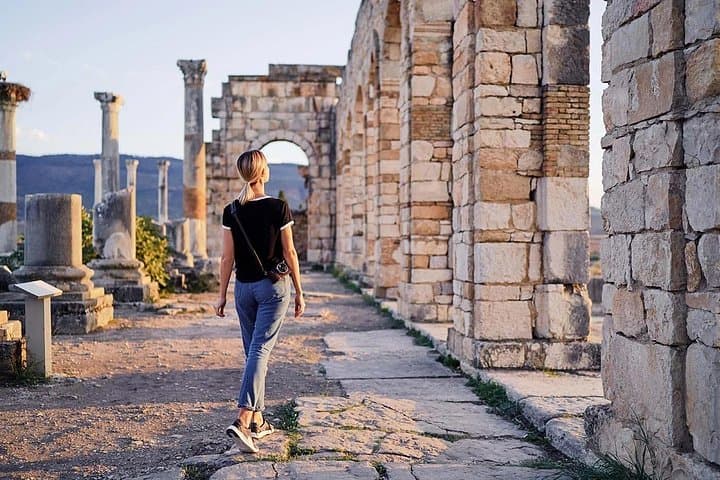
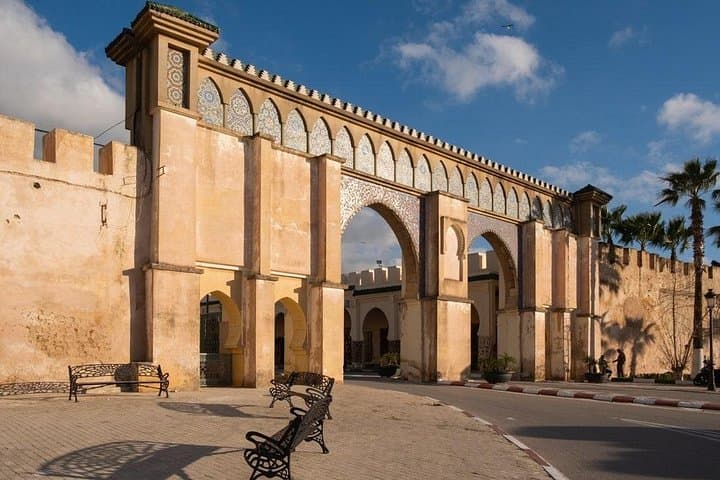
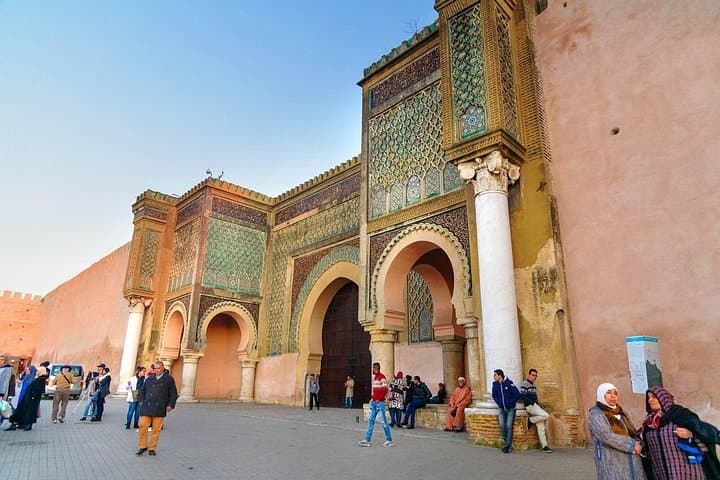
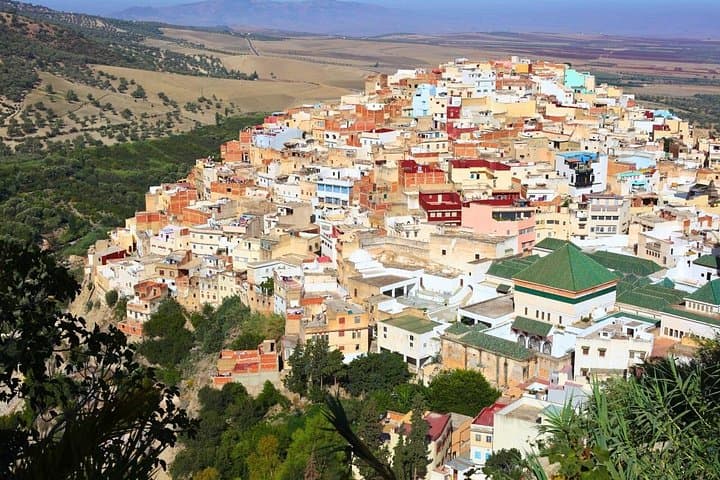
Volubilis arrives as broad, sunwashed ruins—mosaic floors, fluted columns and a triumphal arch that still commands the plain. This Roman outpost, later part of Morocco’s medieval history, sits on a gentle plateau where the geology shifts from red-clay fields to limestone outcrops. Nearby Moulay Idriss, a small pilgrimage town, offers narrow alleys, whitewashed houses and rooftop views that frame the distant Rif. The day closes in Meknes, an imperial city of grand gates, the ornate Bab Mansour and a medina where the rhythm of daily life mixes with centuries-old architecture.
History here moves in layers: Roman civil planning at Volubilis, early Islamic influence in Moulay Idriss, and the 17th-century imperial ambitions of Sultan Moulay Ismail in Meknes. Local culture is visible in mosque courtyards, market stalls and the slow ritual of shared tea.
Practical notes: expect 6–7 hours including driving (roughly 1.5–2 hours each way to Volubilis), uneven walking surfaces and strong sun. Comfortable shoes, sun protection and modest dress for religious sites are essential. Bring cash for museum or site entrances and leave time for a relaxed lunch in Meknes. A private driver handles logistics; your best reward is the sequence of ruins, rooftops and gates that map Morocco’s layered past.
easy.
6–7 hours.
Suitable for most fitness levels; involves several short walks on uneven ground and some steps.
Entrance fees for Volubilis and any museums are usually not included; bring cash for admission or check with your operator in advance.
Travel time is typically 1.5–2 hours each way to Volubilis depending on traffic and route; the full tour runs about 6–7 hours.
Yes—it's a private, easy-paced tour, but the ruins have uneven surfaces and some stairs that may be challenging for limited mobility.
Yes—there is time in Meknes for a sit-down lunch with Moroccan dishes; notify the operator of dietary needs ahead of time.
Volubilis was a prosperous Roman administrative center later incorporated into early Islamic Morocco; Meknes rose to imperial prominence under Sultan Moulay Ismail in the 17th century.
Volubilis is a protected UNESCO site—stay on marked paths, avoid stepping on mosaics and support local guides who promote responsible visitation.
Cobra Travel Source operates guided outdoor trips and adventures with an emphasis on safety, stewardship, and memorable experiences.
You leave Fez at dawn, the city’s tile roofs shrinking as the road threads through olive-scarred foothills. The light slants over low, terraced fields and the air carries a dry, herb-scented heat that seems to push you forward toward stone and silence.
You leave Fez at dawn, the city’s tile roofs shrinking as the road threads through olive-scarred foothills. The light slants over low, terraced fields and the air carries a dry, herb-scented heat that seems to push you forward toward stone and silence.
Volubilis arrives as broad, sunwashed ruins—mosaic floors, fluted columns and a triumphal arch that still commands the plain. This Roman outpost, later part of Morocco’s medieval history, sits on a gentle plateau where the geology shifts from red-clay fields to limestone outcrops. Nearby Moulay Idriss, a small pilgrimage town, offers narrow alleys, whitewashed houses and rooftop views that frame the distant Rif. The day closes in Meknes, an imperial city of grand gates, the ornate Bab Mansour and a medina where the rhythm of daily life mixes with centuries-old architecture.
History here moves in layers: Roman civil planning at Volubilis, early Islamic influence in Moulay Idriss, and the 17th-century imperial ambitions of Sultan Moulay Ismail in Meknes. Local culture is visible in mosque courtyards, market stalls and the slow ritual of shared tea.
Practical notes: expect 6–7 hours including driving (roughly 1.5–2 hours each way to Volubilis), uneven walking surfaces and strong sun. Comfortable shoes, sun protection and modest dress for religious sites are essential. Bring cash for museum or site entrances and leave time for a relaxed lunch in Meknes. A private driver handles logistics; your best reward is the sequence of ruins, rooftops and gates that map Morocco’s layered past.