THE ADVENTURE COLLECTIVE® · Independent discovery and booking for outdoor travel

Drive east from Errachidia into Erg Chebbi and spend a day among towering dunes, Gnawa music in Khamlia, and fossil-rich towns. This full-day route balances cultural stops with time on the sand to climb, photograph, and feel the Sahara’s scale.
Drive east from Errachidia into Erg Chebbi and spend a day among towering dunes, Gnawa music in Khamlia, and fossil-rich towns. This full-day route balances cultural stops with time on the sand to climb, photograph, and feel the Sahara’s scale.
The road eases out of Errachidia and the land opens into ochre plains; by midday the skyline is a band of rippling sand. Driving toward Merzouga, the dunes of Erg Chebbi rise like a mobile range—gold ridges that change with the wind—inviting the sort of slow, tactile travel that deserts demand.
Verified experiences and guided adventures in the surrounding area.
Operated by Morocco Safari Tours · Merzouga, Drâa-Tafilalet
The road eases out of Errachidia and the land opens into ochre plains; by midday the skyline is a band of rippling sand. Driving toward Merzouga, the dunes of Erg Chebbi rise like a mobile range—gold ridges that change with the wind—inviting the sort of slow, tactile travel that deserts demand.
Geology here is recent and relentless: wind-driven sand piled over millennia to form dunes up to 350 meters high, while nearby Erfoud is famed for Devonian fossils exposed in sedimentary rock. Culturally the route threads through oases and villages shaped by trans-Saharan trade and Berber lifeways; Khamlia’s Gnawa musicians keep an African-Maghreb musical lineage alive, and Meski’s blue pool offers a sudden, cool contrast to the dunes.
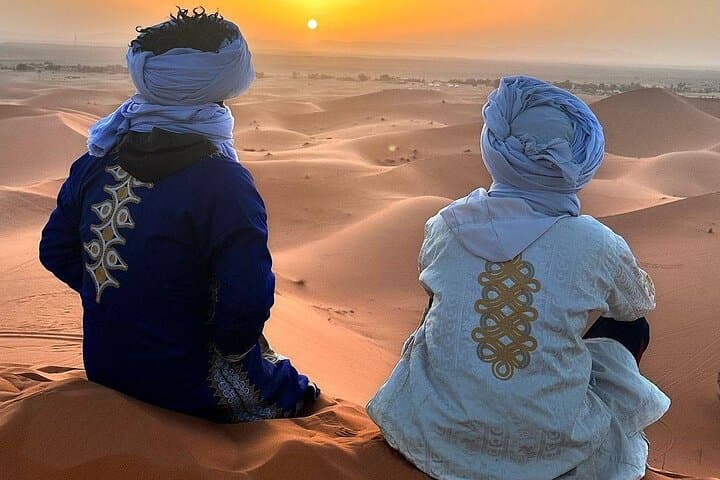
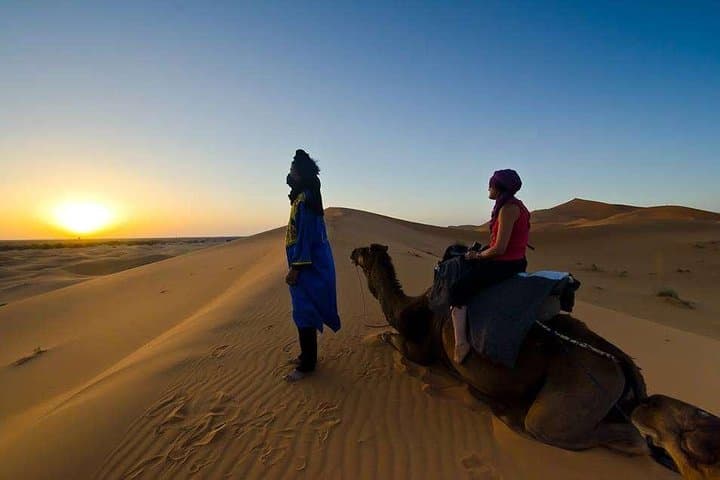
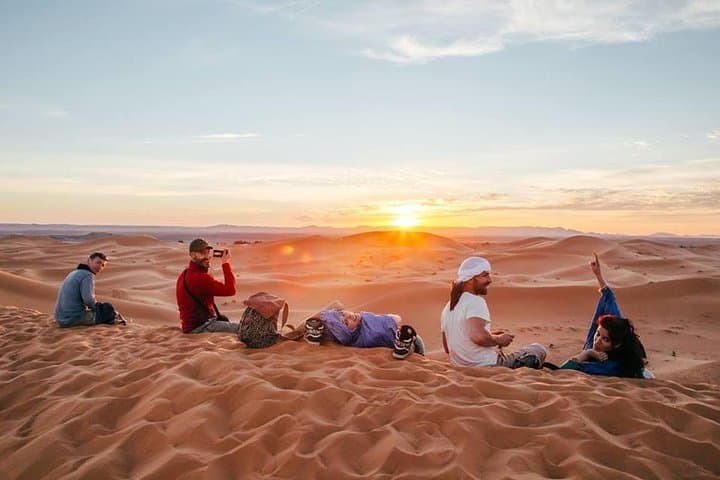
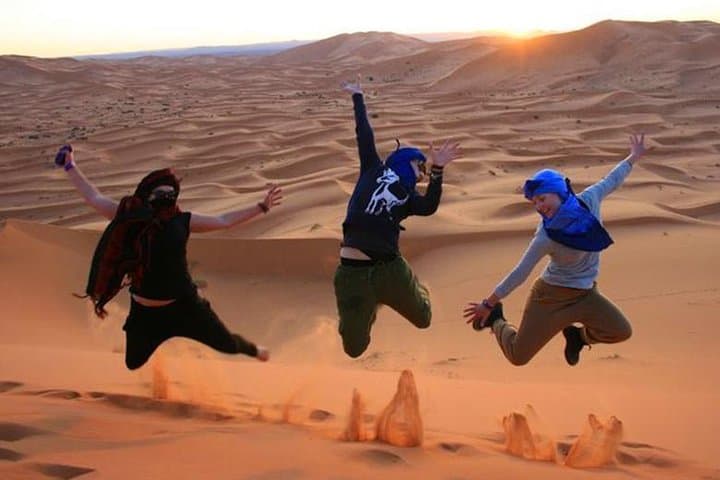
Expect a full-day rhythm: several hours of driving, short stops in Erfoud and Meski, a cultural visit to Khamlia, and 3–4 hours roaming the southern dunes near Merzouga. Terrain is sandy and uneven—shoe traction and patience matter more than speed. Sunrise and sunset are prime for photography and dune climbs, when light sculpts the sand into visible contours.
Practical guidance: pack sun protection and 2–3 liters of water, carry layers for cold desert nights, and confirm whether camel rides or night camps are included or extra. Respect private camps and stay with your guide in open dunes to avoid fragile areas. For those who relish wide horizons and tactile landscapes, this day trip delivers the essentials of Sahara travel—sand, sky, music, and a sharp sense of place.
moderate.
10–12 hours (full day).
Suitable for people with basic fitness—able to walk on uneven sand, climb short dunes, and tolerate several hours in a vehicle.
Camel rides are common in Merzouga but not always included—confirm with the operator; many offer camel treks or dune camps as paid add-ons.
The provider lists a minimum age of 18 and notes the tour is not recommended for pregnant travelers or those with spinal or serious heart conditions.
Walking is intermittent—short village strolls and dune climbs for 30–90 minutes at a time; most of the day is vehicle transfer and guided stops.
Moroccan dirham (MAD) is used locally; tipping guides, drivers, and performers is customary—small tips for music performances and service are appreciated.
The Merzouga area sits at the edge of historic trans-Saharan routes; nearby Erfoud reveals Paleozoic fossils, and villages like Khamlia reflect centuries of cross-Saharan cultural exchange.
Dune ecosystems are fragile—stay on established paths near camps, avoid disturbing vegetation, limit single-use plastics, and hire local guides to support sustainable tourism.
Morocco Safari Tours operates guided outdoor trips and adventures with an emphasis on safety, stewardship, and memorable experiences.
The road eases out of Errachidia and the land opens into ochre plains; by midday the skyline is a band of rippling sand. Driving toward Merzouga, the dunes of Erg Chebbi rise like a mobile range—gold ridges that change with the wind—inviting the sort of slow, tactile travel that deserts demand.
The road eases out of Errachidia and the land opens into ochre plains; by midday the skyline is a band of rippling sand. Driving toward Merzouga, the dunes of Erg Chebbi rise like a mobile range—gold ridges that change with the wind—inviting the sort of slow, tactile travel that deserts demand.
Geology here is recent and relentless: wind-driven sand piled over millennia to form dunes up to 350 meters high, while nearby Erfoud is famed for Devonian fossils exposed in sedimentary rock. Culturally the route threads through oases and villages shaped by trans-Saharan trade and Berber lifeways; Khamlia’s Gnawa musicians keep an African-Maghreb musical lineage alive, and Meski’s blue pool offers a sudden, cool contrast to the dunes.
Expect a full-day rhythm: several hours of driving, short stops in Erfoud and Meski, a cultural visit to Khamlia, and 3–4 hours roaming the southern dunes near Merzouga. Terrain is sandy and uneven—shoe traction and patience matter more than speed. Sunrise and sunset are prime for photography and dune climbs, when light sculpts the sand into visible contours.
Practical guidance: pack sun protection and 2–3 liters of water, carry layers for cold desert nights, and confirm whether camel rides or night camps are included or extra. Respect private camps and stay with your guide in open dunes to avoid fragile areas. For those who relish wide horizons and tactile landscapes, this day trip delivers the essentials of Sahara travel—sand, sky, music, and a sharp sense of place.