THE ADVENTURE COLLECTIVE® · Independent discovery and booking for outdoor travel

Escape Dubrovnik for a full-day private drive into Montenegro’s Bay of Kotor—explore Kotor’s Venetian walls, the baroque charm of Perast, and an optional boat ride to Our Lady of the Rocks. This flexible 9–10 hour tour is tailored to sightseers who want history, coastal panoramas, and local color in one day.
Escape Dubrovnik for a full-day private drive into Montenegro’s Bay of Kotor—explore Kotor’s Venetian walls, the baroque charm of Perast, and an optional boat ride to Our Lady of the Rocks. This flexible 9–10 hour tour is tailored to sightseers who want history, coastal panoramas, and local color in one day.
A low, salt-scented wind meets the minivan before dawn as the convoy slips out of Dubrovnik and threads the coastal road toward an unexpected Adriatic—Montenegro’s Bay of Kotor. Hills rise like folded maps, limestone cliffs scoured by millennia of rain and sea. By mid-morning the bay opens: a fjord-like inlet ringed by terracotta roofs, medieval walls, and church spires that puncture the skyline like punctuation marks. The guide eases the vehicle along switchbacks and you get your first long look at Kotor's ramparts, a grey line climbing the mountain.
Verified experiences and guided adventures in the surrounding area.
Operated by Feel Dubrovnik · Kotor, Kotor Municipality
A low, salt-scented wind meets the minivan before dawn as the convoy slips out of Dubrovnik and threads the coastal road toward an unexpected Adriatic—Montenegro’s Bay of Kotor. Hills rise like folded maps, limestone cliffs scoured by millennia of rain and sea. By mid-morning the bay opens: a fjord-like inlet ringed by terracotta roofs, medieval walls, and church spires that puncture the skyline like punctuation marks. The guide eases the vehicle along switchbacks and you get your first long look at Kotor's ramparts, a grey line climbing the mountain.
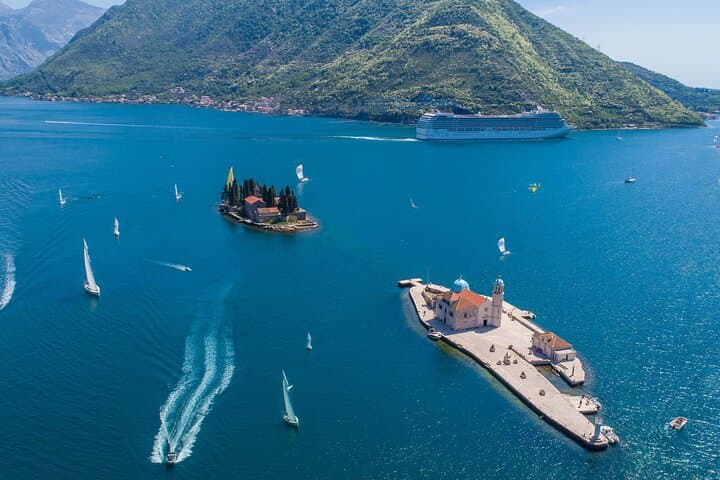
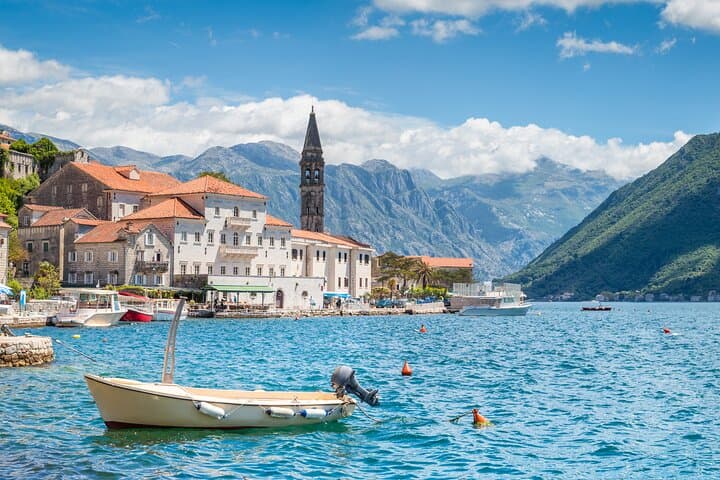
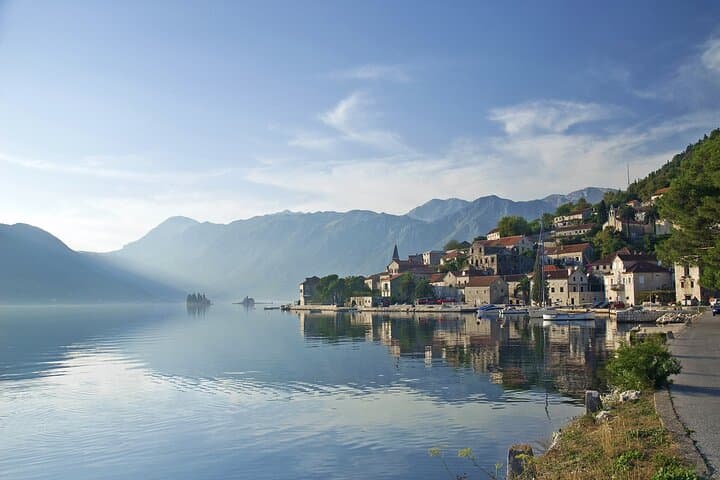
Kotor’s history is carved into its stone. The town’s walls and fortifications, strengthened from the 15th through the 18th centuries under Venetian rule, are part of the Natural and Cultural-Historical Region of Kotor—on UNESCO’s World Heritage List since 1979. Perast, a short ride along the bay, has baroque palaces and two islets: St. George, a graveyard island, and Our Lady of the Rocks, with an 18th-century church built on an artificial reef of sailors’ offerings.
Geologically, the bay is a drowned river canyon—karst limestone folded and fractured, then submerged after the last Ice Age—creating dramatic cliffs and sheltered coves. Culturally, this stretch of coastline has been a crossroads: Venetian merchants, Orthodox and Catholic communities, and seafaring traditions that still steer local life.
Practically, this private day trip compresses that history into a 9–10 hour loop: roughly 9–10 hours door-to-door from Dubrovnik, with about 90 minutes framed for panoramic time at the Bay of Kotor lookout, 3 hours exploring Kotor’s old town on foot, and a 45-minute stroll through Perast. There’s an optional 45-minute boat hop to Our Lady of the Rocks for about €10 per person.
Expect narrow cobbled streets, steep staircases up to the St. John Fortress if you opt for the climb, and sunny stone squares that radiate heat. Currency is the euro; official language is Montenegrin, but Croatian and English are widely understood. Border crossing can add 20–40 minutes depending on season—have passports handy and photocopies or digital scans as backup.
For comfort bring sturdy shoes for uneven pavement, a hat and sunscreen for exposed viewpoints, and a light layer for breezy boat rides. The private-vehicle format allows customization—more time in Perast, a seaside lunch, or a slow boat back—so plan priorities ahead with your guide.
This is a day that moves at the pace of the bay: visual, historical, and quietly maritime. It’s accessible for most travelers, but proves most rewarding if you let the small towns and coastal estuaries set the tempo rather than trying to rush through them.
easy.
9–10 hours.
Light stamina for walking 1–3 miles on cobbled streets and climbing stairs; mostly seated in vehicle between stops.
The road distance is roughly 90–100 km; driving time varies with border queues but plan on about 2–3 hours each way.
EU and many other nationals can enter visa-free, but requirements vary—check passport and visa rules for your nationality before travel.
No—this short boat trip is optional and typically costs around €10 per person, paid locally.
Meals are usually not included; there will be opportunities to eat in Kotor or Perast—bring cash for cafés or choose to request a lunch stop.
Yes—the tour is private and flexible; guides can adjust time in each town or add stops on request, subject to the total tour length.
The minivan transport accommodates most travelers, but old-town streets are steep and uneven—mobility challenges may limit access to some areas.
Kotor’s fortifications were expanded during Venetian rule from the 15th–18th centuries; the area combines Orthodox, Catholic, and maritime traditions shaped by centuries of trade and empire.
The Bay of Kotor is sensitive to tourism pressure—use marked paths, avoid leaving waste, and support local businesses that follow sustainable practices.
Feel Dubrovnik operates guided outdoor trips and adventures with an emphasis on safety, stewardship, and memorable experiences.
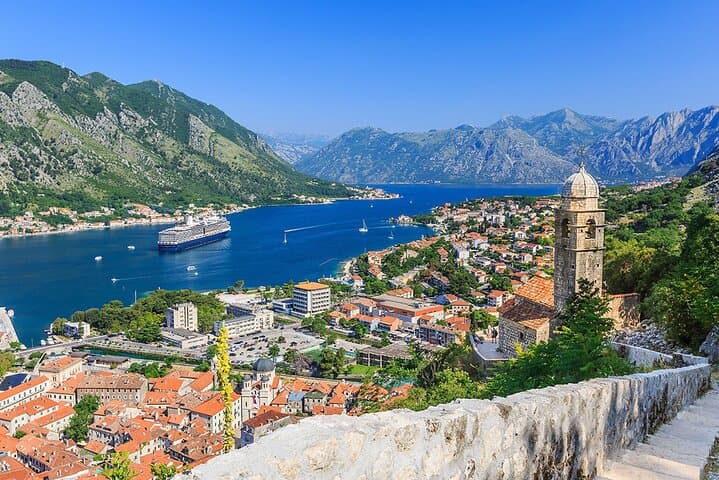
A low, salt-scented wind meets the minivan before dawn as the convoy slips out of Dubrovnik and threads the coastal road toward an unexpected Adriatic—Montenegro’s Bay of Kotor. Hills rise like folded maps, limestone cliffs scoured by millennia of rain and sea. By mid-morning the bay opens: a fjord-like inlet ringed by terracotta roofs, medieval walls, and church spires that puncture the skyline like punctuation marks. The guide eases the vehicle along switchbacks and you get your first long look at Kotor's ramparts, a grey line climbing the mountain.
A low, salt-scented wind meets the minivan before dawn as the convoy slips out of Dubrovnik and threads the coastal road toward an unexpected Adriatic—Montenegro’s Bay of Kotor. Hills rise like folded maps, limestone cliffs scoured by millennia of rain and sea. By mid-morning the bay opens: a fjord-like inlet ringed by terracotta roofs, medieval walls, and church spires that puncture the skyline like punctuation marks. The guide eases the vehicle along switchbacks and you get your first long look at Kotor's ramparts, a grey line climbing the mountain.
Kotor’s history is carved into its stone. The town’s walls and fortifications, strengthened from the 15th through the 18th centuries under Venetian rule, are part of the Natural and Cultural-Historical Region of Kotor—on UNESCO’s World Heritage List since 1979. Perast, a short ride along the bay, has baroque palaces and two islets: St. George, a graveyard island, and Our Lady of the Rocks, with an 18th-century church built on an artificial reef of sailors’ offerings.
Geologically, the bay is a drowned river canyon—karst limestone folded and fractured, then submerged after the last Ice Age—creating dramatic cliffs and sheltered coves. Culturally, this stretch of coastline has been a crossroads: Venetian merchants, Orthodox and Catholic communities, and seafaring traditions that still steer local life.
Practically, this private day trip compresses that history into a 9–10 hour loop: roughly 9–10 hours door-to-door from Dubrovnik, with about 90 minutes framed for panoramic time at the Bay of Kotor lookout, 3 hours exploring Kotor’s old town on foot, and a 45-minute stroll through Perast. There’s an optional 45-minute boat hop to Our Lady of the Rocks for about €10 per person.
Expect narrow cobbled streets, steep staircases up to the St. John Fortress if you opt for the climb, and sunny stone squares that radiate heat. Currency is the euro; official language is Montenegrin, but Croatian and English are widely understood. Border crossing can add 20–40 minutes depending on season—have passports handy and photocopies or digital scans as backup.
For comfort bring sturdy shoes for uneven pavement, a hat and sunscreen for exposed viewpoints, and a light layer for breezy boat rides. The private-vehicle format allows customization—more time in Perast, a seaside lunch, or a slow boat back—so plan priorities ahead with your guide.
This is a day that moves at the pace of the bay: visual, historical, and quietly maritime. It’s accessible for most travelers, but proves most rewarding if you let the small towns and coastal estuaries set the tempo rather than trying to rush through them.