THE ADVENTURE COLLECTIVE® · Independent discovery and booking for outdoor travel

Make a day of it from Dubai to Abu Dhabi: explore the luminous Sheikh Zayed Grand Mosque and the ceremonial halls of Qasr Al Watan in one efficient cultural loop. Practical tips on timing, dress code and what to expect en route.
Make a day of it from Dubai to Abu Dhabi: explore the luminous Sheikh Zayed Grand Mosque and the ceremonial halls of Qasr Al Watan in one efficient cultural loop. Practical tips on timing, dress code and what to expect en route.
A low, cool wind off the Persian Gulf meets the marble steps as the bus pulls into Abu Dhabi, and the first sight—white domes and towering arches—dominates the skyline. You step from air-conditioned transport into a place where modern nation-building meets centuries-old Islamic craft: the Sheikh Zayed Grand Mosque’s columns catch light like columns of ivory, while Qasr Al Watan’s carved façades hold stories of statecraft.
Verified experiences and guided adventures in the surrounding area.
Operated by 360 Adventures · Abu Dhabi, Abu Dhabi
A low, cool wind off the Persian Gulf meets the marble steps as the bus pulls into Abu Dhabi, and the first sight—white domes and towering arches—dominates the skyline. You step from air-conditioned transport into a place where modern nation-building meets centuries-old Islamic craft: the Sheikh Zayed Grand Mosque’s columns catch light like columns of ivory, while Qasr Al Watan’s carved façades hold stories of statecraft.
The mosque, completed in 2007 and dedicated to the UAE’s founding father, mixes Mughal, Moorish and contemporary influences in spaces meant for both prayer and public encounter. Qasr Al Watan, opened to the public in 2019, functions as a working palace and a cultural center, its halls displaying governance, manuscripts and Emirati heritage rather than royal apartments.
Geology here is quiet—coastal plain and reclaimed land—so the drama is architectural: imported stones, hand-cut mosaics and reflecting pools that frame the structures against low desert light. Culturally, visits are as much about observation as participation: respectful behavior, modest dress and measured photography are part of the rhythm.
Practical guidance: tours typically allocate 60–90 minutes at each site plus transit time from Dubai (about 1.5–2 hours each way). Carry water, wear lightweight long sleeves and secure footwear for extensive walking on stone floors. Timed arrivals and security checkpoints mean moving efficiently through exhibits; listen to guides and allow extra time for passport checks and lines during peak hours. With clear planning, the day unfolds as a concentrated primer in modern Emirati identity—architectural spectacle grounded in civic purpose.
easy.
6–7 hours.
Suitable for all fitness levels; expect light walking and standing for up to 90 minutes at each site
Yes—modest attire is required: shoulders and knees covered. The mosque often provides abayas for women; men should avoid shorts.
Expect roughly 1.5–2 hours each way depending on traffic; the tour schedule includes transit time within the total duration.
Photography is permitted in most public areas but follow onsite signs and staff directions; avoid photographing worshippers during prayer.
Both sites have accessible paths and the tour notes stroller access; check specific mobility needs with the operator when booking.
Sheikh Zayed Grand Mosque was completed in 2007 and honors the UAE’s founding father; Qasr Al Watan opened to the public in 2019 as both a working palace and a cultural institution.
Both sites encourage respectful behavior to protect delicate stone, textiles and artworks; conserve water use and follow established paths to limit wear on landscaped areas.
360 Adventures operates guided outdoor trips and adventures with an emphasis on safety, stewardship, and memorable experiences.


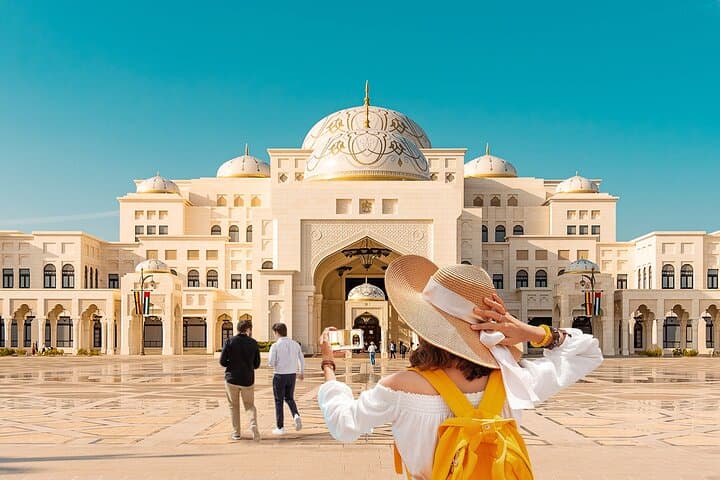
A low, cool wind off the Persian Gulf meets the marble steps as the bus pulls into Abu Dhabi, and the first sight—white domes and towering arches—dominates the skyline. You step from air-conditioned transport into a place where modern nation-building meets centuries-old Islamic craft: the Sheikh Zayed Grand Mosque’s columns catch light like columns of ivory, while Qasr Al Watan’s carved façades hold stories of statecraft.
A low, cool wind off the Persian Gulf meets the marble steps as the bus pulls into Abu Dhabi, and the first sight—white domes and towering arches—dominates the skyline. You step from air-conditioned transport into a place where modern nation-building meets centuries-old Islamic craft: the Sheikh Zayed Grand Mosque’s columns catch light like columns of ivory, while Qasr Al Watan’s carved façades hold stories of statecraft.
The mosque, completed in 2007 and dedicated to the UAE’s founding father, mixes Mughal, Moorish and contemporary influences in spaces meant for both prayer and public encounter. Qasr Al Watan, opened to the public in 2019, functions as a working palace and a cultural center, its halls displaying governance, manuscripts and Emirati heritage rather than royal apartments.
Geology here is quiet—coastal plain and reclaimed land—so the drama is architectural: imported stones, hand-cut mosaics and reflecting pools that frame the structures against low desert light. Culturally, visits are as much about observation as participation: respectful behavior, modest dress and measured photography are part of the rhythm.
Practical guidance: tours typically allocate 60–90 minutes at each site plus transit time from Dubai (about 1.5–2 hours each way). Carry water, wear lightweight long sleeves and secure footwear for extensive walking on stone floors. Timed arrivals and security checkpoints mean moving efficiently through exhibits; listen to guides and allow extra time for passport checks and lines during peak hours. With clear planning, the day unfolds as a concentrated primer in modern Emirati identity—architectural spectacle grounded in civic purpose.