THE ADVENTURE COLLECTIVE® · Independent discovery and booking for outdoor travel

A full-day private trip transports travelers from Cairo to Luxor’s monumental west and east banks, visiting the Valley of the Kings, Hatshepsut’s temple, the Colossi of Memnon, Luxor and Karnak temples. Efficient transfers, a private guide and a day-use room make this a concentrated introduction to ancient Thebes.
A full-day private trip transports travelers from Cairo to Luxor’s monumental west and east banks, visiting the Valley of the Kings, Hatshepsut’s temple, the Colossi of Memnon, Luxor and Karnak temples. Efficient transfers, a private guide and a day-use room make this a concentrated introduction to ancient Thebes.
A morning lift-off from Cairo puts the Nile beneath you and the heat of centuries rising from the valley. By mid-morning the bus and guide deposit you on Luxor’s riverbanks where stone and sand reassert their slow authority: columns that rival trees, tomb corridors that inhale and exhale ancient air, and the Nile itself nudging the city awake.
Verified experiences and guided adventures in the surrounding area.
Operated by Egipto Excursiones · Luxor, Luxor Governorate
A morning lift-off from Cairo puts the Nile beneath you and the heat of centuries rising from the valley. By mid-morning the bus and guide deposit you on Luxor’s riverbanks where stone and sand reassert their slow authority: columns that rival trees, tomb corridors that inhale and exhale ancient air, and the Nile itself nudging the city awake.
This itinerary threads the high points of Thebes—Valley of the Kings, Deir el-Bahari (Hatshepsut’s mortuary temple), the Colossi of Memnon, Luxor Temple and the sprawling Karnak complex. Geologically, the west bank’s limestone escarpments carve tombs into sun-baked rock; on the east bank, manmade stone fields rise in ceremonial geometry. Culturally, Luxor is the urban fossil of New Kingdom Egypt — a working city grown around its antiquities.
Expect guided walks through tomb corridors, stops for photographing colossi and obelisks, and a chance to read hieroglyphic narratives in situ. The tour balances interpretation with efficient movement: flights from Cairo bookend the day and a day-use room in Luxor gives a brief rest before returning.
Practical guidance: bring a sun hat, plenty of water, and closed-toe shoes for uneven surfaces; cameras are welcome but flash is usually forbidden in tombs. Timing matters—start early to avoid the hottest midday sun at open sites and allow queues at ticket offices. Respect site rules, follow your guide’s routing to minimize walking distances, and carry local currency for entrance fees or gratuities. This is a full, paced day that hands you the essentials of Luxor in one readable chapter.
easy.
12 hours.
Minimal sustained fitness required; ability to walk short uneven distances and climb steps is helpful.
Yes—this tour includes round-trip domestic flights between Cairo and Luxor as noted in the inclusions.
Some entrance fees may be included depending on options; expect to pay for optional tomb tickets or the separate 'Tomb of Tutankhamun' if chosen.
The tour involves walking on uneven surfaces and steps; it is not recommended for those with serious spinal or mobility limitations—notify operators at booking for assistance options.
Fall through spring (October–April) offers milder temperatures; summers are very hot and require additional sun protection and pacing.
Luxor sits on ancient Thebes, the religious and political heart of Egypt during the Middle and New Kingdoms, where pharaohs built monumental funerary landscapes across both banks of the Nile.
Visitors should follow site rules to reduce wear on fragile tomb paintings; support licensed guides and local conservation fees where offered to aid preservation efforts.
Egipto Excursiones operates guided outdoor trips and adventures with an emphasis on safety, stewardship, and memorable experiences.
A morning lift-off from Cairo puts the Nile beneath you and the heat of centuries rising from the valley. By mid-morning the bus and guide deposit you on Luxor’s riverbanks where stone and sand reassert their slow authority: columns that rival trees, tomb corridors that inhale and exhale ancient air, and the Nile itself nudging the city awake.
A morning lift-off from Cairo puts the Nile beneath you and the heat of centuries rising from the valley. By mid-morning the bus and guide deposit you on Luxor’s riverbanks where stone and sand reassert their slow authority: columns that rival trees, tomb corridors that inhale and exhale ancient air, and the Nile itself nudging the city awake.
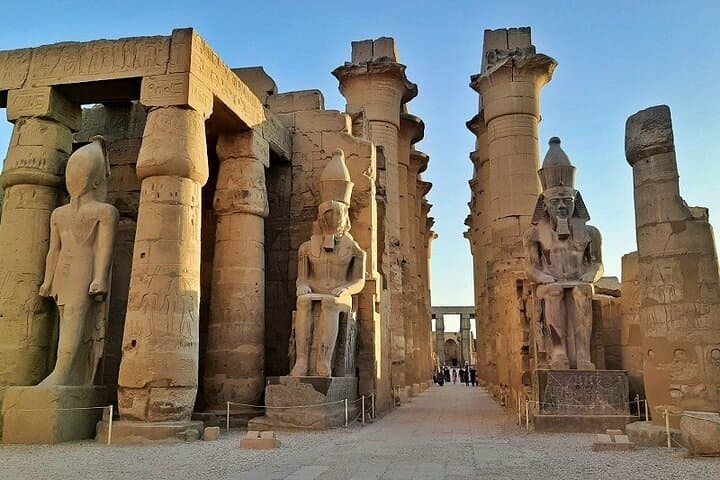
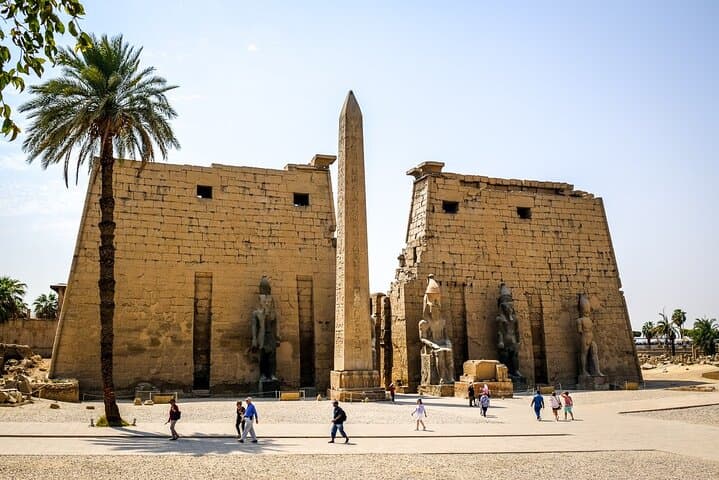
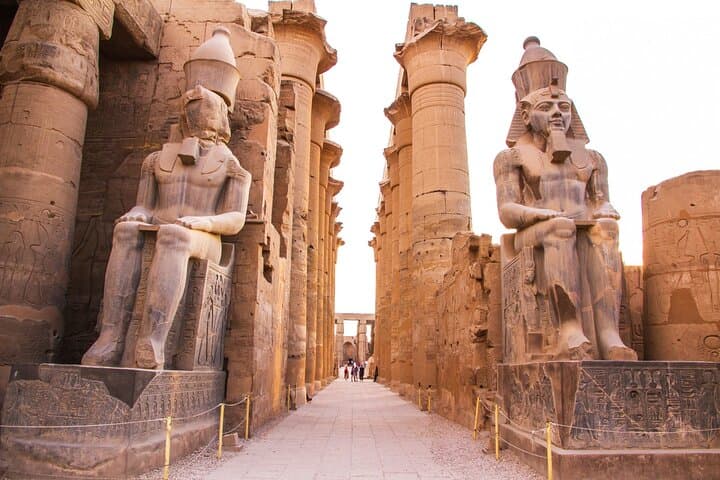
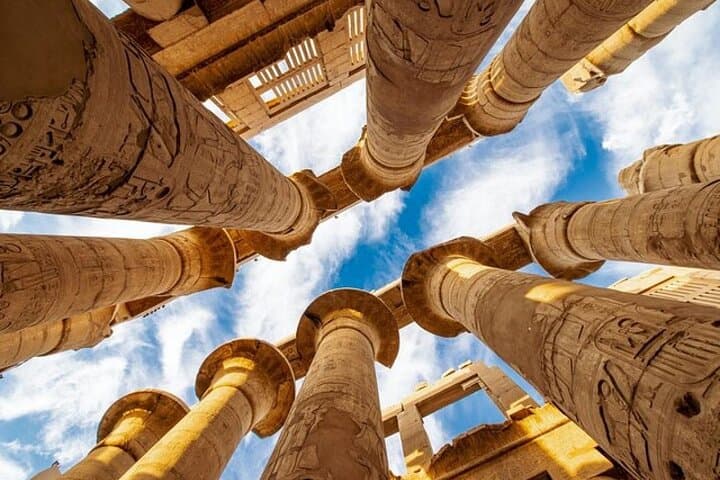
This itinerary threads the high points of Thebes—Valley of the Kings, Deir el-Bahari (Hatshepsut’s mortuary temple), the Colossi of Memnon, Luxor Temple and the sprawling Karnak complex. Geologically, the west bank’s limestone escarpments carve tombs into sun-baked rock; on the east bank, manmade stone fields rise in ceremonial geometry. Culturally, Luxor is the urban fossil of New Kingdom Egypt — a working city grown around its antiquities.
Expect guided walks through tomb corridors, stops for photographing colossi and obelisks, and a chance to read hieroglyphic narratives in situ. The tour balances interpretation with efficient movement: flights from Cairo bookend the day and a day-use room in Luxor gives a brief rest before returning.
Practical guidance: bring a sun hat, plenty of water, and closed-toe shoes for uneven surfaces; cameras are welcome but flash is usually forbidden in tombs. Timing matters—start early to avoid the hottest midday sun at open sites and allow queues at ticket offices. Respect site rules, follow your guide’s routing to minimize walking distances, and carry local currency for entrance fees or gratuities. This is a full, paced day that hands you the essentials of Luxor in one readable chapter.