THE ADVENTURE COLLECTIVE® · Independent discovery and booking for outdoor travel

Catch the train from Athens to Kalambaka and spend a day among Meteora’s dramatic sandstone pillars and cliff-top monasteries. This rail day trip pairs easy hikes, stone staircases and sweeping overlooks with local culture in Kalambaka.
Catch the train from Athens to Kalambaka and spend a day among Meteora’s dramatic sandstone pillars and cliff-top monasteries. This rail day trip pairs easy hikes, stone staircases and sweeping overlooks with local culture in Kalambaka.
The train slides out of Athens and the city gives way to olive groves and folded limestone hills. By mid-afternoon the silhouette of Meteora appears: colossal grey pillars rising from the valley floor, monasteries perched on flat summits as if placed there by hands that understood both faith and gravity. The guide meets you at Kalambaka station and the day unfolds in a rhythm of short drives, stone staircases and rooftop views.
Verified experiences and guided adventures in the surrounding area.
Operated by MTM Experiences · Kalambaka, Thessaly
The train slides out of Athens and the city gives way to olive groves and folded limestone hills. By mid-afternoon the silhouette of Meteora appears: colossal grey pillars rising from the valley floor, monasteries perched on flat summits as if placed there by hands that understood both faith and gravity. The guide meets you at Kalambaka station and the day unfolds in a rhythm of short drives, stone staircases and rooftop views.
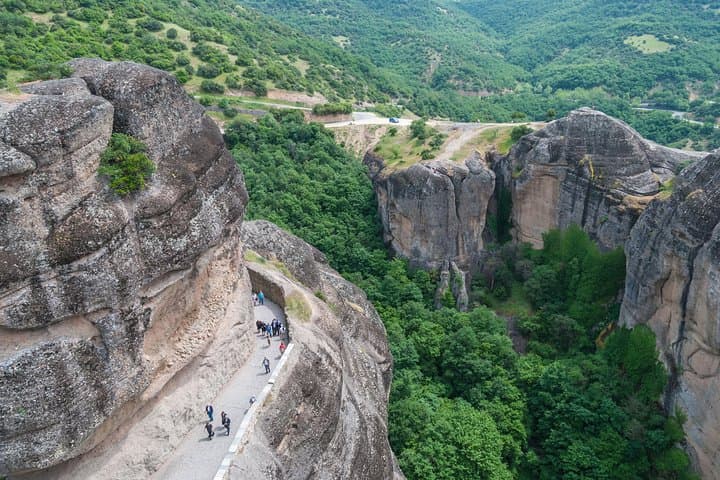
Meteora’s cliffs are conglomerate rock formed from ancient river sediments and uplifted by tectonic forces; erosion carved the towers that now host Byzantine monasteries dating to the 14th century. Culturally, the area is a meeting point of Orthodox monastic tradition and rural life—Kalambaka itself offers tavernas serving mountain beans and local honey. Expect narrow paths, steep stone steps to monastery entrances, and strict dress codes inside active religious sites.
Practical guidance: the trip is long — trains take about 5 hours round trip each way — so pack for a full day. Footwear with good grip is essential; there’s little technical climbing but many uneven steps. Hydrate and carry snacks; lunch in Kalambaka is typically café-style and not included. Photography is excellent from platforms and road pullouts, but some monasteries restrict tripods and require modest apparel (shoulders and knees covered).
Timing matters: visit midweek or early in the season to avoid crowds. Weather shifts fast on the rock tops—wind and sun both make themselves known—so layer up. For travelers wanting a concentrated introduction to Meteora’s geology, history and spirituality, this rail-to-valley day trip delivers a compact, accessible experience without overnight logistics.
moderate.
14 hours.
Moderate fitness for walking on steps and short climbs; able to stand and walk intermittently for several hours.
The direct train journey takes roughly 4.5–5 hours each way depending on service; this tour schedules the day to arrive mid-afternoon for monastery visits.
No—this tour gives time to visit two monasteries but entrance fees are paid on-site and some sites have separate small charges.
No technical climbing is required, but expect stone staircases and uneven paths; comfortable footwear and basic mobility are sufficient.
Large backpacks are cumbersome on steps and some monasteries restrict tripods—travel light and check on-site rules for photography.
Meteora’s monasteries grew from 14th-century monastic communities seeking isolation; the rocks were used as natural fortresses and access remained difficult until modern paths were built.
Visitor numbers are managed through paths and limited access inside monasteries; stay on marked trails and avoid litter to protect fragile cliff-top vegetation.
MTM Experiences operates guided outdoor trips and adventures with an emphasis on safety, stewardship, and memorable experiences.
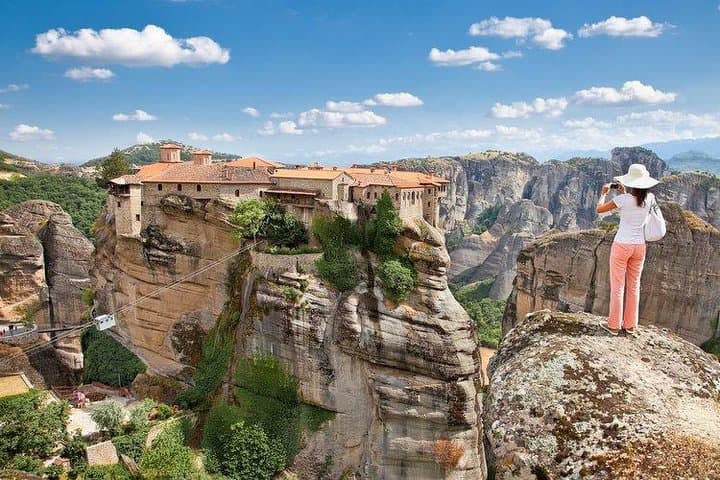

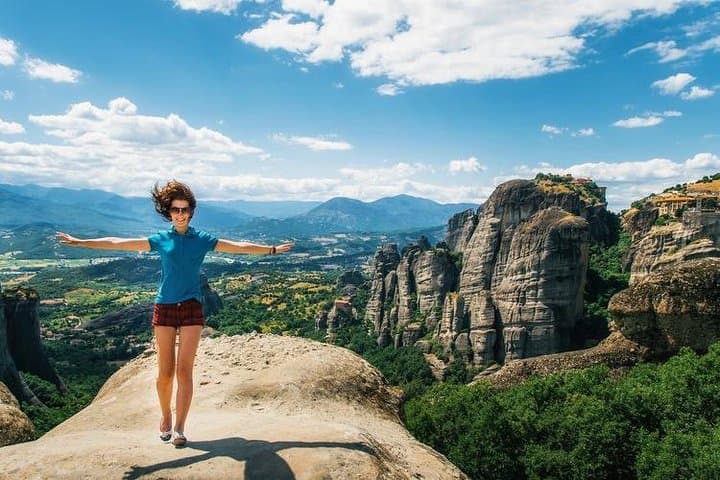
The train slides out of Athens and the city gives way to olive groves and folded limestone hills. By mid-afternoon the silhouette of Meteora appears: colossal grey pillars rising from the valley floor, monasteries perched on flat summits as if placed there by hands that understood both faith and gravity. The guide meets you at Kalambaka station and the day unfolds in a rhythm of short drives, stone staircases and rooftop views.
The train slides out of Athens and the city gives way to olive groves and folded limestone hills. By mid-afternoon the silhouette of Meteora appears: colossal grey pillars rising from the valley floor, monasteries perched on flat summits as if placed there by hands that understood both faith and gravity. The guide meets you at Kalambaka station and the day unfolds in a rhythm of short drives, stone staircases and rooftop views.
Meteora’s cliffs are conglomerate rock formed from ancient river sediments and uplifted by tectonic forces; erosion carved the towers that now host Byzantine monasteries dating to the 14th century. Culturally, the area is a meeting point of Orthodox monastic tradition and rural life—Kalambaka itself offers tavernas serving mountain beans and local honey. Expect narrow paths, steep stone steps to monastery entrances, and strict dress codes inside active religious sites.
Practical guidance: the trip is long — trains take about 5 hours round trip each way — so pack for a full day. Footwear with good grip is essential; there’s little technical climbing but many uneven steps. Hydrate and carry snacks; lunch in Kalambaka is typically café-style and not included. Photography is excellent from platforms and road pullouts, but some monasteries restrict tripods and require modest apparel (shoulders and knees covered).
Timing matters: visit midweek or early in the season to avoid crowds. Weather shifts fast on the rock tops—wind and sun both make themselves known—so layer up. For travelers wanting a concentrated introduction to Meteora’s geology, history and spirituality, this rail-to-valley day trip delivers a compact, accessible experience without overnight logistics.