THE ADVENTURE COLLECTIVE® · Independent discovery and booking for outdoor travel

A full-day excursion from Agadir that links coastal caves, Tiznit’s walled medina, the irrigation feat of Youssef Ben Tachfine Dam and a Berber home lunch. Expect varied terrain, cultural stops, and a hands-on introduction to southern Morocco.
A full-day excursion from Agadir that links coastal caves, Tiznit’s walled medina, the irrigation feat of Youssef Ben Tachfine Dam and a Berber home lunch. Expect varied terrain, cultural stops, and a hands-on introduction to southern Morocco.
The van slips away from Agadir’s morning light and the coast peels back into scrub and low ridges; salt-scented air gives way to warm, dry wind that teases the dunes ahead. Along the south coast the fishermen’s caves at Sidi Rabat sit like weathered mouths opening to the Atlantic, then the road climbs toward Rsmouka where a family kitchen waits with tajine and couscous.
Verified experiences and guided adventures in the surrounding area.
Operated by Agadir Trip Excursions · Agadir, Souss-Massa
The van slips away from Agadir’s morning light and the coast peels back into scrub and low ridges; salt-scented air gives way to warm, dry wind that teases the dunes ahead. Along the south coast the fishermen’s caves at Sidi Rabat sit like weathered mouths opening to the Atlantic, then the road climbs toward Rsmouka where a family kitchen waits with tajine and couscous.
This full-day route threads recent human history and older geology: Tiznit’s 19th-century ramparts and silverwork recall regional craft traditions, while the Youssef Ben Tachfine dam illustrates modern irrigation shaping former river plains. The landscape changes quickly — beach pebbles, scrub, low dunes and the foothills of the Anti-Atlas — giving travelers a concentrated sense of southern Morocco’s margins.
Cultural moments are direct: a Berber home offers mint tea and fresh fruit, market lanes in Tiznit showcase hand-forged jewelry, and roadside argan cooperatives demonstrate local economies. Expect plain-spoken guides who point out how the dam channels winter melt and how coastal caves once sheltered fishing families.
Practicalities matter: this is a long day in a small group with hotel pickup, air-conditioned transport and a seated lunch. Bring sun protection, a refillable water bottle and cash for markets. Footwear should handle sand and cobbles; dressing modestly smooths interactions in small towns. Timed for clear skies, the trip balances scenic stops with cultural contact — a compact, approachable way to see Atlantic coast, desert edges and the working infrastructure that keeps the region verdant.
easy.
6–7 hours.
Suitable for most fitness levels; involves short walks on sand, beach rocks, and uneven town streets.
The tour is approximately 7 hours (420 minutes) with pickup from Agadir hotels; exact pickup time is provided at booking.
Yes — a traditional lunch featuring tajine and couscous, fruit and mint tea served in a local home is included.
The itinerary is described as suitable for all fitness levels, but there are short walks on sand and uneven surfaces; contact the operator if mobility assistance is needed.
Yes — Tiznit’s medina has silver shops and local markets; bring cash and be prepared to bargain politely.
Tiznit’s city walls and gates were strengthened in the late 19th century and the town is noted for its traditional silverwork and Saharan trade links.
Coastal dunes and argan woodlands face pressure from development and over-harvesting; choose operators who respect local sites and support community cooperatives.
Agadir Trip Excursions operates guided outdoor trips and adventures with an emphasis on safety, stewardship, and memorable experiences.
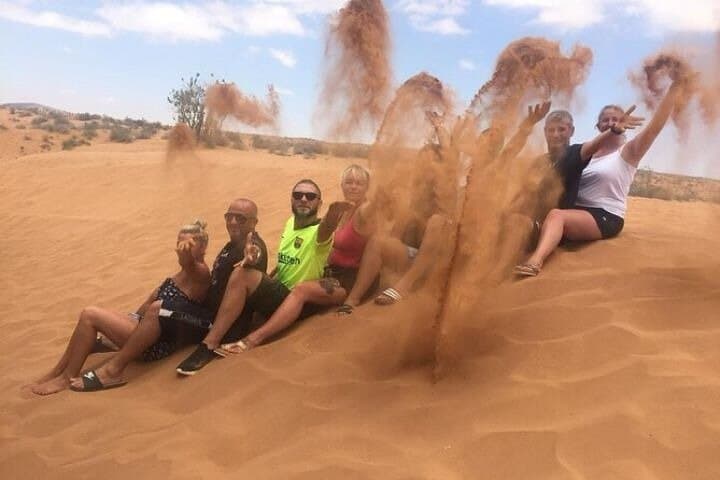
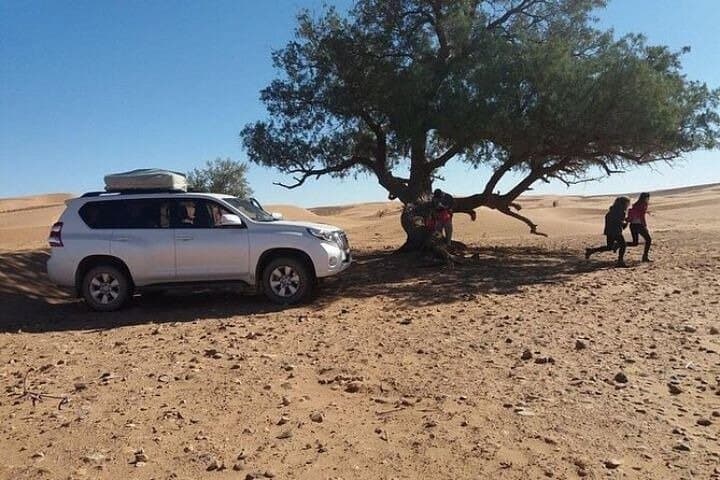

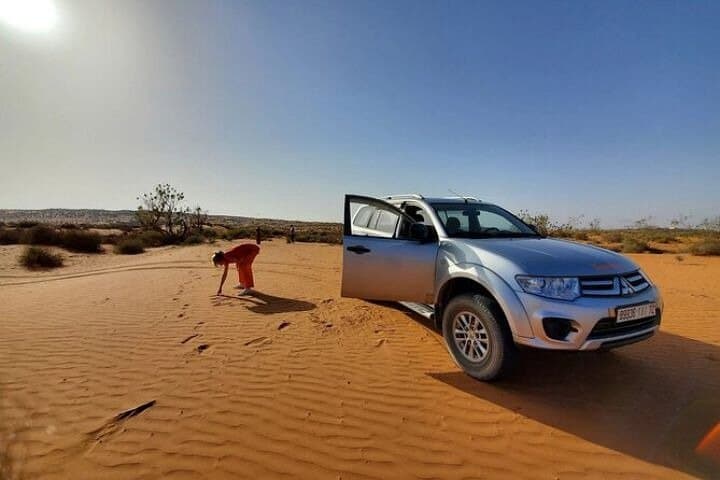
The van slips away from Agadir’s morning light and the coast peels back into scrub and low ridges; salt-scented air gives way to warm, dry wind that teases the dunes ahead. Along the south coast the fishermen’s caves at Sidi Rabat sit like weathered mouths opening to the Atlantic, then the road climbs toward Rsmouka where a family kitchen waits with tajine and couscous.
The van slips away from Agadir’s morning light and the coast peels back into scrub and low ridges; salt-scented air gives way to warm, dry wind that teases the dunes ahead. Along the south coast the fishermen’s caves at Sidi Rabat sit like weathered mouths opening to the Atlantic, then the road climbs toward Rsmouka where a family kitchen waits with tajine and couscous.
This full-day route threads recent human history and older geology: Tiznit’s 19th-century ramparts and silverwork recall regional craft traditions, while the Youssef Ben Tachfine dam illustrates modern irrigation shaping former river plains. The landscape changes quickly — beach pebbles, scrub, low dunes and the foothills of the Anti-Atlas — giving travelers a concentrated sense of southern Morocco’s margins.
Cultural moments are direct: a Berber home offers mint tea and fresh fruit, market lanes in Tiznit showcase hand-forged jewelry, and roadside argan cooperatives demonstrate local economies. Expect plain-spoken guides who point out how the dam channels winter melt and how coastal caves once sheltered fishing families.
Practicalities matter: this is a long day in a small group with hotel pickup, air-conditioned transport and a seated lunch. Bring sun protection, a refillable water bottle and cash for markets. Footwear should handle sand and cobbles; dressing modestly smooths interactions in small towns. Timed for clear skies, the trip balances scenic stops with cultural contact — a compact, approachable way to see Atlantic coast, desert edges and the working infrastructure that keeps the region verdant.