THE ADVENTURE COLLECTIVE® · Independent discovery and booking for outdoor travel

A full-day road trip from Addis Ababa that pairs highland viewpoints at Entoto with the ancient Debre Libanos monastery and dramatic drops into the Blue Nile Gorge. Expect history, endemic birds, and a chance to see gelada baboons.
A full-day road trip from Addis Ababa that pairs highland viewpoints at Entoto with the ancient Debre Libanos monastery and dramatic drops into the Blue Nile Gorge. Expect history, endemic birds, and a chance to see gelada baboons.
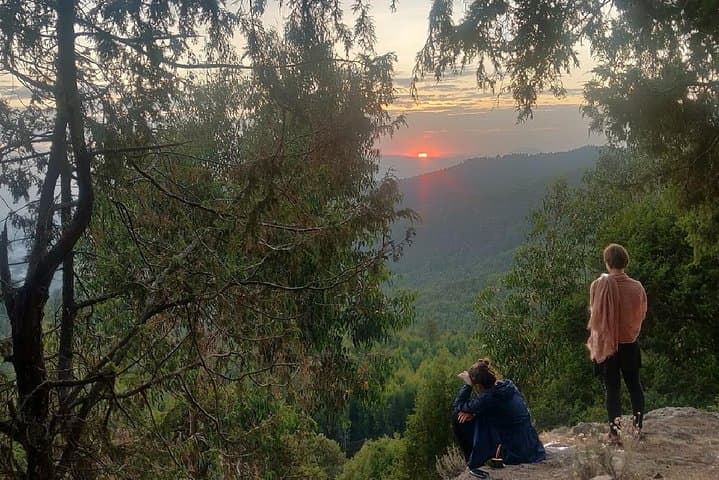
You leave Addis Ababa before the city fully wakes, the car cutting through highland farmland as terraces and grazing cattle slide past the windows. The road climbs to Entoto, where at about 3,300 meters a wind-swept viewpoint opens out over the city—sharp light and a cool edge to the air that makes every rooftop and distant ridge feel close enough to touch.
Verified experiences and guided adventures in the surrounding area.
Operated by myGuzo · Addis Ababa, Addis Ababa
You leave Addis Ababa before the city fully wakes, the car cutting through highland farmland as terraces and grazing cattle slide past the windows. The road climbs to Entoto, where at about 3,300 meters a wind-swept viewpoint opens out over the city—sharp light and a cool edge to the air that makes every rooftop and distant ridge feel close enough to touch.
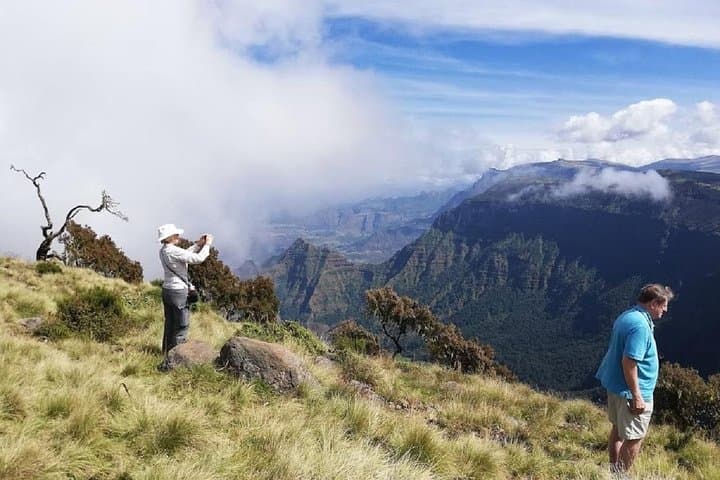
The route threads through history: Debre Libanos, founded in the 13th century by Saint Tekle Haymanot, sits on the rim of a deep river canyon and has been a spiritual center for centuries. The present domed church replaces an earlier structure lost in the 1937 Italian assault. Downriver, the so-called Portuguese Bridge—actually a 19th-century arch built in a Portuguese style—straddles a cascade that swells in the rains, while the Jemma and Blue Nile gorges reveal the raw geology of the Rift's western edge with drops of roughly 1,000 meters to their floors.
Expect open-plateau viewing, endemic birds wheeling on thermals, and the chance to spot gelada baboons grazing on cliff-side grasslands. Cultural encounters are quiet and reverent: modest dress at churches, and local guides who explain religious practice and rural life.
Practical notes: this is a long day (about 7–8 hours), mostly vehicle-based with short walks at viewpoints. Roads can be bumpy; dress in layers for altitude change, bring sun protection and water, and plan for early pickup. Cameras and binoculars reward patience; wildlife sightings are weather- and season-dependent, so check conditions before you go.
moderate.
7–8 hours.
Suitable for travelers in average fitness; short, easy walks at viewpoints but long time in vehicles
The tour runs about 7–8 hours (420–480 minutes) including drives and short stops at viewpoints and sites.
No—gelada sightings are common but not guaranteed; they range freely and visibility depends on season and local movements.
Minimum age is 7 years; the operator does not recommend the tour for pregnant travelers due to long driving and variable road conditions.
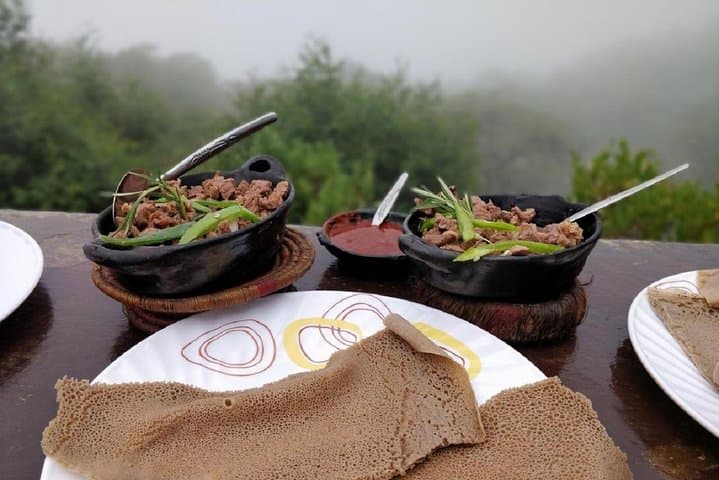
Yes—museum and church entrance fees plus lunch with a bottle of water and hot drinks are included in the tour price.
Debre Libanos dates to the 13th century and became a major Ethiopian Orthodox center; the original church was largely destroyed during the 1937 Italian occupation.
Stick to marked viewing areas to protect fragile cliff-edge grasslands and avoid feeding wildlife; support local guides who help minimize visitor impact.
myGuzo operates guided outdoor trips and adventures with an emphasis on safety, stewardship, and memorable experiences.

You leave Addis Ababa before the city fully wakes, the car cutting through highland farmland as terraces and grazing cattle slide past the windows. The road climbs to Entoto, where at about 3,300 meters a wind-swept viewpoint opens out over the city—sharp light and a cool edge to the air that makes every rooftop and distant ridge feel close enough to touch.
You leave Addis Ababa before the city fully wakes, the car cutting through highland farmland as terraces and grazing cattle slide past the windows. The road climbs to Entoto, where at about 3,300 meters a wind-swept viewpoint opens out over the city—sharp light and a cool edge to the air that makes every rooftop and distant ridge feel close enough to touch.
The route threads through history: Debre Libanos, founded in the 13th century by Saint Tekle Haymanot, sits on the rim of a deep river canyon and has been a spiritual center for centuries. The present domed church replaces an earlier structure lost in the 1937 Italian assault. Downriver, the so-called Portuguese Bridge—actually a 19th-century arch built in a Portuguese style—straddles a cascade that swells in the rains, while the Jemma and Blue Nile gorges reveal the raw geology of the Rift's western edge with drops of roughly 1,000 meters to their floors.
Expect open-plateau viewing, endemic birds wheeling on thermals, and the chance to spot gelada baboons grazing on cliff-side grasslands. Cultural encounters are quiet and reverent: modest dress at churches, and local guides who explain religious practice and rural life.
Practical notes: this is a long day (about 7–8 hours), mostly vehicle-based with short walks at viewpoints. Roads can be bumpy; dress in layers for altitude change, bring sun protection and water, and plan for early pickup. Cameras and binoculars reward patience; wildlife sightings are weather- and season-dependent, so check conditions before you go.