THE ADVENTURE COLLECTIVE® · Independent discovery and booking for outdoor travel

A full-day drive from Accra delivers treetop views in Kakum National Park and solemn tours through Elmina and Cape Coast Castles. Expect long road time, short rainforest hikes, and deeply informative history at the forts.
A full-day drive from Accra delivers treetop views in Kakum National Park and solemn tours through Elmina and Cape Coast Castles. Expect long road time, short rainforest hikes, and deeply informative history at the forts.
The morning opens on the highway out of Accra: palms slide past the window, fishermen wave from coastal villages and the Atlantic hums at the edge of the road. By midmorning you stand on a suspended bridge in Kakum National Park, the canopy swaying and the forest daring you to look over the edge. Later, stone walls and narrow dungeons at Elmina and Cape Coast Castle bring a quieter, heavier hush — history that insists you listen.
Verified experiences and guided adventures in the surrounding area.
Operated by Tichama Tours · Cape Coast, Central Region
The morning opens on the highway out of Accra: palms slide past the window, fishermen wave from coastal villages and the Atlantic hums at the edge of the road. By midmorning you stand on a suspended bridge in Kakum National Park, the canopy swaying and the forest daring you to look over the edge. Later, stone walls and narrow dungeons at Elmina and Cape Coast Castle bring a quieter, heavier hush — history that insists you listen.
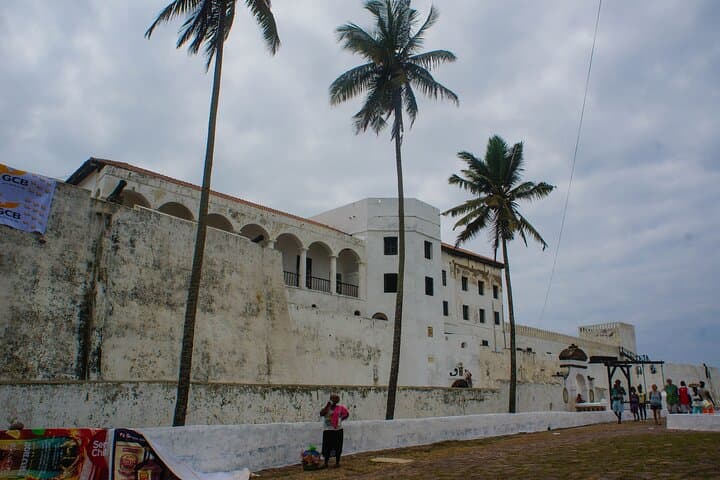
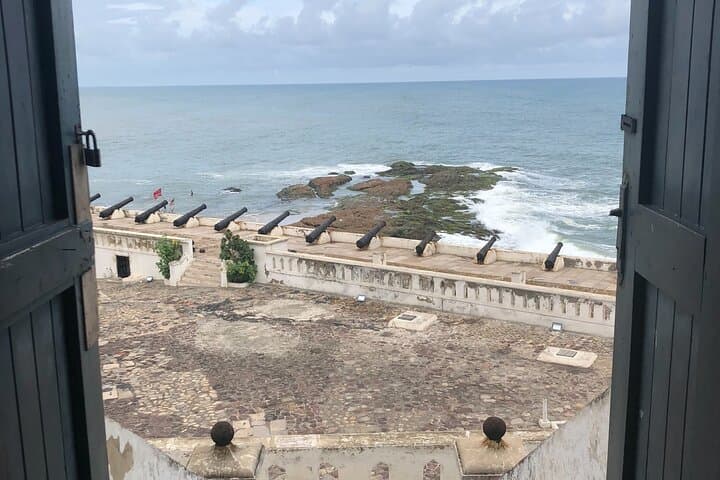
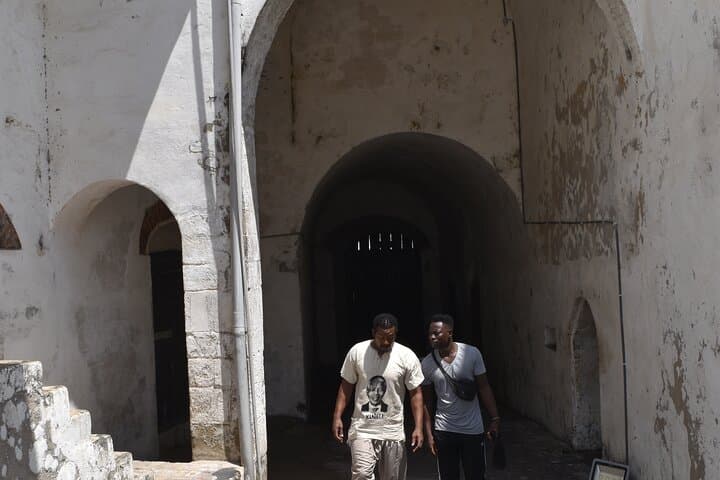
Geology here is coastal plain and remnant rainforest, carved by rivers that press toward the Gulf of Guinea. Kakum’s canopy, roughly 30 meters above the forest floor, gives a treetop vantage on tall mahogany and hardwoods where Diana monkeys move like punctuation through the leaves. Elmina (one of the oldest European-built forts on West Africa’s coast) and Cape Coast Castle (originally constructed by northern European traders in the 17th century) anchor the region’s difficult colonial history and the trans-Atlantic slave trade; museum exhibits and guided tours explain routes, artifacts, and local memory.
Practical guidance: this is a long day—expect 3–4 hours of driving each way depending on traffic, a few kilometers of walking across uneven castle floors and forest trails, and periods of sun and sudden shade in the park. Bring a refillable water bottle, sun protection, insect repellent, and sturdy shoes. Start early, pace your photos at the canopy and use quieter moments in the castles to absorb context rather than rush. Respect sites and local guides: many of these places are active places of remembrance and community life.
moderate.
10–12 hours.
Suitable for travelers who can handle long vehicle transfers and a few hours of walking on uneven surfaces; stairs and short climbs expected.
Expect about 3–4 hours each way depending on traffic; total round-trip driving time can be 6–8 hours.
Children can join but must follow guide rules; the walkway is suspended but guarded by secure netting and supervision is required.
This tour includes entrance fees to Kakum and the castles, as stated in the itinerary inclusions.
Most operators will provide space in the vehicle and stops for restroom breaks; confirm pickup details and any special requests before booking.
Elmina and Cape Coast were central hubs in West Africa’s European trading networks and later played major roles in the trans-Atlantic slave trade; the castles now function as museums and memorials.
Kakum National Park protects a patch of Ghana’s coastal rainforest; visitors are encouraged to stay on trails, support local guides, and minimize plastic waste.
Tichama Tours operates guided outdoor trips and adventures with an emphasis on safety, stewardship, and memorable experiences.
The morning opens on the highway out of Accra: palms slide past the window, fishermen wave from coastal villages and the Atlantic hums at the edge of the road. By midmorning you stand on a suspended bridge in Kakum National Park, the canopy swaying and the forest daring you to look over the edge. Later, stone walls and narrow dungeons at Elmina and Cape Coast Castle bring a quieter, heavier hush — history that insists you listen.
The morning opens on the highway out of Accra: palms slide past the window, fishermen wave from coastal villages and the Atlantic hums at the edge of the road. By midmorning you stand on a suspended bridge in Kakum National Park, the canopy swaying and the forest daring you to look over the edge. Later, stone walls and narrow dungeons at Elmina and Cape Coast Castle bring a quieter, heavier hush — history that insists you listen.
Geology here is coastal plain and remnant rainforest, carved by rivers that press toward the Gulf of Guinea. Kakum’s canopy, roughly 30 meters above the forest floor, gives a treetop vantage on tall mahogany and hardwoods where Diana monkeys move like punctuation through the leaves. Elmina (one of the oldest European-built forts on West Africa’s coast) and Cape Coast Castle (originally constructed by northern European traders in the 17th century) anchor the region’s difficult colonial history and the trans-Atlantic slave trade; museum exhibits and guided tours explain routes, artifacts, and local memory.
Practical guidance: this is a long day—expect 3–4 hours of driving each way depending on traffic, a few kilometers of walking across uneven castle floors and forest trails, and periods of sun and sudden shade in the park. Bring a refillable water bottle, sun protection, insect repellent, and sturdy shoes. Start early, pace your photos at the canopy and use quieter moments in the castles to absorb context rather than rush. Respect sites and local guides: many of these places are active places of remembrance and community life.