THE ADVENTURE COLLECTIVE® · Independent discovery and booking for outdoor travel

Explore Morocco’s Roman ruins at Volubilis, the holy town of Moulay Idriss and the imperial streets of Meknes on a full-day private tour from Fez. Expect archaeology, village viewpoints and grand gates—with practical tips for timing, tickets and what to bring.
Explore Morocco’s Roman ruins at Volubilis, the holy town of Moulay Idriss and the imperial streets of Meknes on a full-day private tour from Fez. Expect archaeology, village viewpoints and grand gates—with practical tips for timing, tickets and what to bring.
You leave Fez at first light and the road opens into the broad plains north of the Atlas foothills—olive groves and low stone walls slide past as the minivan hums toward Volubilis.
Verified experiences and guided adventures in the surrounding area.
Operated by Ahmed Meski · Fez, Fès-Meknès
You leave Fez at first light and the road opens into the broad plains north of the Atlas foothills—olive groves and low stone walls slide past as the minivan hums toward Volubilis.
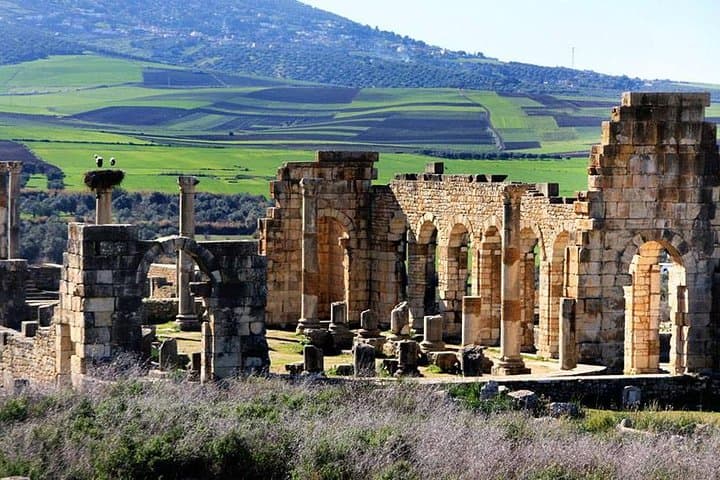
At Volubilis the earth speaks in tile and carved stone: marble thresholds, geometric mosaics and fluted columns that mark the edge of the Roman frontier in Mauretania Tingitana. The site’s raised terraces give clear views of the surrounding agricultural plains and the hill crowned by Moulay Idriss, where a compact town clings to its sacred history.
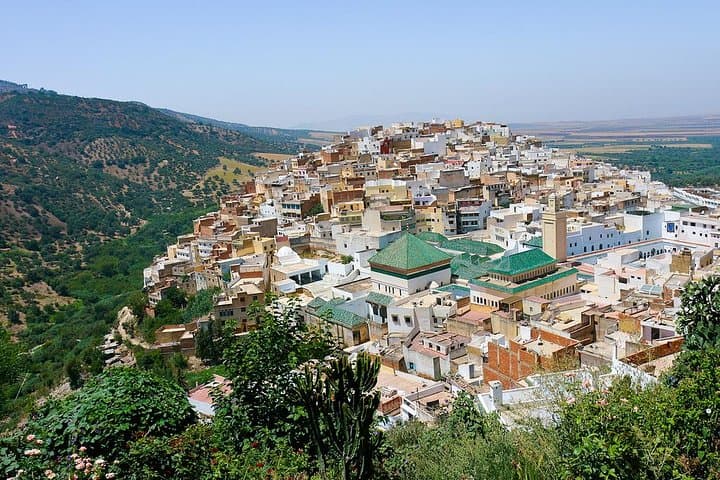
Moulay Idriss Zerhoun is both pilgrimage place and lookout; whitewashed alleys funnel toward a domed mausoleum and the town’s defensive walls, while below, the Rif foothills fold into the horizon. Meknes closes the day with wide gates and grand avenues—Moulay Ismail’s architectural ambition still visible in stables, granaries and the Bab Mansour gate.
Expect a day paced around short walks, photo stops and an easy rhythm of vehicle transfers. The geology is soft limestone and terraced loam—good traction matters on mosaics and ruin slopes. Cultural notes: Volubilis is Roman; Moulay Idriss is one of Morocco’s earliest Islamic settlements; Meknes is an 18th-century imperial capital. Practicalities: tour runs roughly 8–9 hours with hotel pickup in Fez, carry sun protection, water and a scarf for mosque areas. Bring local currency for entrance fees and vendors, and keep to marked paths at archaeological sites to protect fragile mosaics.
easy.
8–9 hours.
Suitable for most fitness levels; involves short to moderate walks on uneven ground.
The itinerary runs about 8–9 hours, typically departing Fez in the morning and returning late afternoon.
Volubilis often requires an entry ticket and may not be included—confirm at booking; some city site entries can be included depending on operator.
The tour is rated easy but involves uneven surfaces and steps at ruins; young children and limited-mobility travelers should check specific site access in advance.
A valid passport is required for booking and must be carried for identification on the day of travel.
Volubilis was a Roman administrative center; Moulay Idriss became a religious seat in the 8th–9th centuries and Meknes grew under Sultan Moulay Ismail in the 17th–18th centuries.
The archaeological mosaics and exposed stonework are fragile—stay on designated paths and support local guides who follow preservation practices.
Ahmed Meski operates guided outdoor trips and adventures with an emphasis on safety, stewardship, and memorable experiences.


You leave Fez at first light and the road opens into the broad plains north of the Atlas foothills—olive groves and low stone walls slide past as the minivan hums toward Volubilis.
You leave Fez at first light and the road opens into the broad plains north of the Atlas foothills—olive groves and low stone walls slide past as the minivan hums toward Volubilis.
At Volubilis the earth speaks in tile and carved stone: marble thresholds, geometric mosaics and fluted columns that mark the edge of the Roman frontier in Mauretania Tingitana. The site’s raised terraces give clear views of the surrounding agricultural plains and the hill crowned by Moulay Idriss, where a compact town clings to its sacred history.
Moulay Idriss Zerhoun is both pilgrimage place and lookout; whitewashed alleys funnel toward a domed mausoleum and the town’s defensive walls, while below, the Rif foothills fold into the horizon. Meknes closes the day with wide gates and grand avenues—Moulay Ismail’s architectural ambition still visible in stables, granaries and the Bab Mansour gate.
Expect a day paced around short walks, photo stops and an easy rhythm of vehicle transfers. The geology is soft limestone and terraced loam—good traction matters on mosaics and ruin slopes. Cultural notes: Volubilis is Roman; Moulay Idriss is one of Morocco’s earliest Islamic settlements; Meknes is an 18th-century imperial capital. Practicalities: tour runs roughly 8–9 hours with hotel pickup in Fez, carry sun protection, water and a scarf for mosque areas. Bring local currency for entrance fees and vendors, and keep to marked paths at archaeological sites to protect fragile mosaics.