THE ADVENTURE COLLECTIVE® · Independent discovery and booking for outdoor travel

Spend a long day exploring Maya pyramids, colonial plazas and a swimming cenote on this 12‑hour loop from Mérida. Visit Izamal’s convent, tour Chichén Itzá with a guide, cool off in Cenote Xcajum, and stroll Valladolid’s central square.
Spend a long day exploring Maya pyramids, colonial plazas and a swimming cenote on this 12‑hour loop from Mérida. Visit Izamal’s convent, tour Chichén Itzá with a guide, cool off in Cenote Xcajum, and stroll Valladolid’s central square.
The morning light in Yucatán slices across low limestone walls as the bus pulls out of Mérida — heat already promising, birds calling from scrub. You arrive first in Izamal, the Yellow City, where sun‑washed facades and the Convento de San Antonio de Padua frame a plaza that rises from a pre‑Columbian platform. Climbing Kinich Kakmó feels like stepping back through layers of Maya urban life and Spanish colonial repurposing.
Verified experiences and guided adventures in the surrounding area.
Operated by Mystic Travel Mérida · Mérida, Yucatán
The morning light in Yucatán slices across low limestone walls as the bus pulls out of Mérida — heat already promising, birds calling from scrub. You arrive first in Izamal, the Yellow City, where sun‑washed facades and the Convento de San Antonio de Padua frame a plaza that rises from a pre‑Columbian platform. Climbing Kinich Kakmó feels like stepping back through layers of Maya urban life and Spanish colonial repurposing.
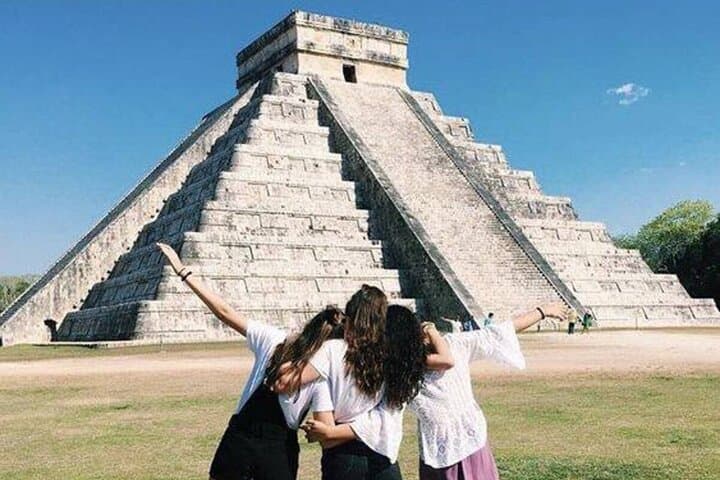
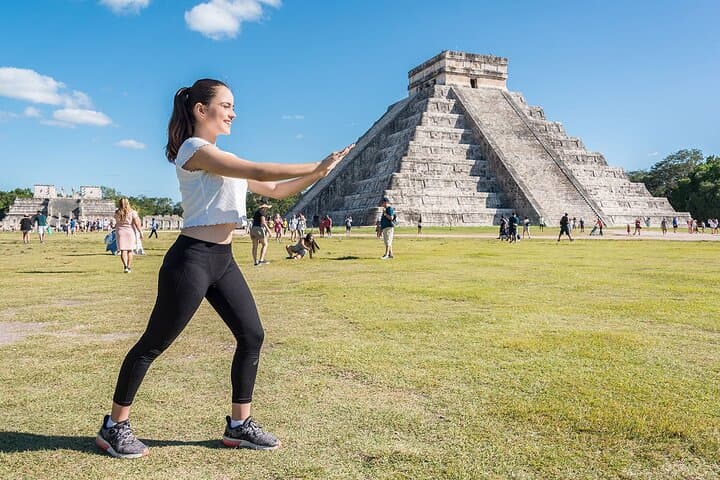
From Izamal the road runs over flat, karstic terrain toward Chichén Itzá, where El Castillo, the Great Ball Court and the Sacred Cenote illustrate Maya astronomy, civic ritual and engineering. The region’s porous limestone created the sinkholes—cenotes—that sustained ancient settlements and now offer cool refuge; the tour’s stop at Cenote Xcajum lets you float in turquoise water beneath dangling roots and sheer rock.
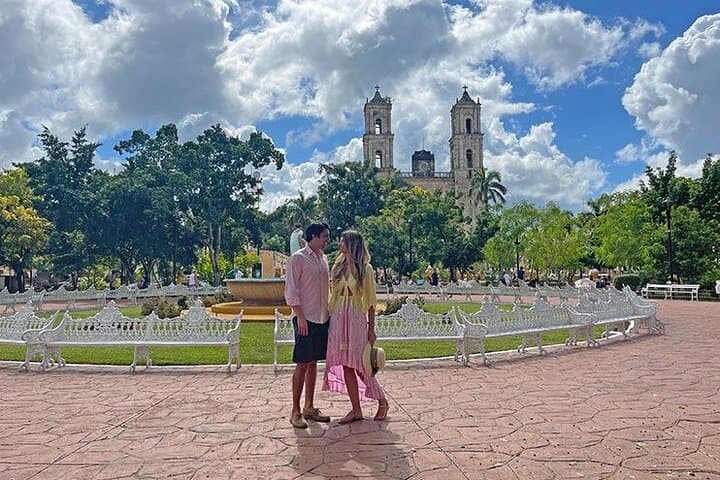
Valladolid closes the loop: a compact colonial grid, San Servacio church and craft stalls that reflect Yucatecan flavors influenced by Maya and Spanish histories. Expect humid heat, bright sun and short stretches of uneven stone and stairs at ruins and convents.
Practical guidance: the full itinerary runs about 12 hours; entrance to Chichén Itzá and the cenote are typically paid on site (fees noted by operator). Wear sturdy walking shoes, sun protection and bring cash for small purchases and tips. Hydrate before and during the day, and plan for early mornings or the dry season to avoid heavy rains and crowds. Respect archaeological sites by staying on marked paths and avoiding sunscreen in cenotes to protect water quality.
easy.
12 hours.
Light walking and standing for several hours; suitable for most travelers who can manage stairs and short hikes
No — entrance to Chichén Itzá (approximately $35 USD) and the cenote (about $10 USD) are typically paid on site and are not included.
The itinerary runs about 12 hours (roughly a full day); return to Mérida is usually in the early evening but can vary with traffic and site crowding.
This operator offers round‑trip transportation from Mérida with air‑conditioning, but they do not collect people from hotels; confirm the exact meeting point when booking.
Not recommended for pregnant travelers or people with serious spinal or heart conditions due to bus travel, stairs and walking at archaeological sites.
This route traces layers of Yucatán history: major Maya ceremonial centers later repurposed by Spanish colonists, exemplified by Izamal’s convent built atop a pyramid and Valladolid’s colonial grid.
Cenotes are delicate freshwater systems—avoid sunscreens and detergents; support local conservation by using designated facilities and following guide instructions.
Mystic Travel Mérida operates guided outdoor trips and adventures with an emphasis on safety, stewardship, and memorable experiences.
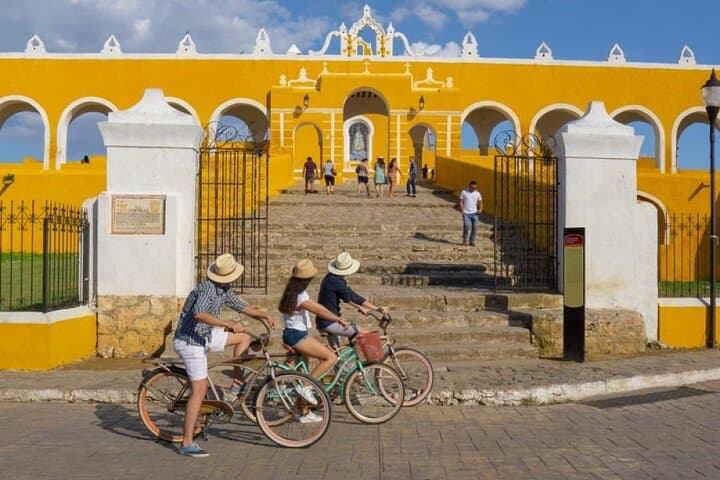
The morning light in Yucatán slices across low limestone walls as the bus pulls out of Mérida — heat already promising, birds calling from scrub. You arrive first in Izamal, the Yellow City, where sun‑washed facades and the Convento de San Antonio de Padua frame a plaza that rises from a pre‑Columbian platform. Climbing Kinich Kakmó feels like stepping back through layers of Maya urban life and Spanish colonial repurposing.
The morning light in Yucatán slices across low limestone walls as the bus pulls out of Mérida — heat already promising, birds calling from scrub. You arrive first in Izamal, the Yellow City, where sun‑washed facades and the Convento de San Antonio de Padua frame a plaza that rises from a pre‑Columbian platform. Climbing Kinich Kakmó feels like stepping back through layers of Maya urban life and Spanish colonial repurposing.
From Izamal the road runs over flat, karstic terrain toward Chichén Itzá, where El Castillo, the Great Ball Court and the Sacred Cenote illustrate Maya astronomy, civic ritual and engineering. The region’s porous limestone created the sinkholes—cenotes—that sustained ancient settlements and now offer cool refuge; the tour’s stop at Cenote Xcajum lets you float in turquoise water beneath dangling roots and sheer rock.
Valladolid closes the loop: a compact colonial grid, San Servacio church and craft stalls that reflect Yucatecan flavors influenced by Maya and Spanish histories. Expect humid heat, bright sun and short stretches of uneven stone and stairs at ruins and convents.
Practical guidance: the full itinerary runs about 12 hours; entrance to Chichén Itzá and the cenote are typically paid on site (fees noted by operator). Wear sturdy walking shoes, sun protection and bring cash for small purchases and tips. Hydrate before and during the day, and plan for early mornings or the dry season to avoid heavy rains and crowds. Respect archaeological sites by staying on marked paths and avoiding sunscreen in cenotes to protect water quality.