THE ADVENTURE COLLECTIVE® · Independent discovery and booking for outdoor travel

A full-day road trip from Quito to Baños de Agua Santa that pairs dramatic canyon viewpoints with three signature waterfalls — including Pailón del Diablo — plus the treehouse and swing. Expect steep steps, mist-sprayed viewpoints, and a day framed by volcanic landscapes and local flavors.
A full-day road trip from Quito to Baños de Agua Santa that pairs dramatic canyon viewpoints with three signature waterfalls — including Pailón del Diablo — plus the treehouse and swing. Expect steep steps, mist-sprayed viewpoints, and a day framed by volcanic landscapes and local flavors.
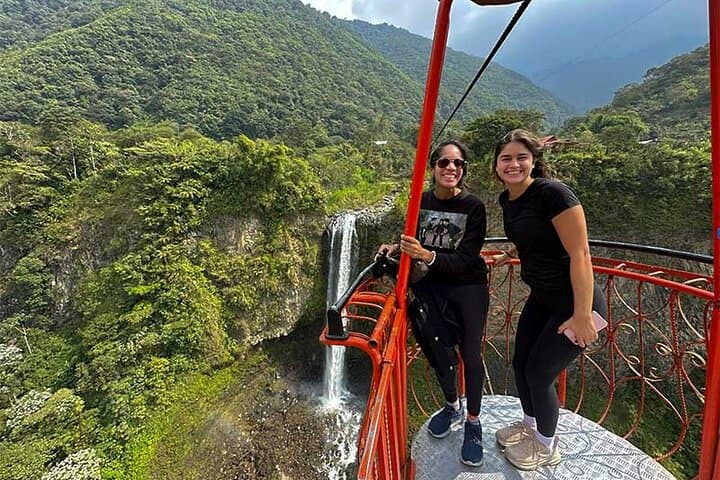
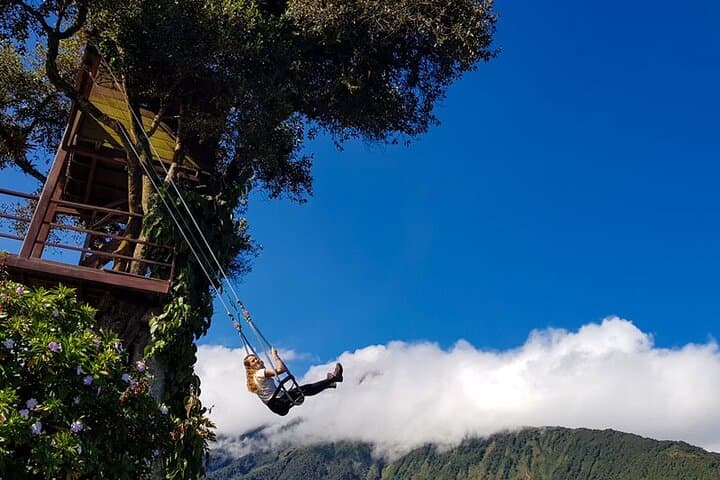
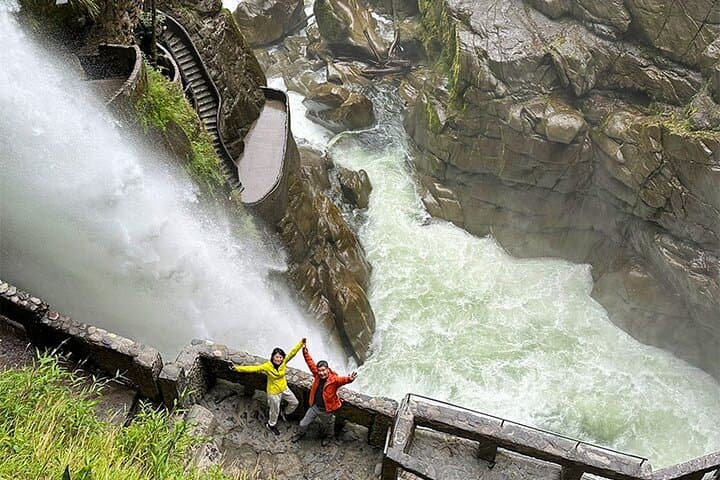
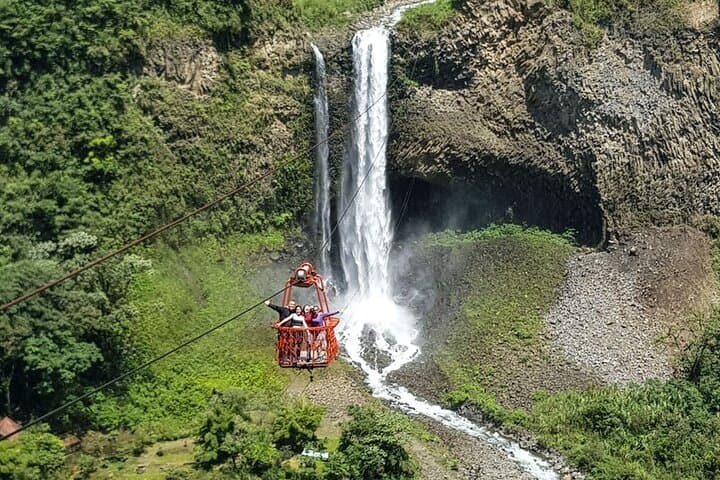
Clouds roll through the rim of Pastaza canyon as the van climbs toward the treehouse viewpoint; the Tungurahua volcano looms beyond, its slopes still shaping the rivers and falls below. At the treehouse and the famous "Swing at the End of the World" you feel the canyon breathe beneath you — wind and river daring you to look down. Later, the trail leads closer to water: cables hum above Manto de la Novia, spray throws rainbows at Pailón del Diablo, and the Pailón's river pushes forward with visible force.
Verified experiences and guided adventures in the surrounding area.
Operated by Quito Trip · Baños de Agua Santa, Tungurahua
Clouds roll through the rim of Pastaza canyon as the van climbs toward the treehouse viewpoint; the Tungurahua volcano looms beyond, its slopes still shaping the rivers and falls below. At the treehouse and the famous "Swing at the End of the World" you feel the canyon breathe beneath you — wind and river daring you to look down. Later, the trail leads closer to water: cables hum above Manto de la Novia, spray throws rainbows at Pailón del Diablo, and the Pailón's river pushes forward with visible force.
Baños grew around thermal springs — its name, “Baths of the Holy Water,” reflects a long tradition of healing and pilgrimage. Geologically, the falls are carved from volcanic andesite and layered ash from Tungurahua; the Pastaza River has cut sheer walls and glassy plunge pools that reveal that restless history. Culturally, the town blends highland market stalls with Amazonian flavors; a midday stop highlights local food and the relaxed, service-oriented pace of a gateway town.
Practical guidance: this is a full-day outing from Quito (roughly 9–10 hours including drive time). Expect short walks, steep staircases at waterfalls, and heavy mist near viewing platforms — waterproof layers and good grip soles matter. The tour includes private transport, bilingual guide, lunch, and entrance tickets (treehouse, cable car, Devil’s Cauldron). Stay behind railings, follow your guide on cable-car crossings, and plan for early pickup from Quito to make the most of daylight and photo windows.
easy.
9–10 hours.
Suitable for travelers in basic to moderate fitness; involves short steep stair sections and brief walks to viewpoints.
Expect approximately 3 hours each way depending on traffic and road conditions; the tour total is about 9–10 hours including stops.
Platforms have railings but can be wet and crowded; supervise children closely and keep them away from edges.
Yes—this tour includes the cable car ticket so you can cross the Pastaza River and view the falls up close.
Baños sits around 1,820 m (6,000 ft). Most visitors from Quito adjust fine, but those sensitive to altitude should move slowly and stay hydrated.
Baños developed around natural hot springs and became a colonial-era spa and pilgrimage site; its location at the edge of the Amazon made it a trade and culture crossroads.
High foot traffic and spray zones accelerate erosion and littering; stick to marked paths, pack out trash, and use refillable bottles to reduce single-use plastic.
Quito Trip operates guided outdoor trips and adventures with an emphasis on safety, stewardship, and memorable experiences.
Clouds roll through the rim of Pastaza canyon as the van climbs toward the treehouse viewpoint; the Tungurahua volcano looms beyond, its slopes still shaping the rivers and falls below. At the treehouse and the famous "Swing at the End of the World" you feel the canyon breathe beneath you — wind and river daring you to look down. Later, the trail leads closer to water: cables hum above Manto de la Novia, spray throws rainbows at Pailón del Diablo, and the Pailón's river pushes forward with visible force.
Clouds roll through the rim of Pastaza canyon as the van climbs toward the treehouse viewpoint; the Tungurahua volcano looms beyond, its slopes still shaping the rivers and falls below. At the treehouse and the famous "Swing at the End of the World" you feel the canyon breathe beneath you — wind and river daring you to look down. Later, the trail leads closer to water: cables hum above Manto de la Novia, spray throws rainbows at Pailón del Diablo, and the Pailón's river pushes forward with visible force.
Baños grew around thermal springs — its name, “Baths of the Holy Water,” reflects a long tradition of healing and pilgrimage. Geologically, the falls are carved from volcanic andesite and layered ash from Tungurahua; the Pastaza River has cut sheer walls and glassy plunge pools that reveal that restless history. Culturally, the town blends highland market stalls with Amazonian flavors; a midday stop highlights local food and the relaxed, service-oriented pace of a gateway town.
Practical guidance: this is a full-day outing from Quito (roughly 9–10 hours including drive time). Expect short walks, steep staircases at waterfalls, and heavy mist near viewing platforms — waterproof layers and good grip soles matter. The tour includes private transport, bilingual guide, lunch, and entrance tickets (treehouse, cable car, Devil’s Cauldron). Stay behind railings, follow your guide on cable-car crossings, and plan for early pickup from Quito to make the most of daylight and photo windows.