THE ADVENTURE COLLECTIVE® · Independent discovery and booking for outdoor travel

Drive south from Aswan for a sunrise encounter with the colossal temples of Abu Simbel. This full‑day private tour delivers close views of Ramses II’s monuments, the relocated temple complex, and a compact, informative cultural visit with roundtrip transfers.
Drive south from Aswan for a sunrise encounter with the colossal temples of Abu Simbel. This full‑day private tour delivers close views of Ramses II’s monuments, the relocated temple complex, and a compact, informative cultural visit with roundtrip transfers.
You arrive before dawn, windshield glass cooling as the desert light hardens into gold. The road from Aswan runs low and flat; a private, air‑conditioned car eats the distance while palms and low scrub blur past. At Abu Simbel the sandstone façade rises like a carved wall of time — four colossal seated figures of Ramses II stare out over the plain, their faces threaded with thousands of years of wind and sun.
Verified experiences and guided adventures in the surrounding area.
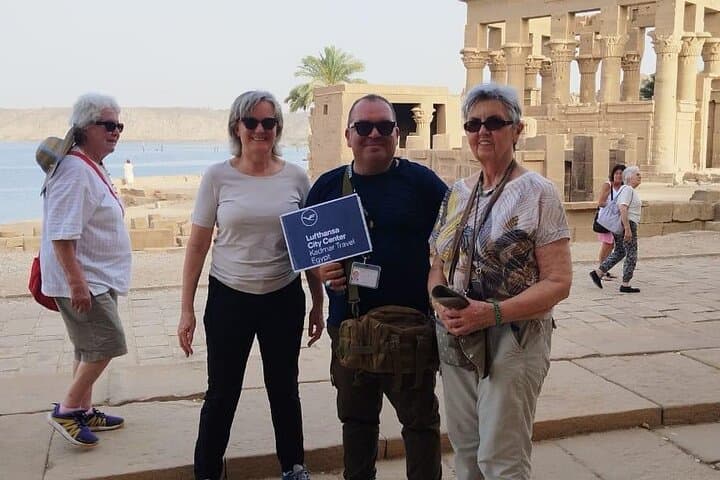
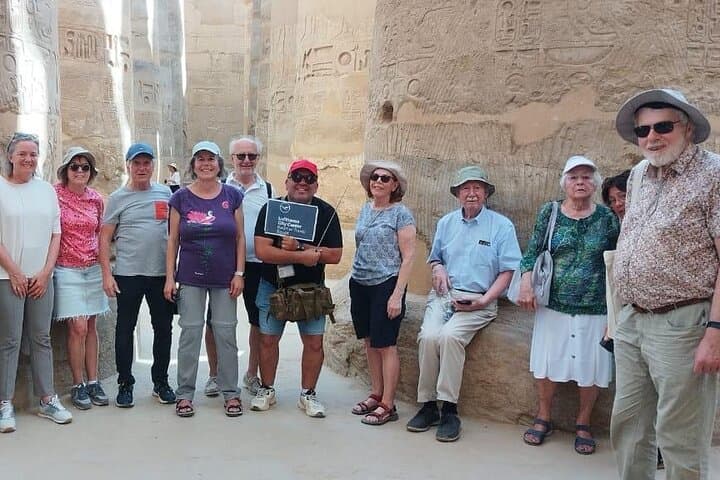
Operated by Kadmar Travel Lufthansa City Center · Abu Simbel, Aswan Governorate
You arrive before dawn, windshield glass cooling as the desert light hardens into gold. The road from Aswan runs low and flat; a private, air‑conditioned car eats the distance while palms and low scrub blur past. At Abu Simbel the sandstone façade rises like a carved wall of time — four colossal seated figures of Ramses II stare out over the plain, their faces threaded with thousands of years of wind and sun.
These twin temples date to the New Kingdom (c. 13th century BCE). Ramses II ordered the Great Temple set into the cliff to proclaim power and to align with the rising sun on specific days. The smaller temple honors Queen Nefertari and the goddess Hathor; both were painstakingly relocated, block by block, in the 1960s when Lake Nasser threatened to drown the site — a landmark UNESCO salvage operation.
Expect dry heat, sharp shadows, and close-up views of hieroglyphs and colossal statuary. The visit moves briskly: audio or a guide explains the solar alignment and the relocation engineering, and you’ll walk paved paths and steps between chambers. Photography is permitted but be respectful of conservation signage.
Practicalities: start early to avoid midday heat, bring sun protection and at least 2 liters of water, and wear sturdy shoes for uneven stone and short climbs. The round‑trip from Aswan is roughly 3 hours each way by road and makes for a long day — plan for a 9‑hour excursion with pickup and drop‑off. Respect restricted areas, follow your guide’s directions, and leave no trace; in this hot, fragile landscape small choices preserve the ruins for the next visitor.
easy.
9–10 hours.
Suitable for travelers with average fitness; expect walking on paved and uneven stone for 30–60 minutes onsite.
About 2.5–3 hours each way by private car, depending on stops and traffic — plan for a 9–10 hour round trip including time at the temples.
On this tour entrance fees are typically included; confirm at booking and keep your ticket for re‑entry if needed.
Photography is allowed in most external and many internal areas, but flash may be restricted; follow signage and guide instructions.
There are steps and uneven surfaces; some viewpoints are reachable with assistance but the interior chambers may be difficult for those with limited mobility.
Built under Ramses II in the 13th century BCE, Abu Simbel’s temples were relocated in the 1960s to save them from Lake Nasser after the Aswan High Dam project.
Tourism and rising water levels demand careful site management — stay on marked paths, avoid touching carvings, and support local guides to minimize impact.
Kadmar Travel Lufthansa City Center operates guided outdoor trips and adventures with an emphasis on safety, stewardship, and memorable experiences.
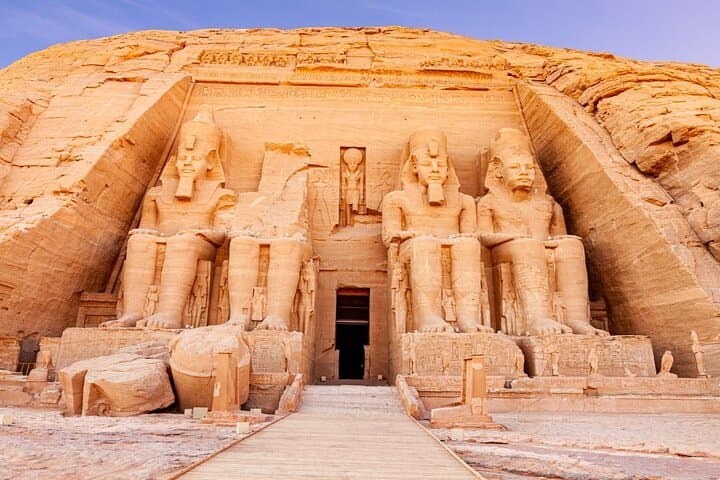
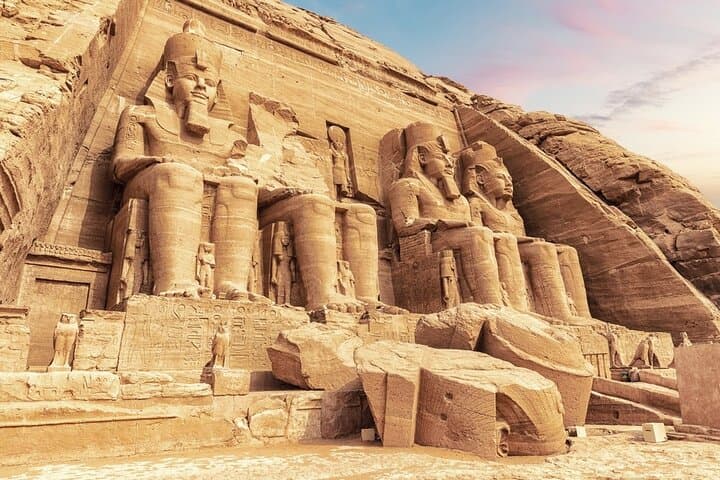
You arrive before dawn, windshield glass cooling as the desert light hardens into gold. The road from Aswan runs low and flat; a private, air‑conditioned car eats the distance while palms and low scrub blur past. At Abu Simbel the sandstone façade rises like a carved wall of time — four colossal seated figures of Ramses II stare out over the plain, their faces threaded with thousands of years of wind and sun.
You arrive before dawn, windshield glass cooling as the desert light hardens into gold. The road from Aswan runs low and flat; a private, air‑conditioned car eats the distance while palms and low scrub blur past. At Abu Simbel the sandstone façade rises like a carved wall of time — four colossal seated figures of Ramses II stare out over the plain, their faces threaded with thousands of years of wind and sun.
These twin temples date to the New Kingdom (c. 13th century BCE). Ramses II ordered the Great Temple set into the cliff to proclaim power and to align with the rising sun on specific days. The smaller temple honors Queen Nefertari and the goddess Hathor; both were painstakingly relocated, block by block, in the 1960s when Lake Nasser threatened to drown the site — a landmark UNESCO salvage operation.
Expect dry heat, sharp shadows, and close-up views of hieroglyphs and colossal statuary. The visit moves briskly: audio or a guide explains the solar alignment and the relocation engineering, and you’ll walk paved paths and steps between chambers. Photography is permitted but be respectful of conservation signage.
Practicalities: start early to avoid midday heat, bring sun protection and at least 2 liters of water, and wear sturdy shoes for uneven stone and short climbs. The round‑trip from Aswan is roughly 3 hours each way by road and makes for a long day — plan for a 9‑hour excursion with pickup and drop‑off. Respect restricted areas, follow your guide’s directions, and leave no trace; in this hot, fragile landscape small choices preserve the ruins for the next visitor.