THE ADVENTURE COLLECTIVE® · Independent discovery and booking for outdoor travel

A compact day that pairs the stony Agafay Desert with the foothills of the Atlas Mountains—expect short walks, a Berber-hosted lunch, a camel ride at sunset, and a stop by Lake Takerkoust. Ideal for travelers who want dramatic landscapes without overnight travel.
A compact day that pairs the stony Agafay Desert with the foothills of the Atlas Mountains—expect short walks, a Berber-hosted lunch, a camel ride at sunset, and a stop by Lake Takerkoust. Ideal for travelers who want dramatic landscapes without overnight travel.
You leave Marrakech and the city’s heat folds behind you as the road climbs toward the Atlas foothills, the skyline sharpening into hard, fluted ridges. By midmorning you’re in the Ait Mizan valley, passing terraced fields and low stone houses where shepherds and donkeys gesture to a long human history on the slopes.
Verified experiences and guided adventures in the surrounding area.
Operated by Atlas Mountains Guided Tour · Marrakech, Marrakech-Safi
You leave Marrakech and the city’s heat folds behind you as the road climbs toward the Atlas foothills, the skyline sharpening into hard, fluted ridges. By midmorning you’re in the Ait Mizan valley, passing terraced fields and low stone houses where shepherds and donkeys gesture to a long human history on the slopes.
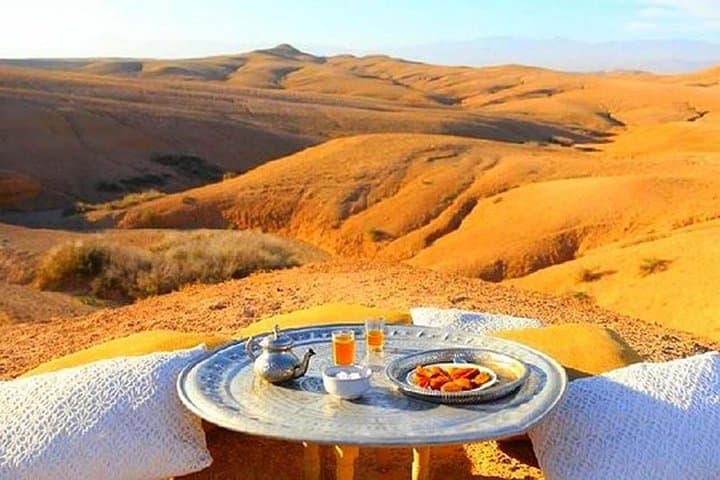
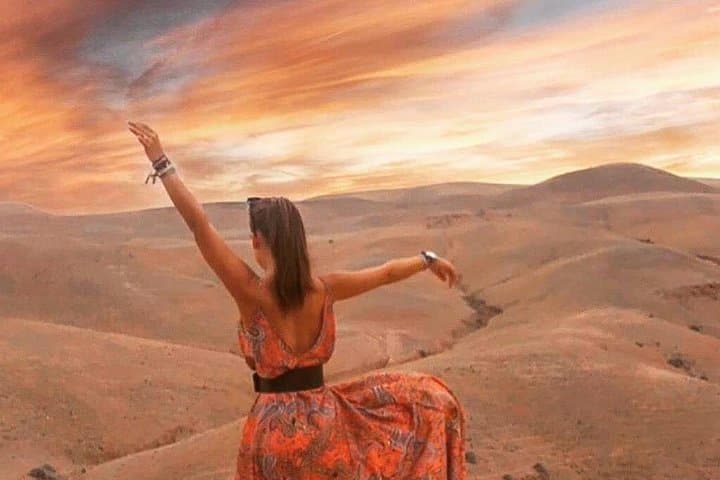
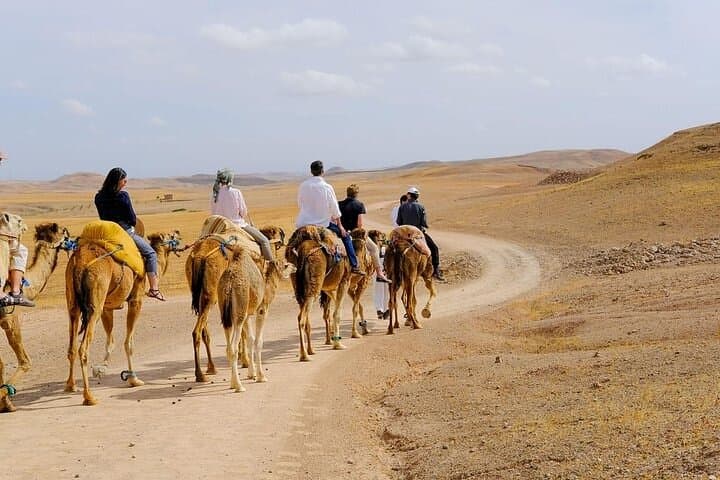
Geology here is immediate: the Atlas is young, folded rock—schist and granite—pushed up by tectonic tension; Agafay, by contrast, is an earthen plateau of compacted stone and gravel rather than soft dunes. That contrast—green valleys, high ridges, then a barren stone sea—frames the day. You’ll walk a short route in Toubkal’s lower reaches, meet a Berber family for a simple lunch, and pause at Lake Takerkoust, a blue interruption popular with Marrakchis. The camel ride in Agafay is brief but cinematic: a slow, swaying ascent across ochre plains while the late light sculpts the horizon.
Practical bits: the loop is about a 7-hour day with multiple short stops for photos and tea; expect one hour of easy off-road walking and short drives on unpaved tracks. Bring sun protection, water, and modest clothing for village visits. Mobility limits and spinal issues are noted—camel saddle rides and occasional bumpy roads can jolt the back.
This trip is part landscape contrast, part cultural snapshot: quick, accessible, and best scheduled for late afternoon light if you want the desert to “feel” cinematic without long heat exposure.
moderate.
7 hours.
Suitable for people with average fitness; includes one hour of easy walking and short periods on unpaved roads—those with serious back or heart issues should avoid camel saddle rides.
Most operators pick up and drop off at hotels in Marrakech; confirm your pickup location when booking.
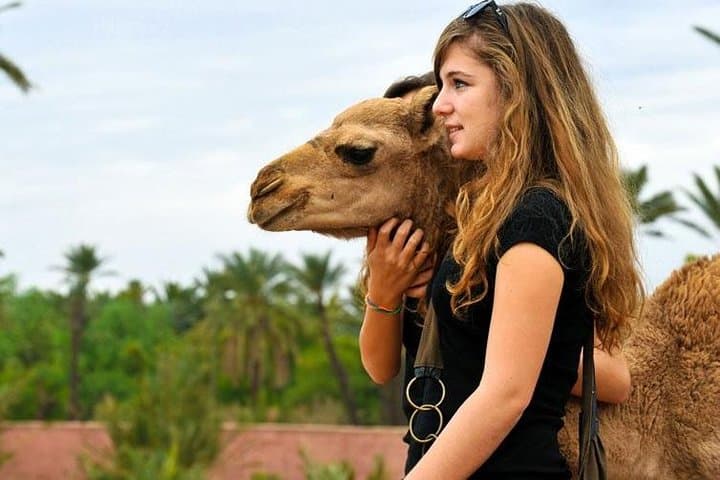
The camel segment is short—typically 20–40 minutes—and guided; it’s a gentle ride but can be jostling for people with back problems.
A traditional Berber lunch is included; notify the operator of dietary restrictions in advance so hosts can prepare alternatives.
Basic facilities are available at Lake Takerkoust and some village stops, but expect minimal facilities in the Agafay area—carry hand sanitizer and tissues.
Local Berber communities have farmed and traded across these foothills for centuries; the route crosses traditional pasture and market routes that link mountain villages to Marrakech.
Water levels at Lake Takerkoust reflect regional management; visitors should follow leave-no-trace principles and avoid single-use plastics to reduce local pressure.
Atlas Mountains Guided Tour operates guided outdoor trips and adventures with an emphasis on safety, stewardship, and memorable experiences.
You leave Marrakech and the city’s heat folds behind you as the road climbs toward the Atlas foothills, the skyline sharpening into hard, fluted ridges. By midmorning you’re in the Ait Mizan valley, passing terraced fields and low stone houses where shepherds and donkeys gesture to a long human history on the slopes.
You leave Marrakech and the city’s heat folds behind you as the road climbs toward the Atlas foothills, the skyline sharpening into hard, fluted ridges. By midmorning you’re in the Ait Mizan valley, passing terraced fields and low stone houses where shepherds and donkeys gesture to a long human history on the slopes.
Geology here is immediate: the Atlas is young, folded rock—schist and granite—pushed up by tectonic tension; Agafay, by contrast, is an earthen plateau of compacted stone and gravel rather than soft dunes. That contrast—green valleys, high ridges, then a barren stone sea—frames the day. You’ll walk a short route in Toubkal’s lower reaches, meet a Berber family for a simple lunch, and pause at Lake Takerkoust, a blue interruption popular with Marrakchis. The camel ride in Agafay is brief but cinematic: a slow, swaying ascent across ochre plains while the late light sculpts the horizon.
Practical bits: the loop is about a 7-hour day with multiple short stops for photos and tea; expect one hour of easy off-road walking and short drives on unpaved tracks. Bring sun protection, water, and modest clothing for village visits. Mobility limits and spinal issues are noted—camel saddle rides and occasional bumpy roads can jolt the back.
This trip is part landscape contrast, part cultural snapshot: quick, accessible, and best scheduled for late afternoon light if you want the desert to “feel” cinematic without long heat exposure.