THE ADVENTURE COLLECTIVE® · Independent discovery and booking for outdoor travel

A full-day circuit from Tbilisi that pairs the cliff-cut monastery of Vardzia with the eclectic Rabati Castle and the pine valleys and mineral springs of Borjomi. Ideal for history-minded hikers and culture seekers, this tour blends short walks with local flavors and panoramic views.
A full-day circuit from Tbilisi that pairs the cliff-cut monastery of Vardzia with the eclectic Rabati Castle and the pine valleys and mineral springs of Borjomi. Ideal for history-minded hikers and culture seekers, this tour blends short walks with local flavors and panoramic views.
You step off the air-conditioned minibus as a cliff-face of carved stone rises before you — a honeycombed façade of windows and tiny chapels that once hid monks and pilgrims. The wind through the valley carries a mineral tang from springs downstream while the guide points out faded frescoes inside a cool rock church: this is Vardzia, the day's dramatic opener.
Verified experiences and guided adventures in the surrounding area.
Operated by Zakaria Nadirashvili · Tbilisi, Tbilisi
You step off the air-conditioned minibus as a cliff-face of carved stone rises before you — a honeycombed façade of windows and tiny chapels that once hid monks and pilgrims. The wind through the valley carries a mineral tang from springs downstream while the guide points out faded frescoes inside a cool rock church: this is Vardzia, the day's dramatic opener.
Vardzia is a 12th-century cave monastery hewn into volcanic tuff, its corridors cut into a seismic landscape shaped by ancient eruptions and river erosion. Nearby Rabati Castle in Akhaltsikhe reframes the region's layered past — Ottoman baths, Christian churches and modern museum displays speak to crossroads of empires. Borjomi offers a gentler coda: pine-scented trails, spa-era architecture and the fizzy green bottles of mineral water that made the town famous across the Russian empire.
Expect a mix of short hikes, stone steps and urban strolling: Vardzia's narrow galleries involve uneven stairways and ledges, Rabati rewards light wandering and viewpoints, Borjomi is for relaxed walking through greenspace and tasting springs. Guides typically offer local stories, basic history and the chance to sample regional cuisine at a village lunch.
Practical edge: start early to beat heat and long coach transfers, bring sufficient water and non-slip footwear for wet or slick stone, and carry small local currency for entrance fees and snacks. Photography is excellent at golden hour; mobility-impaired travelers should note Vardzia's steep sections. This full-day itinerary pairs dramatic geology with living cultural layers, compacted into a single, rewarding Georgian circuit.
moderate.
9–13 hours.
Basic to good aerobic fitness for multiple short hikes and long vehicle transfers; able to manage stairs and uneven ground.
Most tour prices do not include individual site entrance fees; pay on-site in local currency unless the operator specifies otherwise.
Tours commonly depart from central Tbilisi; confirm exact pickup location and return time with the operator.
Yes — the tour is family-friendly, but Vardzia involves steep stairs and uneven surfaces that can be challenging for very young children or those with limited mobility.
Yes, the public taps in Borjomi offer naturally carbonated mineral water; it's potable and commonly sampled by visitors.
The Vardzia complex was begun under Queen Tamar in the 12th century as both monastery and refuge; Rabati reflects centuries of Ottoman and Russian influence in southern Georgia.
Borjomi-Kharagauli National Park protects large tracts of Caucasus forest; visitors are asked to stay on marked trails and avoid littering to preserve springs and habitat.
Zakaria Nadirashvili operates guided outdoor trips and adventures with an emphasis on safety, stewardship, and memorable experiences.
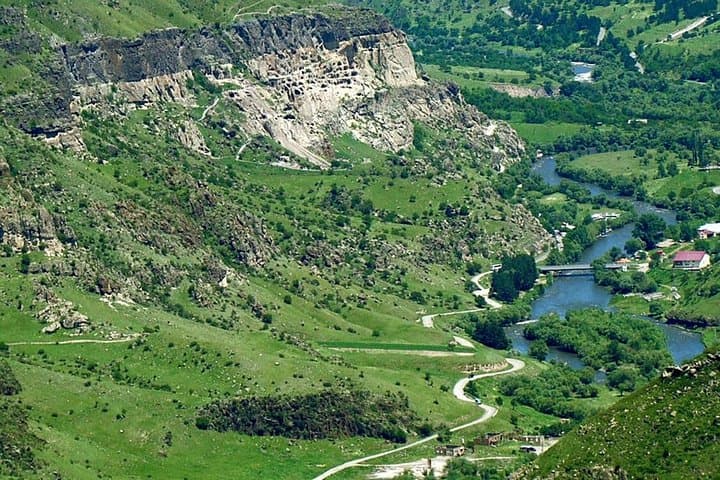
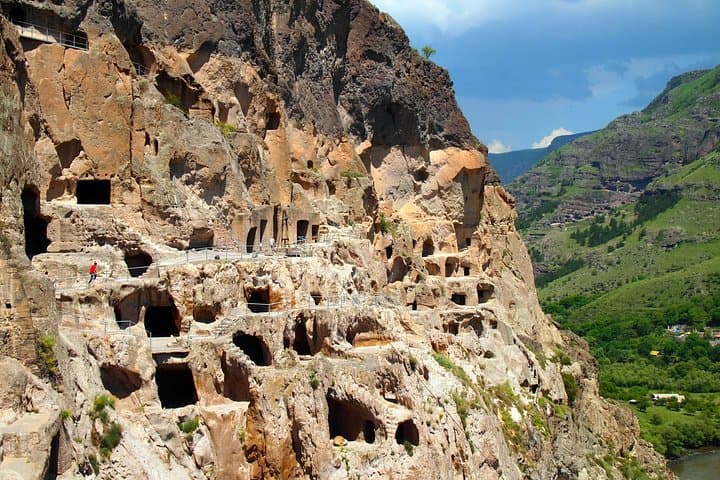
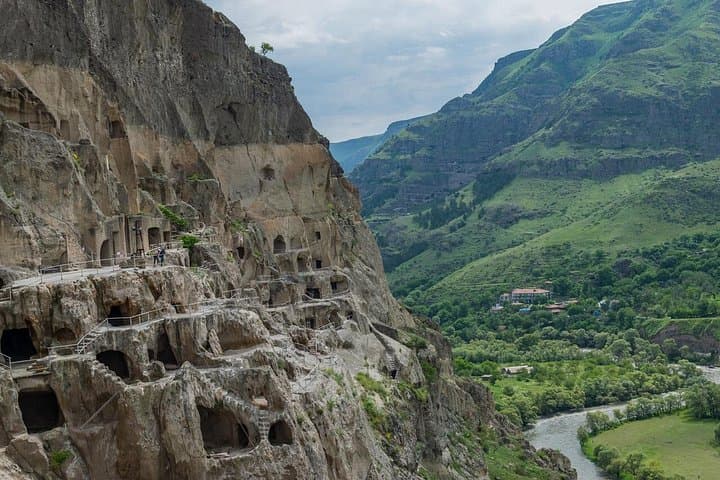
You step off the air-conditioned minibus as a cliff-face of carved stone rises before you — a honeycombed façade of windows and tiny chapels that once hid monks and pilgrims. The wind through the valley carries a mineral tang from springs downstream while the guide points out faded frescoes inside a cool rock church: this is Vardzia, the day's dramatic opener.
You step off the air-conditioned minibus as a cliff-face of carved stone rises before you — a honeycombed façade of windows and tiny chapels that once hid monks and pilgrims. The wind through the valley carries a mineral tang from springs downstream while the guide points out faded frescoes inside a cool rock church: this is Vardzia, the day's dramatic opener.
Vardzia is a 12th-century cave monastery hewn into volcanic tuff, its corridors cut into a seismic landscape shaped by ancient eruptions and river erosion. Nearby Rabati Castle in Akhaltsikhe reframes the region's layered past — Ottoman baths, Christian churches and modern museum displays speak to crossroads of empires. Borjomi offers a gentler coda: pine-scented trails, spa-era architecture and the fizzy green bottles of mineral water that made the town famous across the Russian empire.
Expect a mix of short hikes, stone steps and urban strolling: Vardzia's narrow galleries involve uneven stairways and ledges, Rabati rewards light wandering and viewpoints, Borjomi is for relaxed walking through greenspace and tasting springs. Guides typically offer local stories, basic history and the chance to sample regional cuisine at a village lunch.
Practical edge: start early to beat heat and long coach transfers, bring sufficient water and non-slip footwear for wet or slick stone, and carry small local currency for entrance fees and snacks. Photography is excellent at golden hour; mobility-impaired travelers should note Vardzia's steep sections. This full-day itinerary pairs dramatic geology with living cultural layers, compacted into a single, rewarding Georgian circuit.