THE ADVENTURE COLLECTIVE® · Independent discovery and booking for outdoor travel

Escape Marrakech for a day in the High Atlas: hike from Imlil to a Kasbah restaurant with sweeping views of Mount Toubkal. Expect mixed dirt trails, mule traffic, and a rewarding mountain lunch.
Escape Marrakech for a day in the High Atlas: hike from Imlil to a Kasbah restaurant with sweeping views of Mount Toubkal. Expect mixed dirt trails, mule traffic, and a rewarding mountain lunch.
A dust-swept morning drive from Marrakech pulls you into the foothills and the air thins with pine scent as the road climbs toward Imlil. By mid-morning the valley opens: terraced fields, stone villages, and a distant crown of snow on Mount Toubkal that seems to hold the sky. The trailhead begins with mule tracks and switchbacks that lead to a Kasbah-style restaurant perched to face the massif — lunch here is a pause as much as a reward.
Verified experiences and guided adventures in the surrounding area.
Operated by Ando Travel SARL · Imlil, Marrakesh-Safi
A dust-swept morning drive from Marrakech pulls you into the foothills and the air thins with pine scent as the road climbs toward Imlil. By mid-morning the valley opens: terraced fields, stone villages, and a distant crown of snow on Mount Toubkal that seems to hold the sky. The trailhead begins with mule tracks and switchbacks that lead to a Kasbah-style restaurant perched to face the massif — lunch here is a pause as much as a reward.
The High Atlas is geologically young, uplifted by the collision of the African and Eurasian plates; its ridgelines are a study in folded limestone and volcanic intrusions. Cultural layers are equally obvious — Amazigh (Berber) villages, ancient irrigation channels (seguias), and homes built from local stone. Mules remain the practical transport, carrying supplies and the occasional visitor where roads end.
On this full-day outing expect 5–6 hours total: transfer time from Marrakech, a 1–3 hour guided walk from Imlil to the Kasbah and viewpoints, and a relaxed mountain lunch. Terrain is mixed: packed dirt, rocky steps and short steep pitches; elevation change on the walking portion commonly ranges from 200–600 m depending on chosen route. Trails can be sun-exposed or shaded under juniper and oak; winds can gust suddenly and the afternoon light changes visibility quickly.
Practical tips: bring layered clothing, sturdy shoes with good traction, at least 2 liters of water, and sun protection. If you want more challenge, guides can extend the route toward higher cols; for most visitors the walk to the Kasbah offers panoramic Toubkal views without technical climbing.
moderate.
5–6 hours.
Suitable for travelers with basic cardiovascular fitness who can handle steady uphill walks and uneven terrain for up to a few hours.
Typical walking time is 1–3 hours depending on pace and route; the tour includes transfers, so the full day lasts about 5–6 hours.
Yes—routes on this day trip are non-technical and can accommodate a range of ages, though uneven terrain and short steep sections may be challenging for some.
No—Toubkal summit is a multi-day mountaineering effort. This trip focuses on valley hikes and viewpoints rather than reaching the summit.
Local guides often speak French, Arabic, or English; dress modestly in villages, ask before photographing people, and accept tea or hospitality politely.
The High Atlas has long been inhabited by Amazigh communities who built stone villages and maintained irrigation systems; mule caravans were historically essential for trade across the mountains.
Toubkal National Park balances tourism with local livelihoods—stay on trails, avoid feeding wildlife, and support local guides and eco-conscious businesses.
Ando Travel SARL operates guided outdoor trips and adventures with an emphasis on safety, stewardship, and memorable experiences.
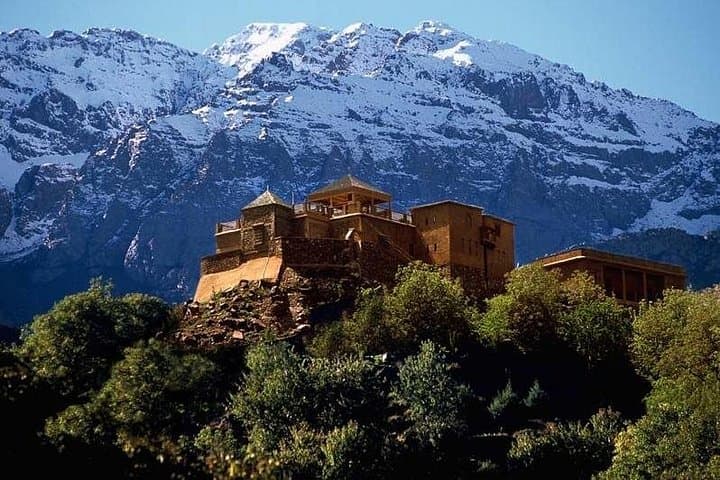
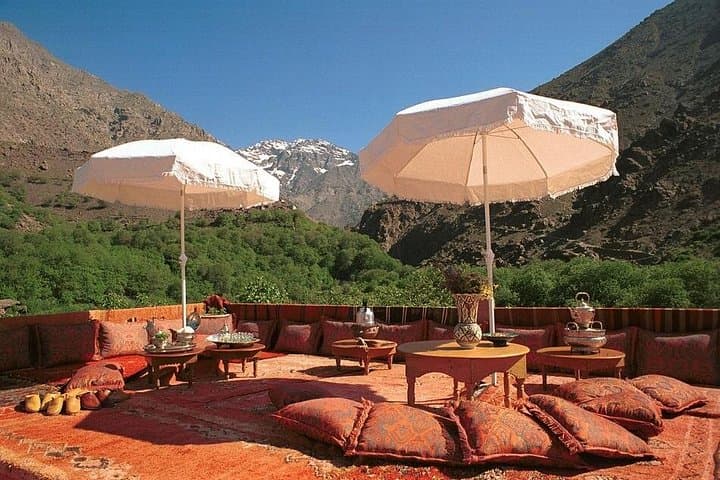
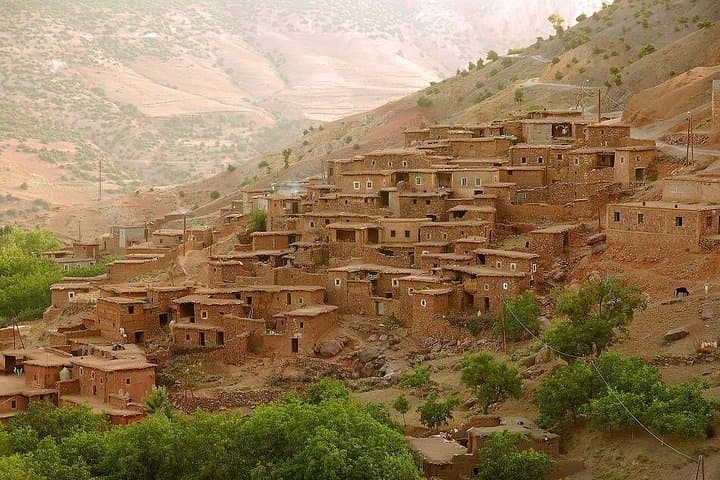
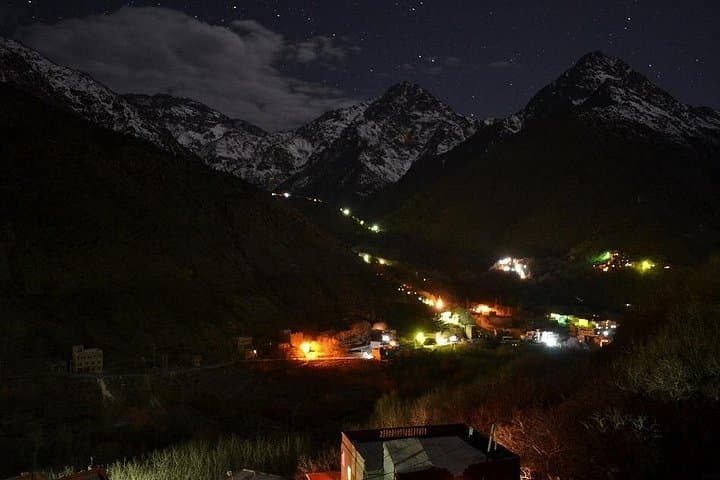
A dust-swept morning drive from Marrakech pulls you into the foothills and the air thins with pine scent as the road climbs toward Imlil. By mid-morning the valley opens: terraced fields, stone villages, and a distant crown of snow on Mount Toubkal that seems to hold the sky. The trailhead begins with mule tracks and switchbacks that lead to a Kasbah-style restaurant perched to face the massif — lunch here is a pause as much as a reward.
A dust-swept morning drive from Marrakech pulls you into the foothills and the air thins with pine scent as the road climbs toward Imlil. By mid-morning the valley opens: terraced fields, stone villages, and a distant crown of snow on Mount Toubkal that seems to hold the sky. The trailhead begins with mule tracks and switchbacks that lead to a Kasbah-style restaurant perched to face the massif — lunch here is a pause as much as a reward.
The High Atlas is geologically young, uplifted by the collision of the African and Eurasian plates; its ridgelines are a study in folded limestone and volcanic intrusions. Cultural layers are equally obvious — Amazigh (Berber) villages, ancient irrigation channels (seguias), and homes built from local stone. Mules remain the practical transport, carrying supplies and the occasional visitor where roads end.
On this full-day outing expect 5–6 hours total: transfer time from Marrakech, a 1–3 hour guided walk from Imlil to the Kasbah and viewpoints, and a relaxed mountain lunch. Terrain is mixed: packed dirt, rocky steps and short steep pitches; elevation change on the walking portion commonly ranges from 200–600 m depending on chosen route. Trails can be sun-exposed or shaded under juniper and oak; winds can gust suddenly and the afternoon light changes visibility quickly.
Practical tips: bring layered clothing, sturdy shoes with good traction, at least 2 liters of water, and sun protection. If you want more challenge, guides can extend the route toward higher cols; for most visitors the walk to the Kasbah offers panoramic Toubkal views without technical climbing.