THE ADVENTURE COLLECTIVE® · Independent discovery and booking for outdoor travel

A short, rewarding day hike above Pokhara that links the Pumdikot viewpoint and World Peace Stupa with sweeping views of the Annapurna range and Phewa Lake. Ideal for walkers of most fitness levels, the route combines village paths, forested descents, and dramatic panoramas.
A short, rewarding day hike above Pokhara that links the Pumdikot viewpoint and World Peace Stupa with sweeping views of the Annapurna range and Phewa Lake. Ideal for walkers of most fitness levels, the route combines village paths, forested descents, and dramatic panoramas.
You start on a narrow track that climbs out of a village road, the air turning cooler as terraced fields drop away and the city’s hum softens. Pumdikot’s ridge opens suddenly: a low-but-broad summit that puts Annapurna’s snowy shoulders and the pale curve of Phewa Lake in the same frame. The World Peace Stupa waits a short descent away, a white dome catching light while pine and sal shrub lean toward the trail like companions.
Verified experiences and guided adventures in the surrounding area.
Operated by AM Travels and Tours · Pokhara, Gandaki Province
You start on a narrow track that climbs out of a village road, the air turning cooler as terraced fields drop away and the city’s hum softens. Pumdikot’s ridge opens suddenly: a low-but-broad summit that puts Annapurna’s snowy shoulders and the pale curve of Phewa Lake in the same frame. The World Peace Stupa waits a short descent away, a white dome catching light while pine and sal shrub lean toward the trail like companions.
This loop follows traditional footpaths used by hill farmers; stone steps and packed-earth trails reveal the region’s young, folded geology where rivers carved the valley and monsoon-fed soils created the green hillsides. Pokhara’s culture—Newari and Gurung influences—appears in roadside shrines and farm terraces, and the stupa itself is part of a post-1950 peace pagoda movement that turned hilltops into panoramic meditation sites.
Expect five to six hours on trail and road: a 25-minute drive from Lakeside to Khadekhola, roughly 50 minutes of uphill walking to the Pumdikot viewpoint, then a descent toward the stupa and forested switchbacks to the northern shore of Phewa Lake. Terrain alternates packed dirt, stone steps, and short grassy pitches with minimal exposure.
Practical pointers: start early to avoid midday heat and afternoon monsoon bursts; bring 1–2 liters of water, steady footwear, and a light rain layer. Photography windows are best at sunrise or late afternoon when the mountains sharpen and wind eases. The route suits most fitness levels but includes sustained climbs—move at your breath, not the group’s pace. Respect local worship sites, stick to trails to limit erosion, and carry out any trash—these hills recharge quickly, but only if visitors tread lightly.
easy.
5–6 hours.
Suitable for people in regular walking condition; requires ability to handle sustained uphill walking and descents.
The full experience, including transfers, is 5–6 hours; expect about 50 minutes of steady uphill from Khadekhola to Pumdikot with short steep sections rather than technical climbs.
Yes — the route is rated easy and fits most fitness levels, though small children or those with mobility issues may find some steps challenging.
Yes — private transfer from Lakeside and an English-speaking trekking guide are included in the standard offering.
No special trekking permits are required for this day hike; local donations at shrines/stupas are customary but optional.
The World Peace Stupa is part of a 20th-century movement to build peace pagodas; local trails trace centuries-old mule and foot paths used by hill farmers connecting Pokhara to surrounding villages.
Stick to established trails to limit erosion on fragile hill soils; avoid single-use plastics—local NGOs work with communities to manage waste around popular viewpoints.
AM Travels and Tours operates guided outdoor trips and adventures with an emphasis on safety, stewardship, and memorable experiences.
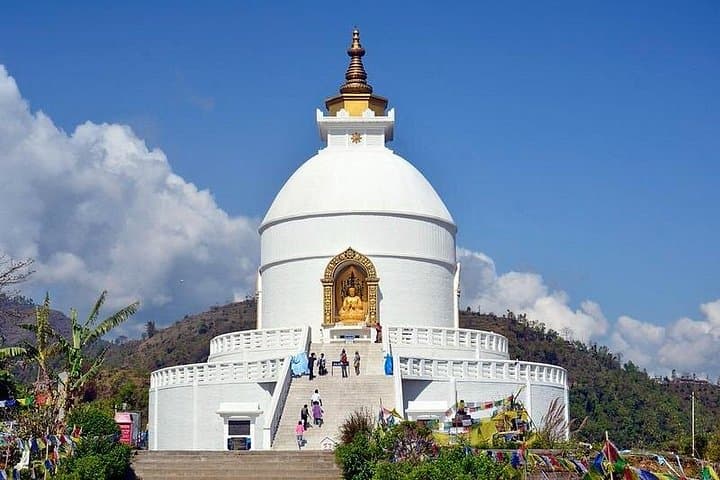
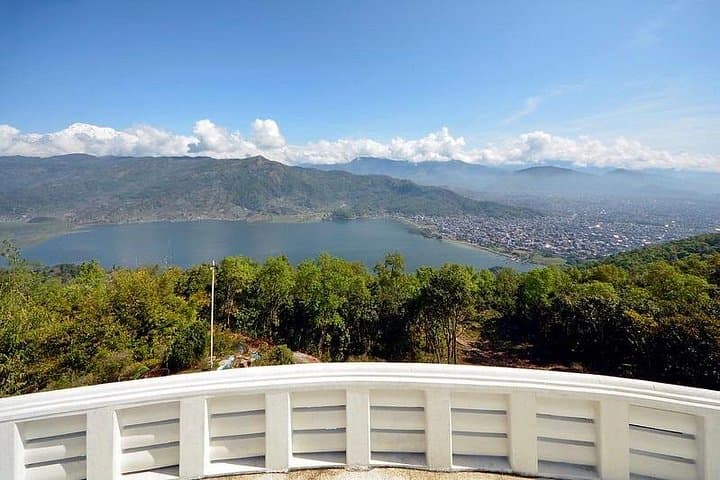
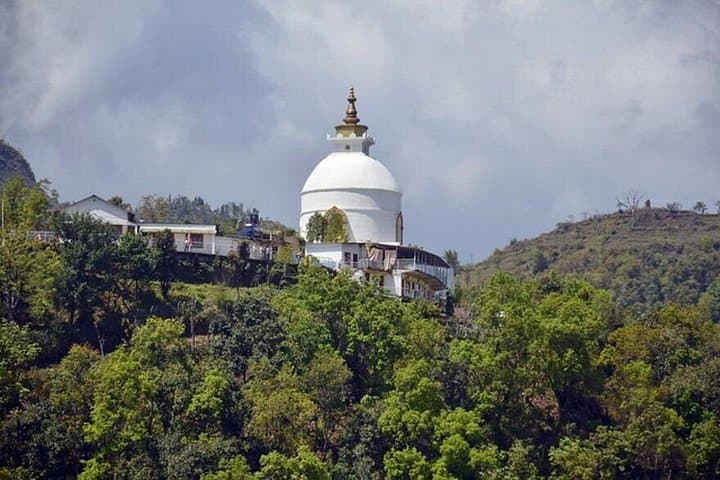
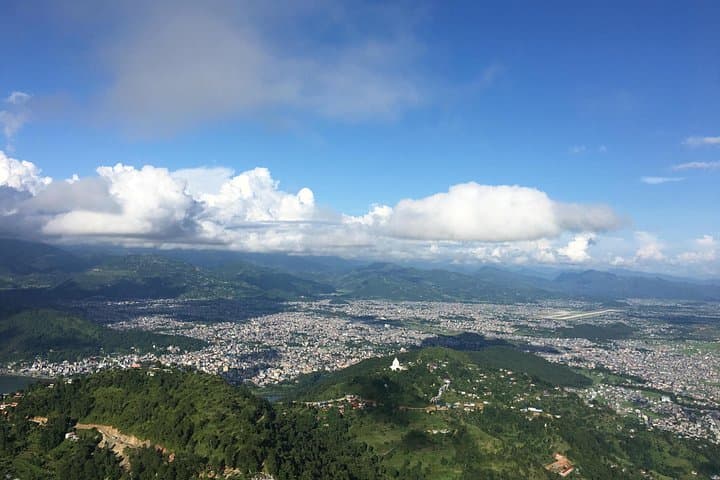
You start on a narrow track that climbs out of a village road, the air turning cooler as terraced fields drop away and the city’s hum softens. Pumdikot’s ridge opens suddenly: a low-but-broad summit that puts Annapurna’s snowy shoulders and the pale curve of Phewa Lake in the same frame. The World Peace Stupa waits a short descent away, a white dome catching light while pine and sal shrub lean toward the trail like companions.
You start on a narrow track that climbs out of a village road, the air turning cooler as terraced fields drop away and the city’s hum softens. Pumdikot’s ridge opens suddenly: a low-but-broad summit that puts Annapurna’s snowy shoulders and the pale curve of Phewa Lake in the same frame. The World Peace Stupa waits a short descent away, a white dome catching light while pine and sal shrub lean toward the trail like companions.
This loop follows traditional footpaths used by hill farmers; stone steps and packed-earth trails reveal the region’s young, folded geology where rivers carved the valley and monsoon-fed soils created the green hillsides. Pokhara’s culture—Newari and Gurung influences—appears in roadside shrines and farm terraces, and the stupa itself is part of a post-1950 peace pagoda movement that turned hilltops into panoramic meditation sites.
Expect five to six hours on trail and road: a 25-minute drive from Lakeside to Khadekhola, roughly 50 minutes of uphill walking to the Pumdikot viewpoint, then a descent toward the stupa and forested switchbacks to the northern shore of Phewa Lake. Terrain alternates packed dirt, stone steps, and short grassy pitches with minimal exposure.
Practical pointers: start early to avoid midday heat and afternoon monsoon bursts; bring 1–2 liters of water, steady footwear, and a light rain layer. Photography windows are best at sunrise or late afternoon when the mountains sharpen and wind eases. The route suits most fitness levels but includes sustained climbs—move at your breath, not the group’s pace. Respect local worship sites, stick to trails to limit erosion, and carry out any trash—these hills recharge quickly, but only if visitors tread lightly.