THE ADVENTURE COLLECTIVE® · Independent discovery and booking for outdoor travel

A full-day, guided hike up Kilimanjaro’s Marangu Route to Mandara Hut that combines rainforest walking, Chagga cultural context and panoramic crater views—no summit attempt. Perfect for hikers looking to experience Africa’s highest massif without high-altitude technicality.
A full-day, guided hike up Kilimanjaro’s Marangu Route to Mandara Hut that combines rainforest walking, Chagga cultural context and panoramic crater views—no summit attempt. Perfect for hikers looking to experience Africa’s highest massif without high-altitude technicality.
You start before breakfast on a narrow road that climbs out of Moshi, the town’s lights shrinking behind you as the Kilimanjaro forest edges close in. The trail on the Marangu Route immediately pulls you under a vaulted canopy; moss drips from branches and the air tastes of wet earth. By mid-hike the forest opens in pockets, and every clearing hands you a new angle on Mawenzi and Kibo ridgelines.
Verified experiences and guided adventures in the surrounding area.
Operated by Telly Africa Safaris · Moshi, Kilimanjaro Region
You start before breakfast on a narrow road that climbs out of Moshi, the town’s lights shrinking behind you as the Kilimanjaro forest edges close in. The trail on the Marangu Route immediately pulls you under a vaulted canopy; moss drips from branches and the air tastes of wet earth. By mid-hike the forest opens in pockets, and every clearing hands you a new angle on Mawenzi and Kibo ridgelines.
Geologically, Kilimanjaro is a three-coned volcano; the Marangu path runs through old lava slopes and dense montane rainforest that feeds downstream coffee farms. Culturally the area is Chagga country—villages tile the lower slopes, with terraced farms and coffee processing stations that speak to generations of agricultural adaptation.
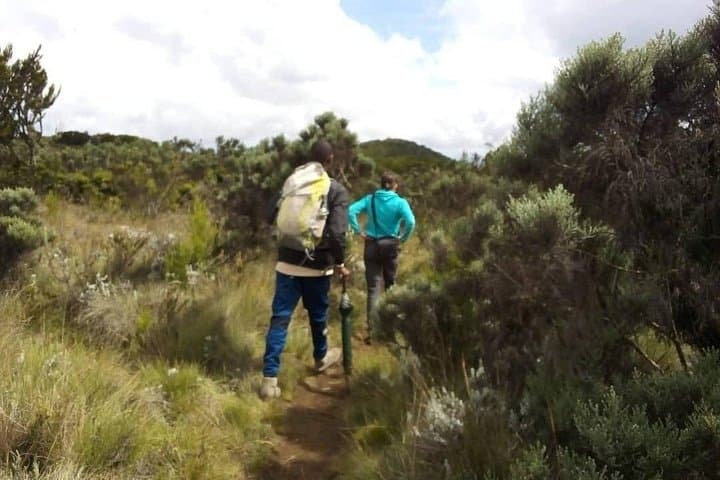
The day trek climbs from roughly 1,800–2,700 m to Mandara Hut, a mix of steep switchbacks, rocky tread and muddy rainforest trail—expect 8–10 km roundtrip and about 700–900 m of elevation gain depending on the start point. Look for black-and-white colobus monkeys, sunbirds, and towering eucalyptus; a side trip to Maundi Crater rewards you with sweeping views across northern Tanzania and into Kenya on clear days.
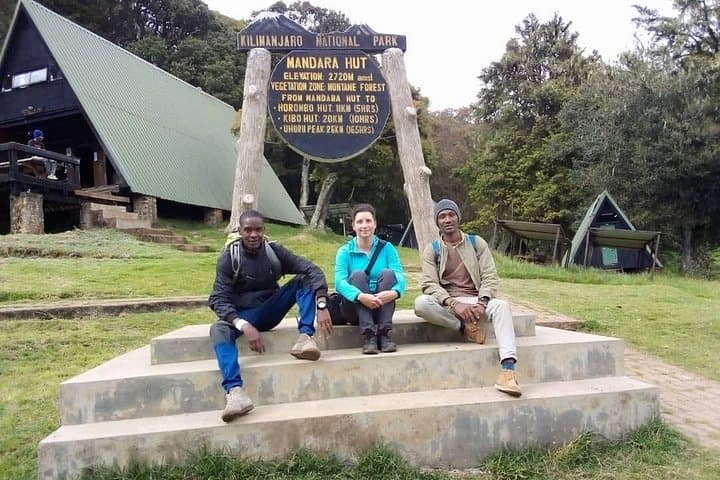
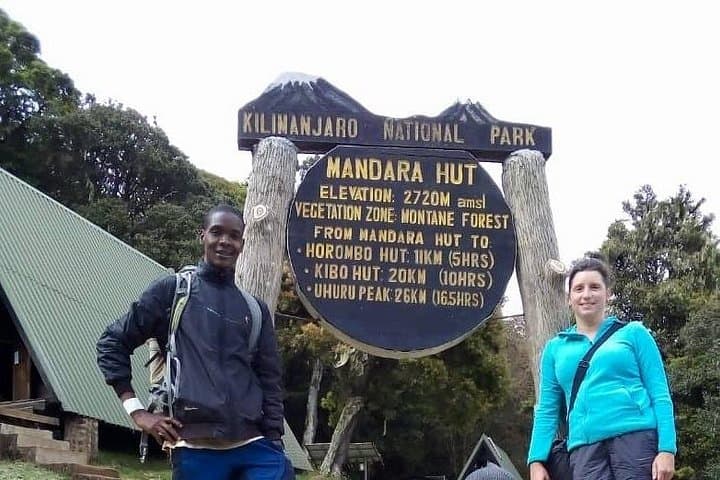
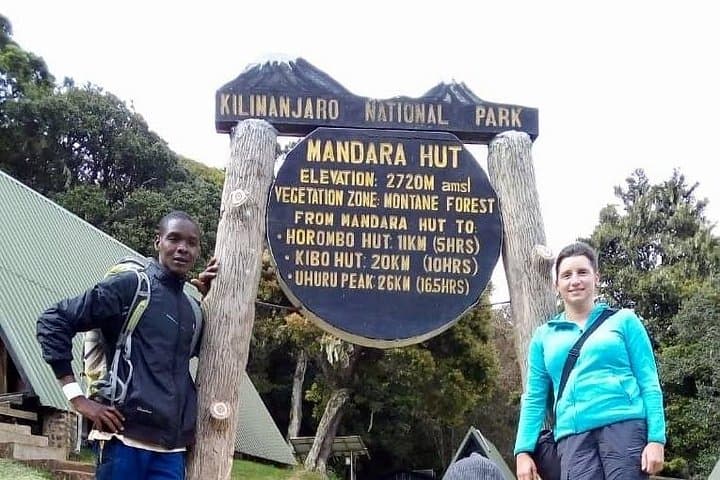
Practically: the climb is not to Uhuru Peak and requires a certified Kilimanjaro guide inside the national park. Wear sturdy, treaded boots, layer for changing conditions, carry water and rain protection, and allow a steady pace for altitude comfort. The route tempts but does not require technical skills—what it asks for is good footwear, steady legs and respect for mountain weather.
moderate.
5–7 hours (door-to-door: ~10 hours including transport).
Good aerobic fitness for steady uphill hiking; routine walkers can manage with regular breaks
No. This day hike reaches Mandara Hut on the Marangu Route and offers forest, crater and ridge views but not the summit.
Yes. Kilimanjaro National Park requires certified guides for all trekking inside park boundaries; guides handle permits and safety.
The route is moderate—steady uphill walking with 700–900 m elevation gain; prior high-altitude experience helps but is not required for the day hike. Take it slow and stay hydrated.
Most travelers stay in Moshi or Marangu village; both offer guesthouses and quick transfers to the park gate.
Kilimanjaro’s slopes have long been inhabited by the Chagga people, who developed terraced farming and trade routes linking the mountain to the lowlands.
Kilimanjaro National Park manages visitor impact with permit systems and park fees; stay on trail, avoid single-use plastics, and follow guide instructions to protect fragile montane forest.
Telly Africa Safaris operates guided outdoor trips and adventures with an emphasis on safety, stewardship, and memorable experiences.
You start before breakfast on a narrow road that climbs out of Moshi, the town’s lights shrinking behind you as the Kilimanjaro forest edges close in. The trail on the Marangu Route immediately pulls you under a vaulted canopy; moss drips from branches and the air tastes of wet earth. By mid-hike the forest opens in pockets, and every clearing hands you a new angle on Mawenzi and Kibo ridgelines.
You start before breakfast on a narrow road that climbs out of Moshi, the town’s lights shrinking behind you as the Kilimanjaro forest edges close in. The trail on the Marangu Route immediately pulls you under a vaulted canopy; moss drips from branches and the air tastes of wet earth. By mid-hike the forest opens in pockets, and every clearing hands you a new angle on Mawenzi and Kibo ridgelines.
Geologically, Kilimanjaro is a three-coned volcano; the Marangu path runs through old lava slopes and dense montane rainforest that feeds downstream coffee farms. Culturally the area is Chagga country—villages tile the lower slopes, with terraced farms and coffee processing stations that speak to generations of agricultural adaptation.
The day trek climbs from roughly 1,800–2,700 m to Mandara Hut, a mix of steep switchbacks, rocky tread and muddy rainforest trail—expect 8–10 km roundtrip and about 700–900 m of elevation gain depending on the start point. Look for black-and-white colobus monkeys, sunbirds, and towering eucalyptus; a side trip to Maundi Crater rewards you with sweeping views across northern Tanzania and into Kenya on clear days.
Practically: the climb is not to Uhuru Peak and requires a certified Kilimanjaro guide inside the national park. Wear sturdy, treaded boots, layer for changing conditions, carry water and rain protection, and allow a steady pace for altitude comfort. The route tempts but does not require technical skills—what it asks for is good footwear, steady legs and respect for mountain weather.