THE ADVENTURE COLLECTIVE® · Independent discovery and booking for outdoor travel

Climb before dawn to Poon Hill for one of the most accessible Himalayan sunrises: wide mountain panoramas, stone stairways through rhododendron, and village hospitality. This short Ghorepani trek packs culture, forest, and high views into a 2–3 day outing ideal for fit beginners.
Climb before dawn to Poon Hill for one of the most accessible Himalayan sunrises: wide mountain panoramas, stone stairways through rhododendron, and village hospitality. This short Ghorepani trek packs culture, forest, and high views into a 2–3 day outing ideal for fit beginners.
Pre-dawn on the stone steps to Poon Hill feels deliberate: small lanterns and steady breath stitch a line of trekkers up through rhododendron thickets while the first light lances the Annapurna range. By the summit the horizon opens—Dhaulagiri’s broad flank, the fish-tail sweep of Machapuchare, and a ladder of snow ridges catching pink at sunrise. The view isn’t a single spectacle but a shifting sequence that demands a quiet, early climb.
Verified experiences and guided adventures in the surrounding area.
Operated by Mission Summit Treks And Expedition · Ghorepani, Gandaki Province
Pre-dawn on the stone steps to Poon Hill feels deliberate: small lanterns and steady breath stitch a line of trekkers up through rhododendron thickets while the first light lances the Annapurna range. By the summit the horizon opens—Dhaulagiri’s broad flank, the fish-tail sweep of Machapuchare, and a ladder of snow ridges catching pink at sunrise. The view isn’t a single spectacle but a shifting sequence that demands a quiet, early climb.
Geology here reads like a rugged chapter of the Himalaya—uplifted crystalline and sedimentary rocks folded by tectonic collision and carved by glaciers and seasonal streams. Culturally, the valleys host Gurung and Magar villages where stone houses, prayer flags, and terraced fields show centuries of mountain livelihood. The Ghorepani–Poon Hill route is short but rich: cloud forests give way to high meadows, with wildlife signs common along the trail.
Practical guidance: plan 2–3 days from Pokhara for a typical round trip, allowing for steady uphill on stone stairways and single-track. Ghorepani sits around 2,800–2,900 m and Poon Hill peaks near 3,200 m; mild altitude awareness and a sensible pace matter. Hike pre-sunrise for the best light, carry water and warm layers for summit wind, and use trekking poles to ease the long stair sections. Accommodations are basic guesthouses run by local families—book in peak season. Waste management is improving through community initiatives, but pack out what you can. With a handful of early starts, simple food, and good boots, this compact trek delivers one of the clearest Himalayan sunrises you can reach without high-altitude technical climbing.
moderate.
2–3 days.
Good cardiovascular fitness and the ability to walk 4–6 hours over uneven, often steep stone steps; carry a light overnight pack.
Most itineraries take 2–3 days from Pokhara (drive to trailhead, overnight in Ghorepani, sunrise at Poon Hill then return), with daily walks of 4–6 hours.
For the Ghorepani–Poon Hill route you need the Annapurna Conservation Area Permit (ACAP) and a TIMS card; guides or agencies typically arrange these for you.
Yes—physically fit beginners can complete it, but expect sustained uphill, many stone steps, and simple mountain accommodations.
Autumn (Sept–Nov) and spring (Mar–May) offer the most reliable clear mornings; avoid monsoon months for guaranteed views.
Local Gurung and Magar communities have farmed these slopes for generations; trade and mule routes once connected remote villages to Pokhara markets.
The Annapurna Conservation Area uses community-based lodges, waste collection and permit fees to fund trail maintenance—pack out non-biodegradable waste and support local guesthouses.
Mission Summit Treks And Expedition operates guided outdoor trips and adventures with an emphasis on safety, stewardship, and memorable experiences.
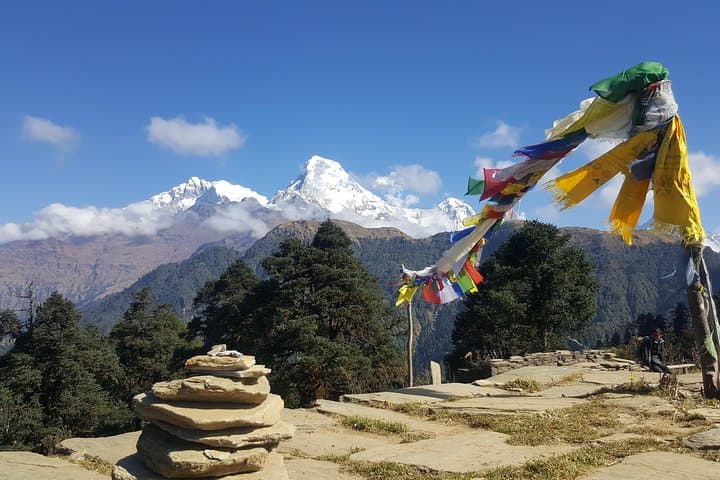
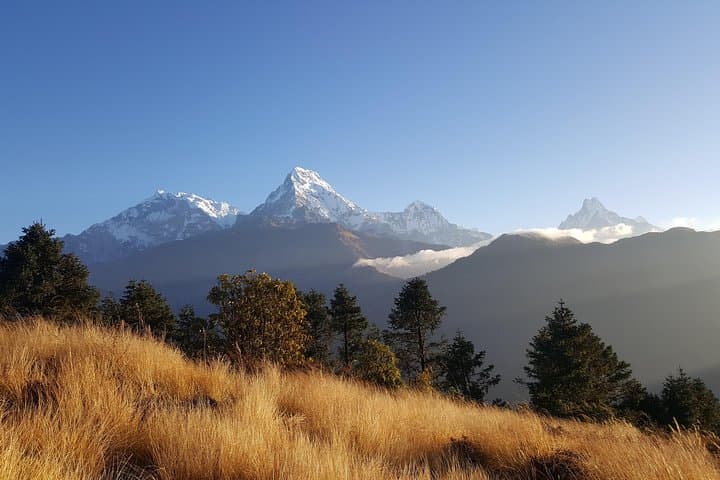
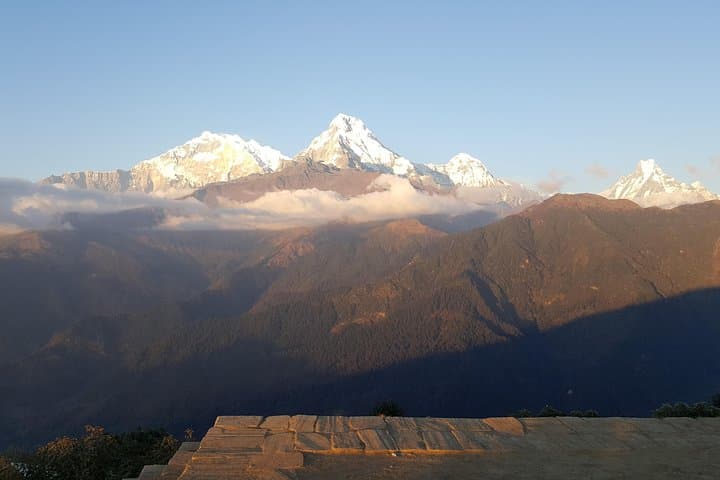
Pre-dawn on the stone steps to Poon Hill feels deliberate: small lanterns and steady breath stitch a line of trekkers up through rhododendron thickets while the first light lances the Annapurna range. By the summit the horizon opens—Dhaulagiri’s broad flank, the fish-tail sweep of Machapuchare, and a ladder of snow ridges catching pink at sunrise. The view isn’t a single spectacle but a shifting sequence that demands a quiet, early climb.
Pre-dawn on the stone steps to Poon Hill feels deliberate: small lanterns and steady breath stitch a line of trekkers up through rhododendron thickets while the first light lances the Annapurna range. By the summit the horizon opens—Dhaulagiri’s broad flank, the fish-tail sweep of Machapuchare, and a ladder of snow ridges catching pink at sunrise. The view isn’t a single spectacle but a shifting sequence that demands a quiet, early climb.
Geology here reads like a rugged chapter of the Himalaya—uplifted crystalline and sedimentary rocks folded by tectonic collision and carved by glaciers and seasonal streams. Culturally, the valleys host Gurung and Magar villages where stone houses, prayer flags, and terraced fields show centuries of mountain livelihood. The Ghorepani–Poon Hill route is short but rich: cloud forests give way to high meadows, with wildlife signs common along the trail.
Practical guidance: plan 2–3 days from Pokhara for a typical round trip, allowing for steady uphill on stone stairways and single-track. Ghorepani sits around 2,800–2,900 m and Poon Hill peaks near 3,200 m; mild altitude awareness and a sensible pace matter. Hike pre-sunrise for the best light, carry water and warm layers for summit wind, and use trekking poles to ease the long stair sections. Accommodations are basic guesthouses run by local families—book in peak season. Waste management is improving through community initiatives, but pack out what you can. With a handful of early starts, simple food, and good boots, this compact trek delivers one of the clearest Himalayan sunrises you can reach without high-altitude technical climbing.