THE ADVENTURE COLLECTIVE® · Independent discovery and booking for outdoor travel

Catch the first light over Angkor Wat, then continue through jungle-tangled temples and the floating villages of Tonle Sap. This guided sunrise tour blends history, landscape, and local life into a single early-morning adventure.
Catch the first light over Angkor Wat, then continue through jungle-tangled temples and the floating villages of Tonle Sap. This guided sunrise tour blends history, landscape, and local life into a single early-morning adventure.
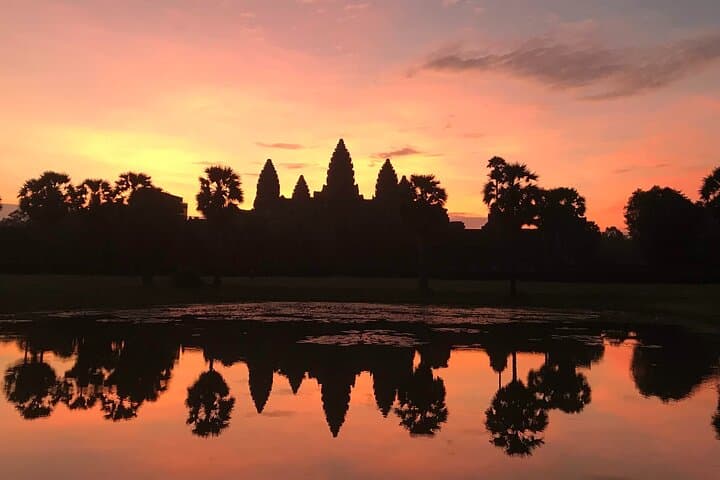
The sky over the Angkor plain lightens as a line of travelers threads between sandstone causeways and reflecting pools. The central towers of Angkor Wat silhouette against a peach horizon while the early light skims bas-reliefs that have watched centuries pass. This sunrise tour moves with that quiet momentum—arrive before the sun, catch the shifting light, then spread across nearby temple sites and the floating villages of Tonle Sap.
Verified experiences and guided adventures in the surrounding area.
Operated by Palm Angkor Tour · Siem Reap, Siem Reap Province
The sky over the Angkor plain lightens as a line of travelers threads between sandstone causeways and reflecting pools. The central towers of Angkor Wat silhouette against a peach horizon while the early light skims bas-reliefs that have watched centuries pass. This sunrise tour moves with that quiet momentum—arrive before the sun, catch the shifting light, then spread across nearby temple sites and the floating villages of Tonle Sap.
Angkor Wat began as a 12th-century Khmer state temple and remains Cambodia’s defining monument. The complex sits on low-lying alluvial plain formed by the Mekong and Tonle Sap systems; the landscape’s seasonal pulse still shapes local life. Guides explain Khmer iconography while pointing out the temple’s hydraulic engineering and how Angkor’s water management supported a vast medieval city.
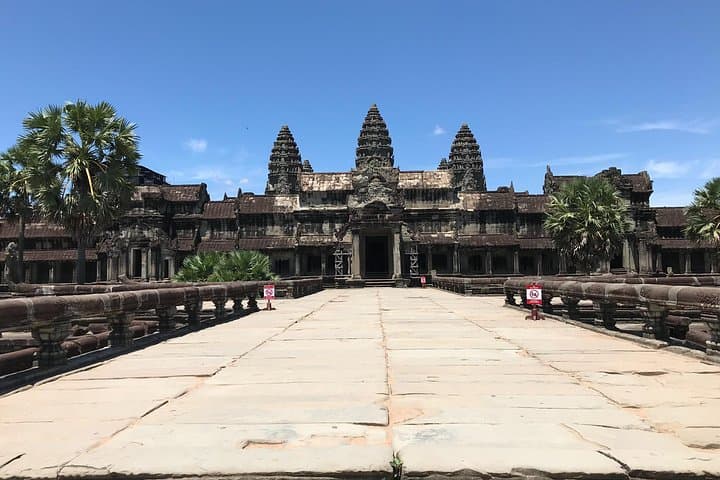
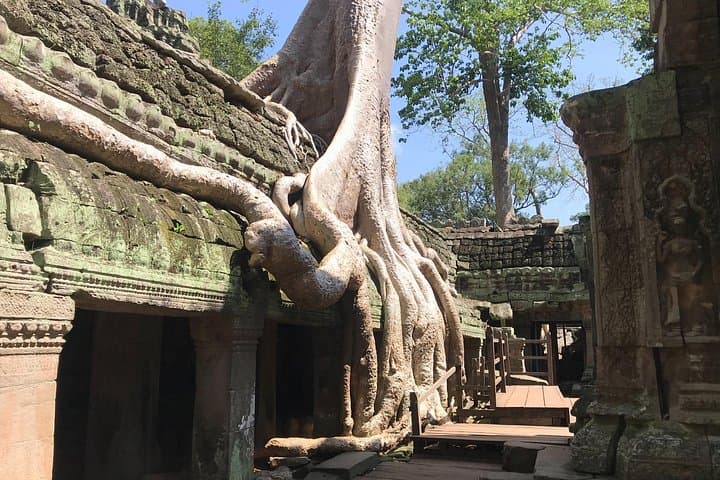
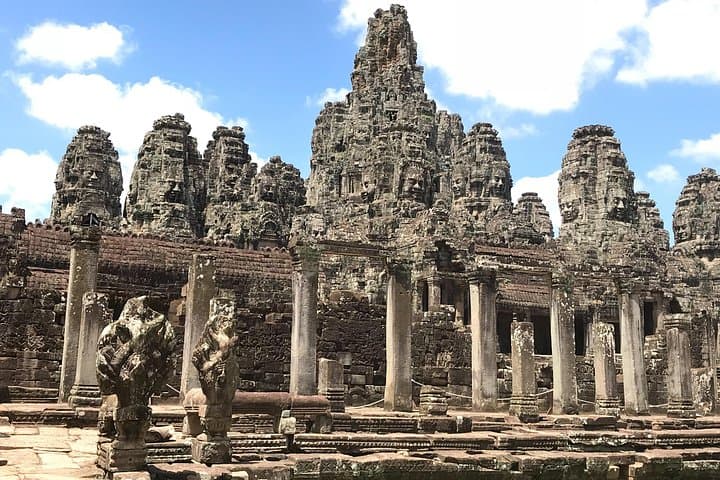
Expect a mix of flat causeways, carved stone steps, and short uneven trails through tree-rooted ruins. The tour often includes Ta Prohm’s fig-and-root dramatics (familiar from film), the smiling faces of Bayon, and a boat run on Tonle Sap to see stilted homes and smoke-drying fish.
Practical details: plan for 6–8 hours, wear breathable layers, and bring a headlamp or small torch for pre-dawn walking. An official Angkor Pass is required for entry (purchase in Siem Reap). Sunrise is busiest—arrive at the appointed pickup on time to avoid crowds. Respect temple rules: shoulders and knees covered, modest conduct, and no climbing on fragile carvings. With steady shoes, plenty of water, and patience for crowds, the sunrise here is a clear, elemental way to read Cambodia’s history by light.
moderate.
6–8 hours.
Moderate fitness for walking on uneven stone, some short stair sections, and being on your feet for several hours
Yes—an official Angkor Pass (1-, 3-, or 7-day) is required for temple entry; it’s available at the Angkor ticket center in Siem Reap.
Pickup is typically very early—generally 4:00–5:00 AM depending on sunrise; confirm exact time with the operator on your booking voucher.
Children can join but the schedule is long; travelers with serious mobility restrictions or spinal issues are not recommended due to uneven surfaces and stairs.
Many sunrise tours include a boat stop on Tonle Sap to view floating villages, but confirm in your specific itinerary whether boat fees are covered.
Angkor Wat was constructed in the early 12th century under King Suryavarman II; the site later became a Buddhist complex and remains central to Cambodian identity.
Visitor impact is managed through ticketed access and restricted areas; stick to marked paths, avoid touching carvings, and support local conservation-focused guides.
Palm Angkor Tour operates guided outdoor trips and adventures with an emphasis on safety, stewardship, and memorable experiences.
The sky over the Angkor plain lightens as a line of travelers threads between sandstone causeways and reflecting pools. The central towers of Angkor Wat silhouette against a peach horizon while the early light skims bas-reliefs that have watched centuries pass. This sunrise tour moves with that quiet momentum—arrive before the sun, catch the shifting light, then spread across nearby temple sites and the floating villages of Tonle Sap.
The sky over the Angkor plain lightens as a line of travelers threads between sandstone causeways and reflecting pools. The central towers of Angkor Wat silhouette against a peach horizon while the early light skims bas-reliefs that have watched centuries pass. This sunrise tour moves with that quiet momentum—arrive before the sun, catch the shifting light, then spread across nearby temple sites and the floating villages of Tonle Sap.
Angkor Wat began as a 12th-century Khmer state temple and remains Cambodia’s defining monument. The complex sits on low-lying alluvial plain formed by the Mekong and Tonle Sap systems; the landscape’s seasonal pulse still shapes local life. Guides explain Khmer iconography while pointing out the temple’s hydraulic engineering and how Angkor’s water management supported a vast medieval city.
Expect a mix of flat causeways, carved stone steps, and short uneven trails through tree-rooted ruins. The tour often includes Ta Prohm’s fig-and-root dramatics (familiar from film), the smiling faces of Bayon, and a boat run on Tonle Sap to see stilted homes and smoke-drying fish.
Practical details: plan for 6–8 hours, wear breathable layers, and bring a headlamp or small torch for pre-dawn walking. An official Angkor Pass is required for entry (purchase in Siem Reap). Sunrise is busiest—arrive at the appointed pickup on time to avoid crowds. Respect temple rules: shoulders and knees covered, modest conduct, and no climbing on fragile carvings. With steady shoes, plenty of water, and patience for crowds, the sunrise here is a clear, elemental way to read Cambodia’s history by light.