THE ADVENTURE COLLECTIVE® · Independent discovery and booking for outdoor travel

A single-day circuit from Tbilisi that pairs the basalt cliffs of Dashbashi Canyon with the windswept shore of Lake Paravani and a visit to Phoca Monastery and Dukhabor settlements. Expect dramatic geology, birdlife on highland wetlands, and short walks suited to most travelers.
A single-day circuit from Tbilisi that pairs the basalt cliffs of Dashbashi Canyon with the windswept shore of Lake Paravani and a visit to Phoca Monastery and Dukhabor settlements. Expect dramatic geology, birdlife on highland wetlands, and short walks suited to most travelers.
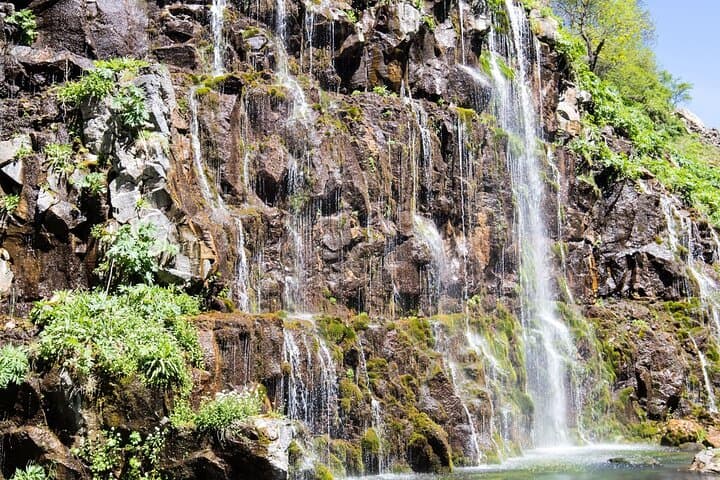
You step out of the van onto a rim of exposed basalt and the canyon seems to inhale — a narrow cleft of vertical rock and a ribbon of river that dares you to follow its course. Dashbashi (Tsalka) Canyon opens suddenly after the drive from Tbilisi, its cliffs cutting a clean line against highland pasture and scattered juniper. The day moves through contrasting geology: basalt columns and waterfalls give way to the broad, wind-polished surface of Lake Paravani, a high plateau lake whose shoreline invites slow, careful exploration.
Verified experiences and guided adventures in the surrounding area.
Operated by ushba travel · Tbilisi, Samtskhe-Javakheti
You step out of the van onto a rim of exposed basalt and the canyon seems to inhale — a narrow cleft of vertical rock and a ribbon of river that dares you to follow its course. Dashbashi (Tsalka) Canyon opens suddenly after the drive from Tbilisi, its cliffs cutting a clean line against highland pasture and scattered juniper. The day moves through contrasting geology: basalt columns and waterfalls give way to the broad, wind-polished surface of Lake Paravani, a high plateau lake whose shoreline invites slow, careful exploration.
This route threads history into landscape. Phoca (Foka) Monastery’s stone cells and fresco traces point to medieval Georgian monastic life; nearby small Dukhabor settlements recall waves of 19th-century Russian-speaking spiritual migrants who left an imprint on local customs and chapels. Javakheti’s volcanic soils and glacial-era basins explain the lakes and their importance for migratory birds.
Expect a full-day, vehicle-led excursion with short, unpaved walks and flat shorelines rather than long hikes. Terrain ranges from compacted dirt tracks to rocky viewpoints; some viewpoints require stepping over loose scree. Weather can swing quickly on the plateau — wind and sun are both present. Bring layered clothing, sun protection, and a camera with spare batteries: the light across the lake and canyon changes fast.
Practical: the tour runs out of Tbilisi, includes guide service and private transport, and is suitable for most fitness levels. Roads in Javakheti can be rough; allow time for photo stops and local visits to gain the full context of geology and culture.
easy.
10 hours.
Suitable for travelers in general good health; involves short, mostly flat walks and standing at viewpoints but no sustained hiking.
The tour departs from Tbilisi with private pickup; confirm your pickup point when booking and expect to return to Tbilisi the same day.
Walking is limited to short shoreline strolls and viewpoint paths—no technical hiking—making the day accessible to most fitness levels.
Meals are not typically included; the itinerary allows for stops at local cafes or packed lunches, and guide support for dietary needs when arranged in advance.
You can visit the Dukhabor chapel and Phoca Monastery grounds; access to interiors may depend on clergy schedules and local customs—respectful dress and quiet are requested.
The Javakheti plateau bears medieval monastic sites and later settlements of Doukhobors (Dukhabors) — Russian-speaking communities who settled in the 19th century and left distinct chapels and traditions.
Paravani and surrounding wetlands are important for migratory birds; stick to marked tracks, avoid disturbing nesting areas, and pack out all waste to protect fragile highland ecosystems.
ushba travel operates guided outdoor trips and adventures with an emphasis on safety, stewardship, and memorable experiences.


You step out of the van onto a rim of exposed basalt and the canyon seems to inhale — a narrow cleft of vertical rock and a ribbon of river that dares you to follow its course. Dashbashi (Tsalka) Canyon opens suddenly after the drive from Tbilisi, its cliffs cutting a clean line against highland pasture and scattered juniper. The day moves through contrasting geology: basalt columns and waterfalls give way to the broad, wind-polished surface of Lake Paravani, a high plateau lake whose shoreline invites slow, careful exploration.
You step out of the van onto a rim of exposed basalt and the canyon seems to inhale — a narrow cleft of vertical rock and a ribbon of river that dares you to follow its course. Dashbashi (Tsalka) Canyon opens suddenly after the drive from Tbilisi, its cliffs cutting a clean line against highland pasture and scattered juniper. The day moves through contrasting geology: basalt columns and waterfalls give way to the broad, wind-polished surface of Lake Paravani, a high plateau lake whose shoreline invites slow, careful exploration.
This route threads history into landscape. Phoca (Foka) Monastery’s stone cells and fresco traces point to medieval Georgian monastic life; nearby small Dukhabor settlements recall waves of 19th-century Russian-speaking spiritual migrants who left an imprint on local customs and chapels. Javakheti’s volcanic soils and glacial-era basins explain the lakes and their importance for migratory birds.
Expect a full-day, vehicle-led excursion with short, unpaved walks and flat shorelines rather than long hikes. Terrain ranges from compacted dirt tracks to rocky viewpoints; some viewpoints require stepping over loose scree. Weather can swing quickly on the plateau — wind and sun are both present. Bring layered clothing, sun protection, and a camera with spare batteries: the light across the lake and canyon changes fast.
Practical: the tour runs out of Tbilisi, includes guide service and private transport, and is suitable for most fitness levels. Roads in Javakheti can be rough; allow time for photo stops and local visits to gain the full context of geology and culture.