THE ADVENTURE COLLECTIVE® · Independent discovery and booking for outdoor travel

A full-day excursion from Tbilisi to Dashbashi Canyon highlights volcanic cliffs, tiered waterfalls, and short hikes on uneven trails—ideal for photographers and geology-minded travelers.
A full-day excursion from Tbilisi to Dashbashi Canyon highlights volcanic cliffs, tiered waterfalls, and short hikes on uneven trails—ideal for photographers and geology-minded travelers.
You arrive on a low, gray road and the valley opens: a narrow gorge carved into black volcanic tuff, terraces of basalt, and a ribbon of water splitting into stepped falls that keep time with the wind. The air smells faintly of wet stone; local pines lean toward the water as if listening. For a few hours the world narrows to rock, spray, and the steady roar of cascades.
Verified experiences and guided adventures in the surrounding area.
Operated by Miracle Travel · Tsalka, Kvemo Kartli
You arrive on a low, gray road and the valley opens: a narrow gorge carved into black volcanic tuff, terraces of basalt, and a ribbon of water splitting into stepped falls that keep time with the wind. The air smells faintly of wet stone; local pines lean toward the water as if listening. For a few hours the world narrows to rock, spray, and the steady roar of cascades.
Dashbashi Canyon sits in the Khrami River valley and is a clear product of volcanic geology — flows and later erosion have left sheer walls and multi-tiered waterfalls. Historically the corridor linked pastoral communities; today small villages nearby still herd sheep and harvest hay on high benches. The site’s dramatic columns and basalt shelves are the visible record of past eruptions and slow river work.
On a one-day tour from Tbilisi you’ll typically get 2–3 hours at the canyon for easy walks, viewpoints and photo stops. Trails are short but uneven; close-toed shoes and steady footing matter near the falls. Morning light is best for depth and color; late afternoon brings long shadows on the cliffs. Bring water, layers, and a light rain shell — spray can chill you even on warm days.
Practical notes: limited facilities at the site, modest walking distances over rocky paths, and short vantage trails that reward cautious exploration. Respect fenced areas and local guides’ directions; the canyon’s edges are unstable in places. With straightforward planning this is a compact, high-reward day outing from Tbilisi for photographers and anyone who likes geology framed by moving water.
easy.
9 hours (including transport).
Appropriate for most fitness levels—able to walk short uneven trails and modest steps.
Expect roughly 2–3 hours each way depending on traffic and stops; the tour is a full-day outing (about 9 hours total).
Yes for older children who can handle uneven trails; keep them close at viewpoints and near cliffs.
Swimming is not recommended—pools are shallow, cold, and currents can be unpredictable; stick to viewing areas.
Facilities are limited; bring snacks and water—some tours include a short stop at a local cafe or service area en route.
The canyon follows volcanic flows that shaped the Khrami valley; the corridor has served local shepherding communities for centuries.
The site is a protected natural monument with limited infrastructure—stay on trails to prevent erosion and avoid leaving litter to protect the fragile basalt and riparian plants.
Miracle Travel operates guided outdoor trips and adventures with an emphasis on safety, stewardship, and memorable experiences.
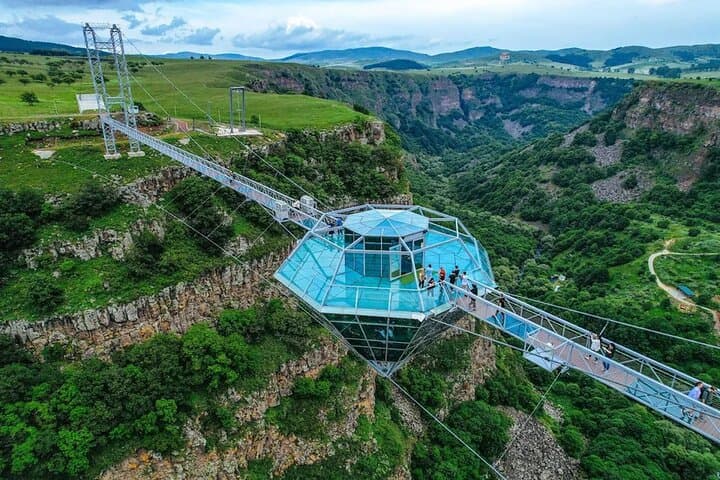
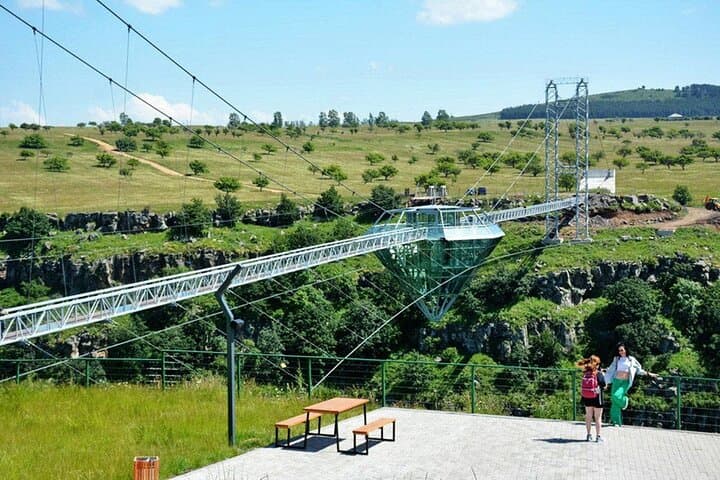
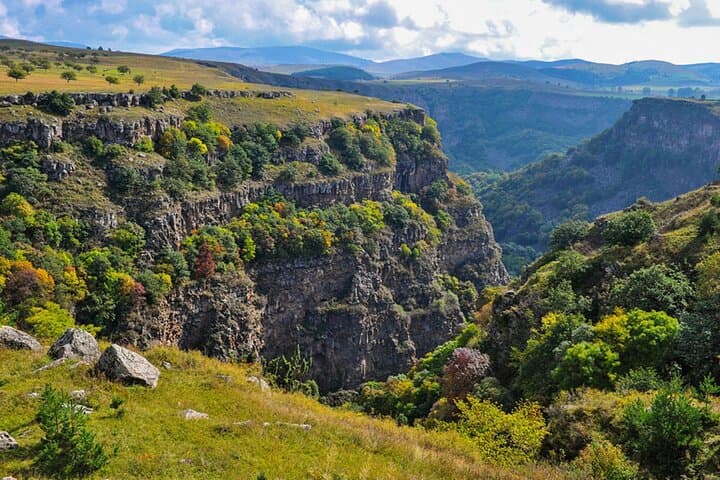
You arrive on a low, gray road and the valley opens: a narrow gorge carved into black volcanic tuff, terraces of basalt, and a ribbon of water splitting into stepped falls that keep time with the wind. The air smells faintly of wet stone; local pines lean toward the water as if listening. For a few hours the world narrows to rock, spray, and the steady roar of cascades.
You arrive on a low, gray road and the valley opens: a narrow gorge carved into black volcanic tuff, terraces of basalt, and a ribbon of water splitting into stepped falls that keep time with the wind. The air smells faintly of wet stone; local pines lean toward the water as if listening. For a few hours the world narrows to rock, spray, and the steady roar of cascades.
Dashbashi Canyon sits in the Khrami River valley and is a clear product of volcanic geology — flows and later erosion have left sheer walls and multi-tiered waterfalls. Historically the corridor linked pastoral communities; today small villages nearby still herd sheep and harvest hay on high benches. The site’s dramatic columns and basalt shelves are the visible record of past eruptions and slow river work.
On a one-day tour from Tbilisi you’ll typically get 2–3 hours at the canyon for easy walks, viewpoints and photo stops. Trails are short but uneven; close-toed shoes and steady footing matter near the falls. Morning light is best for depth and color; late afternoon brings long shadows on the cliffs. Bring water, layers, and a light rain shell — spray can chill you even on warm days.
Practical notes: limited facilities at the site, modest walking distances over rocky paths, and short vantage trails that reward cautious exploration. Respect fenced areas and local guides’ directions; the canyon’s edges are unstable in places. With straightforward planning this is a compact, high-reward day outing from Tbilisi for photographers and anyone who likes geology framed by moving water.