THE ADVENTURE COLLECTIVE® · Independent discovery and booking for outdoor travel

Get close to saltwater crocodiles on a guided jumping-croc cruise, then tour Darwin’s historic harbour with an optional Stokes Hill Wharf lunch—ideal for morning wildlife viewing and short on time.
Get close to saltwater crocodiles on a guided jumping-croc cruise, then tour Darwin’s historic harbour with an optional Stokes Hill Wharf lunch—ideal for morning wildlife viewing and short on time.
The river opens like a long throat of glass as the boat slips from Darwin’s mangrove-fringed banks. Salt spray and hot sun mix on your skin while the guide scans waterlines where crocodiles claim the estuary. The cruise pushes close enough to see scutes glint and, if timed right, to watch a large male launch itself out of the water in a practiced show of power.
Verified experiences and guided adventures in the surrounding area.
Operated by Litchfield Park Adventures · Darwin, Northern Territory
The river opens like a long throat of glass as the boat slips from Darwin’s mangrove-fringed banks. Salt spray and hot sun mix on your skin while the guide scans waterlines where crocodiles claim the estuary. The cruise pushes close enough to see scutes glint and, if timed right, to watch a large male launch itself out of the water in a practiced show of power.
This short combined tour folds local history into the outing: Darwin’s harbour has been a meeting place for Larrakia people for millennia, later a colonial port and a frontline city during World War II. Geologically, the surrounding Arnhem Land escarpments and tidal floodplain shape the estuary’s channels, concentrating fish and drawing the big salties. Culturally the area blends Indigenous heritage, a multicultural port community, and the practical tourism economy around Stokes Hill Wharf.
Expect three compact hours that balance commentary, crocodile viewing at Crocodylus Park, and a slow drive-by of Darwin’s historic sites; an optional stop at Stokes Hill Wharf gives time for harbour photos and a waterfront lunch. Wildlife viewing is best in the cooler morning light; the guides know how to keep distance and coax the crocodiles’ natural behavior without interference.
Practical notes: bring sun protection and insect repellent, a refillable water bottle, and a camera with a zoom lens. Wear stable shoes for boarding and follow crew instructions around the animals. If you want the jumping-crocodile action, arrive for morning departures and book ahead—groups are limited and popular on weekends.
easy.
3 hours.
Suitable for most fitness levels; requires basic mobility to board a small cruise vessel
Yes; cruises operate under Australian safety regulations with experienced guides who maintain safe viewing distances and use controlled feeding demonstrations when appropriate.
Lunch at Stokes Hill Wharf is optional—select the add-on when booking if you want a meal included during the stopover.
Yes; the tour is family friendly, but infants must sit on laps and children should be supervised near viewing platforms and the boat.
Pickup and drop-off are offered; confirm your pickup point and exact time at booking since group sizes and routes vary.
Darwin is on Larrakia Country and grew as a strategic port—its wartime bombing in 1942 reshaped the city and maritime infrastructure.
Crocodile parks combine public education with captive breeding and rehabilitation; visitors should avoid feeding wildlife and follow leave-no-trace guidelines to protect estuarine habitats.
Litchfield Park Adventures operates guided outdoor trips and adventures with an emphasis on safety, stewardship, and memorable experiences.
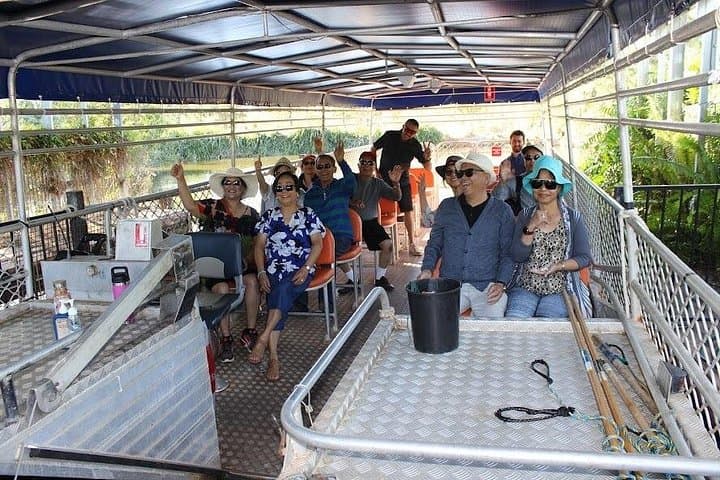
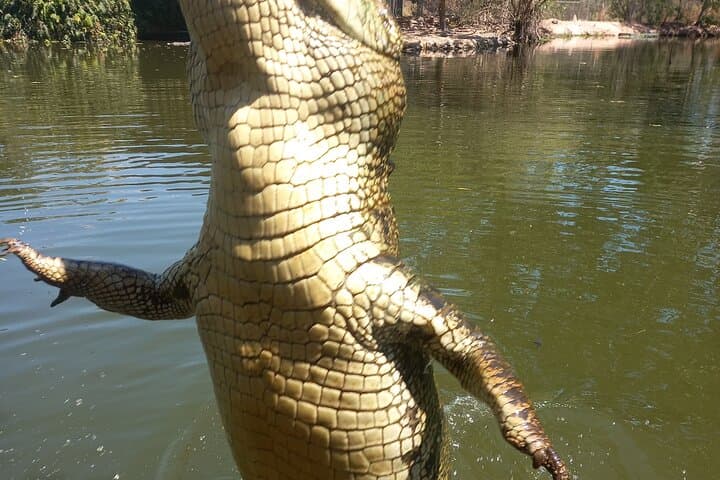
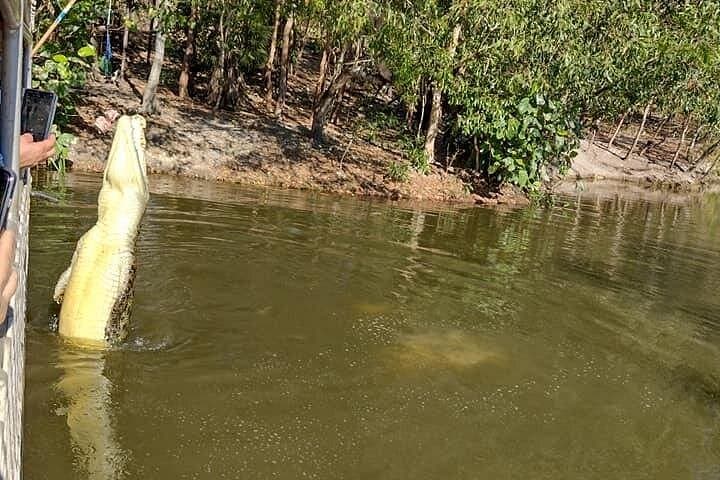
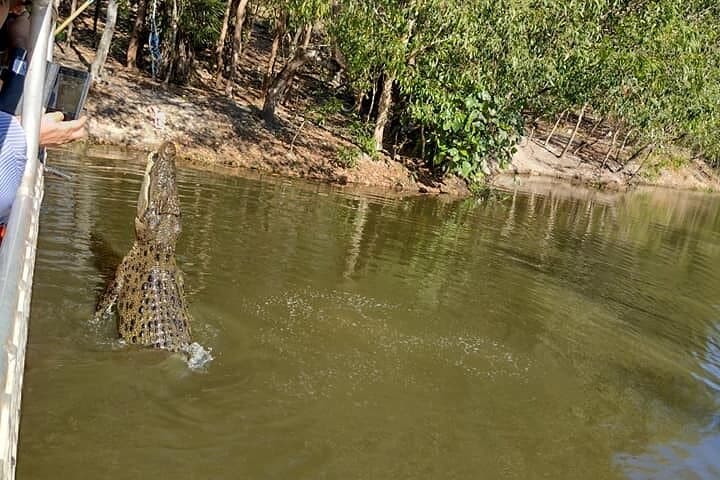
The river opens like a long throat of glass as the boat slips from Darwin’s mangrove-fringed banks. Salt spray and hot sun mix on your skin while the guide scans waterlines where crocodiles claim the estuary. The cruise pushes close enough to see scutes glint and, if timed right, to watch a large male launch itself out of the water in a practiced show of power.
The river opens like a long throat of glass as the boat slips from Darwin’s mangrove-fringed banks. Salt spray and hot sun mix on your skin while the guide scans waterlines where crocodiles claim the estuary. The cruise pushes close enough to see scutes glint and, if timed right, to watch a large male launch itself out of the water in a practiced show of power.
This short combined tour folds local history into the outing: Darwin’s harbour has been a meeting place for Larrakia people for millennia, later a colonial port and a frontline city during World War II. Geologically, the surrounding Arnhem Land escarpments and tidal floodplain shape the estuary’s channels, concentrating fish and drawing the big salties. Culturally the area blends Indigenous heritage, a multicultural port community, and the practical tourism economy around Stokes Hill Wharf.
Expect three compact hours that balance commentary, crocodile viewing at Crocodylus Park, and a slow drive-by of Darwin’s historic sites; an optional stop at Stokes Hill Wharf gives time for harbour photos and a waterfront lunch. Wildlife viewing is best in the cooler morning light; the guides know how to keep distance and coax the crocodiles’ natural behavior without interference.
Practical notes: bring sun protection and insect repellent, a refillable water bottle, and a camera with a zoom lens. Wear stable shoes for boarding and follow crew instructions around the animals. If you want the jumping-crocodile action, arrive for morning departures and book ahead—groups are limited and popular on weekends.