THE ADVENTURE COLLECTIVE® · Independent discovery and booking for outdoor travel

Trace Lima’s colonial past from the Plaza de Armas to the dim vaults of the San Francisco catacombs, then wander the stately aisles of the Presbítero Matías Maestro Cemetery—one of the Americas’ oldest public cemeteries. This 3–4 hour guided walk pairs history, architecture, and chilling local lore.
Trace Lima’s colonial past from the Plaza de Armas to the dim vaults of the San Francisco catacombs, then wander the stately aisles of the Presbítero Matías Maestro Cemetery—one of the Americas’ oldest public cemeteries. This 3–4 hour guided walk pairs history, architecture, and chilling local lore.
Start at Lima’s Plaza de Armas where the city’s colonial heart pulses beneath carved balconies and traffic noise. The guide’s voice draws lines between stone and story: Francisco Pizarro’s founding, the rise of Spanish power, and the city’s layered funerary practices. A short walk leads to the San Francisco Convent; its cloister shelters sunlight while its catacombs drop into cool, low light where shelves of bones and skulls sit in ordered rows as if arranged by an unseen curator.
Verified experiences and guided adventures in the surrounding area.
Operated by Peruvian Worldview Tours · Lima, Lima
Start at Lima’s Plaza de Armas where the city’s colonial heart pulses beneath carved balconies and traffic noise. The guide’s voice draws lines between stone and story: Francisco Pizarro’s founding, the rise of Spanish power, and the city’s layered funerary practices. A short walk leads to the San Francisco Convent; its cloister shelters sunlight while its catacombs drop into cool, low light where shelves of bones and skulls sit in ordered rows as if arranged by an unseen curator.
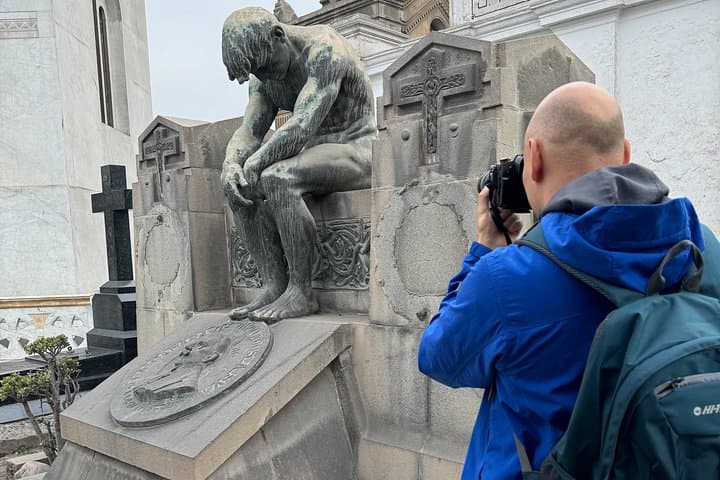
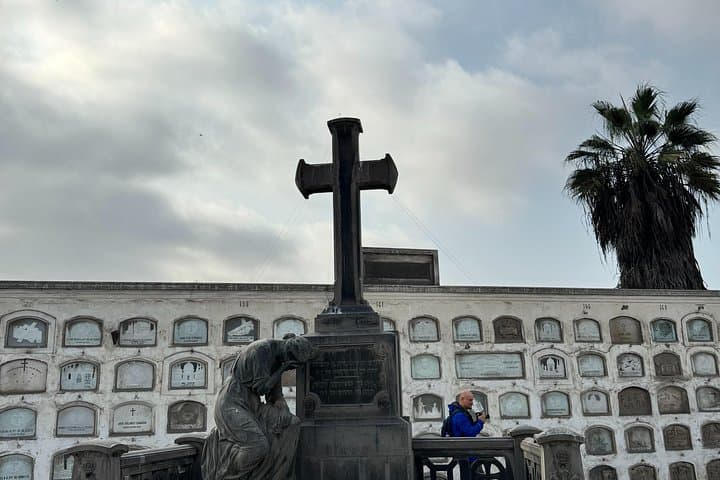
The route moves onward to the Presbítero Matías Maestro Cemetery, opened in 1808 as one of the Americas’ first public burial grounds. Neoclassical mausoleums crowd tree-lined lanes; bronze plaques and marble faces keep watch. Visit the Crypt of Heroes and the small, somber Pavilion of Suicides—places that anchor national memory and quieter, stranger stories of Lima life. The area’s colonial architecture, seismic geology and coastal climate all shaped burial choices here: earth moves, marble cracks, and artisans repaired and ornamented accordingly.
Practical notes: the tour runs roughly 3–3.5 hours, mostly on paved surfaces and gentle steps—comfortable footwear matters. Carry water, modest clothing for religious sites, and a small light to steady photography in dim catacombs (flash may be restricted). Respect signage and stay with the group; mausoleums are fragile and often literal archives. Morning or late afternoon departures avoid midday heat and school groups. For travelers curious about culture, history and the uncanny, this walk combines accessible logistics with strong interpretive storytelling—an urban, atmospheric exploration of Lima’s past and how the city remembers its dead.
easy.
3–3.5 hours.
Suitable for most fitness levels; involves walking on paved surfaces and some stairs.
Yes — admissions to the San Francisco catacombs and Presbítero Matías Maestro Cemetery are included with the tour.
Photography is generally allowed but flash may be restricted in sensitive areas; always follow the guide’s directions.
The tour is rated easy physically, but the subject matter and dim catacombs may be disturbing for young children; parental discretion advised.
Some sites have limited accessibility due to stairs and narrow passages; contact the operator in advance to discuss accommodations.
The Presbítero Matías Maestro Cemetery opened in 1808 as one of the first public cemeteries in the Americas, reflecting changing colonial attitudes toward burial and urban planning.
Granite, marble and ironwork require ongoing preservation; visitors are asked to avoid touching fragile surfaces and to follow paths to reduce wear.
Peruvian Worldview Tours operates guided outdoor trips and adventures with an emphasis on safety, stewardship, and memorable experiences.
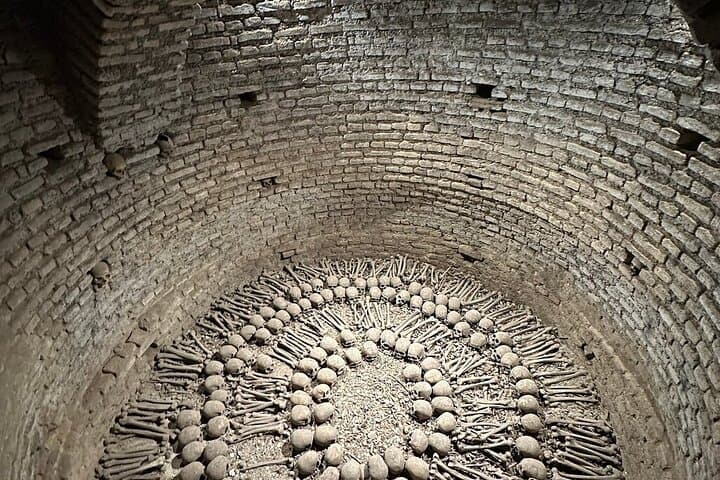
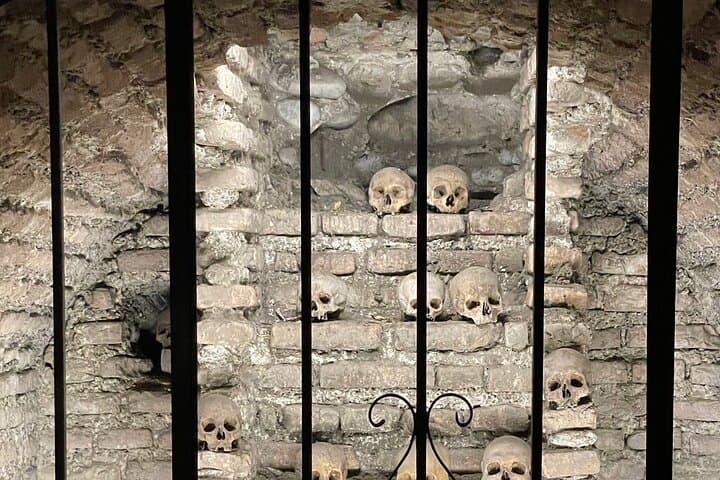
Start at Lima’s Plaza de Armas where the city’s colonial heart pulses beneath carved balconies and traffic noise. The guide’s voice draws lines between stone and story: Francisco Pizarro’s founding, the rise of Spanish power, and the city’s layered funerary practices. A short walk leads to the San Francisco Convent; its cloister shelters sunlight while its catacombs drop into cool, low light where shelves of bones and skulls sit in ordered rows as if arranged by an unseen curator.
Start at Lima’s Plaza de Armas where the city’s colonial heart pulses beneath carved balconies and traffic noise. The guide’s voice draws lines between stone and story: Francisco Pizarro’s founding, the rise of Spanish power, and the city’s layered funerary practices. A short walk leads to the San Francisco Convent; its cloister shelters sunlight while its catacombs drop into cool, low light where shelves of bones and skulls sit in ordered rows as if arranged by an unseen curator.
The route moves onward to the Presbítero Matías Maestro Cemetery, opened in 1808 as one of the Americas’ first public burial grounds. Neoclassical mausoleums crowd tree-lined lanes; bronze plaques and marble faces keep watch. Visit the Crypt of Heroes and the small, somber Pavilion of Suicides—places that anchor national memory and quieter, stranger stories of Lima life. The area’s colonial architecture, seismic geology and coastal climate all shaped burial choices here: earth moves, marble cracks, and artisans repaired and ornamented accordingly.
Practical notes: the tour runs roughly 3–3.5 hours, mostly on paved surfaces and gentle steps—comfortable footwear matters. Carry water, modest clothing for religious sites, and a small light to steady photography in dim catacombs (flash may be restricted). Respect signage and stay with the group; mausoleums are fragile and often literal archives. Morning or late afternoon departures avoid midday heat and school groups. For travelers curious about culture, history and the uncanny, this walk combines accessible logistics with strong interpretive storytelling—an urban, atmospheric exploration of Lima’s past and how the city remembers its dead.