THE ADVENTURE COLLECTIVE® · Independent discovery and booking for outdoor travel

Experience one of Europe’s clearest night skies in the Geneva countryside with a CERN-trained particle physicist. Learn to use a 200mm Newtonian telescope, identify constellations, and hear how astronomy and particle physics intersect.
Experience one of Europe’s clearest night skies in the Geneva countryside with a CERN-trained particle physicist. Learn to use a 200mm Newtonian telescope, identify constellations, and hear how astronomy and particle physics intersect.
The road slips away and the last village lights dim; above, the Milky Way sweeps across a vault so clear it seems to move. You stand in a safe forest clearing on Geneva’s rolling fringe, breath visible on cool air, a 200mm Newtonian telescope set on its tripod like a patient instrument waiting for permission to speak.
Verified experiences and guided adventures in the surrounding area.
Operated by Dark Sky Stargazing Experience with a Particle Physicist · Geneva, Canton of Geneva
The road slips away and the last village lights dim; above, the Milky Way sweeps across a vault so clear it seems to move. You stand in a safe forest clearing on Geneva’s rolling fringe, breath visible on cool air, a 200mm Newtonian telescope set on its tripod like a patient instrument waiting for permission to speak.
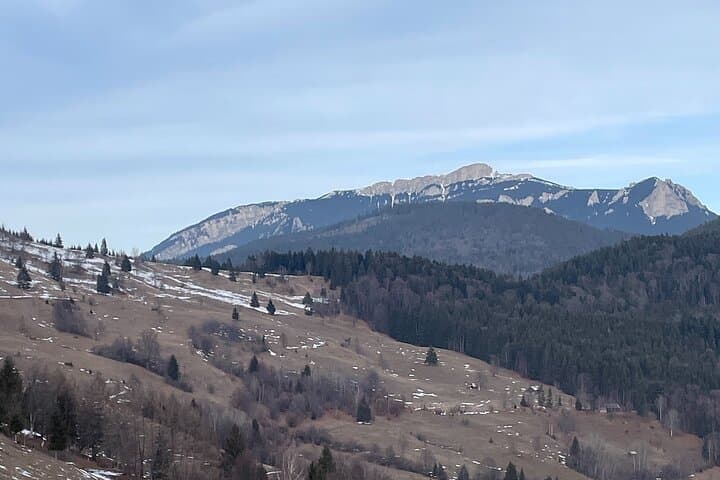
This region of western Switzerland sits between the Jura and the Alps—geology that shapes sky clarity by funneling dry air and limiting light pollution from urban Geneva. Astronomy here has practical roots: observatories and academic centers in Geneva and nearby CERN established a local appetite for sky science. The guide—CERN-trained and fluent in particle physics—links cosmic stories from nebulae to neutrinos, showing how observational astronomy and high-energy experiments probe the same questions from opposite ends of scale.
Expect guided constellation tours, lunar close-ups, and views of bright nebulae and star clusters, with time for questions and quiet watching. Warm drinks and private transport are included; the site is accessible and family-friendly.
Practical notes: dress in insulated layers and bring a headlamp with a red filter so your eyes adapt quickly. Plan around moon phases—new-moon evenings give the richest starfields—while cloud and precipitation cancel the outing. Arrive with patience; night observing rewards slow eyes and steady mounts. For photographers, a tripod and manual camera settings will capture the scene, but set expectations—this is an interpretive, educational evening first and a photo shoot second.
easy.
1.5 hours.
Minimal fitness required; short, level walks to the observing site may be necessary
The tour is weather-dependent; if clouds or precipitation obscure the sky, the operator will cancel and issue a full refund if canceled at least 24 hours prior.
The experience includes private transportation from Geneva-area pickup points; drive time to the countryside observing site is typically 30–60 minutes depending on pickup location.
Expect lunar craters (when the moon is present), star clusters, bright nebulae, and galaxies visible in a 200mm Newtonian; the guide will select targets based on seasonal visibility and sky conditions.
Yes—sessions are family-friendly and the site and transport options are described as wheelchair accessible; contact the operator ahead of booking for specific accessibility needs.
Geneva’s scientific tradition—home to observatories and CERN—has fostered public astronomy outreach that links local culture to international research.
Operators emphasize low-impact observing: limiting lights, keeping groups small, and using established clearings to protect forest understory and nocturnal wildlife.
Dark Sky Stargazing Experience with a Particle Physicist operates guided outdoor trips and adventures with an emphasis on safety, stewardship, and memorable experiences.
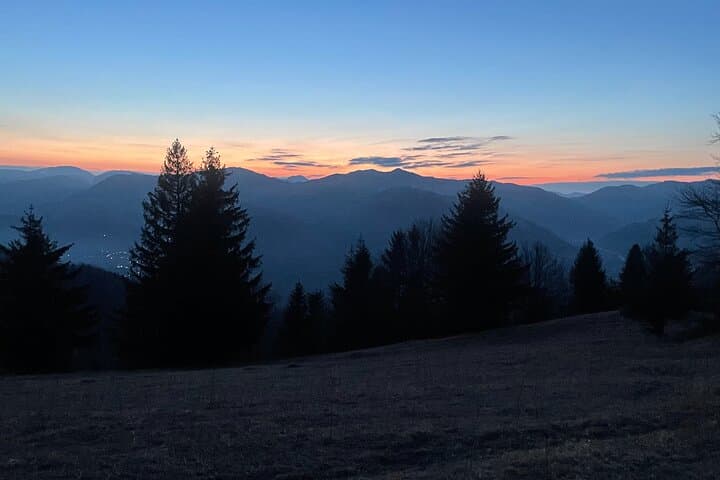
The road slips away and the last village lights dim; above, the Milky Way sweeps across a vault so clear it seems to move. You stand in a safe forest clearing on Geneva’s rolling fringe, breath visible on cool air, a 200mm Newtonian telescope set on its tripod like a patient instrument waiting for permission to speak.
The road slips away and the last village lights dim; above, the Milky Way sweeps across a vault so clear it seems to move. You stand in a safe forest clearing on Geneva’s rolling fringe, breath visible on cool air, a 200mm Newtonian telescope set on its tripod like a patient instrument waiting for permission to speak.
This region of western Switzerland sits between the Jura and the Alps—geology that shapes sky clarity by funneling dry air and limiting light pollution from urban Geneva. Astronomy here has practical roots: observatories and academic centers in Geneva and nearby CERN established a local appetite for sky science. The guide—CERN-trained and fluent in particle physics—links cosmic stories from nebulae to neutrinos, showing how observational astronomy and high-energy experiments probe the same questions from opposite ends of scale.
Expect guided constellation tours, lunar close-ups, and views of bright nebulae and star clusters, with time for questions and quiet watching. Warm drinks and private transport are included; the site is accessible and family-friendly.
Practical notes: dress in insulated layers and bring a headlamp with a red filter so your eyes adapt quickly. Plan around moon phases—new-moon evenings give the richest starfields—while cloud and precipitation cancel the outing. Arrive with patience; night observing rewards slow eyes and steady mounts. For photographers, a tripod and manual camera settings will capture the scene, but set expectations—this is an interpretive, educational evening first and a photo shoot second.