THE ADVENTURE COLLECTIVE® · Independent discovery and booking for outdoor travel

Explore Fort Langley after dark on a 90-minute walking tour that uncovers the town’s true crime history, from Hudson’s Bay Company intrigues to unsolved local mysteries. Expect uneven sidewalks, archival storytelling, and a cooler riverside wind that adds to the atmosphere.
Explore Fort Langley after dark on a 90-minute walking tour that uncovers the town’s true crime history, from Hudson’s Bay Company intrigues to unsolved local mysteries. Expect uneven sidewalks, archival storytelling, and a cooler riverside wind that adds to the atmosphere.
A cold evening presses against storefront windows as your group gathers beneath the heritage lampposts of Fort Langley. Streetlights carve long shadows across brick sidewalks; the Fraser River, like a patient witness, moves dark and slow a few blocks away. This is a walking tour that trades postcard views for the town’s sharper edges—unsolved crimes, local scandals, and the stories officials rarely tell at daytime tours.
Verified experiences and guided adventures in the surrounding area.
A cold evening presses against storefront windows as your group gathers beneath the heritage lampposts of Fort Langley. Streetlights carve long shadows across brick sidewalks; the Fraser River, like a patient witness, moves dark and slow a few blocks away. This is a walking tour that trades postcard views for the town’s sharper edges—unsolved crimes, local scandals, and the stories officials rarely tell at daytime tours.
Fort Langley began as a Hudson’s Bay Company trading post in 1827 and later became a crossroads during the Fraser River Gold Rush. The wooden buildings you pass are more than pretty façades: they are markers of colonial commerce, conflict, and accidental violence that shaped the community. Geologically, the area sits on low Fraser River floodplain—silt and gravel plains that made the village a natural stopping point for river traffic.
Culturally the village blends Indigenous history, settler narratives, and small-town commerce; expect references to the Kwantlen First Nation, Hudson’s Bay operations, and the uneasy social dynamics of a boomtown turned heritage site. Guides lean on archival records, local oral histories, and period newspapers to stitch each account together.
Practical notes: the tour lasts roughly 90 minutes over mostly paved but uneven sidewalks and occasional stairs. Wear sturdy shoes and a warm, rain-ready layer—the river’s microclimate can make nights sharp. Photography is fine but be respectful around private property. The route is compact; bring a small light, a charged phone, and an open mind. If you’re seeking a blend of history, spine-tingling stories, and a hands-on feel for how a community’s past keeps shaping its nights, this walk delivers.
easy.
1.5 hours.
Light fitness; able to stand and walk for 90 minutes on uneven pavement
Minors under 16 are not permitted alone; participants must be 16+ and any younger guests must be accompanied by an adult due to mature themes.
The route includes uneven historic sidewalks and steps; accessibility is limited—contact the operator to discuss accommodations.
Tours are conducted in English; check with the operator for private-tour language options.
Tours typically run in light rain—dress for wet weather; severe conditions may prompt rescheduling under the operator’s policy.
Fort Langley began as a Hudson’s Bay Company post in 1827 and was a key supply point during the Fraser River Gold Rush, shaping early colonial settlement patterns.
Respect the National Historic Site features and private property; stay on public routes, avoid disturbing artifacts, and support local businesses to keep heritage conservation funded.
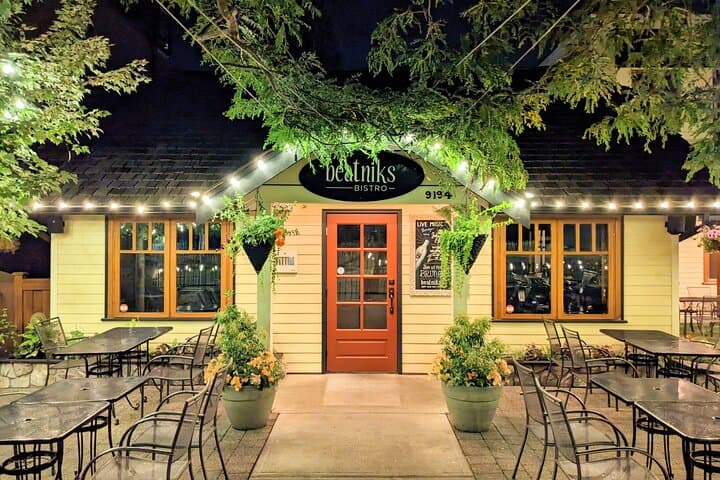
A cold evening presses against storefront windows as your group gathers beneath the heritage lampposts of Fort Langley. Streetlights carve long shadows across brick sidewalks; the Fraser River, like a patient witness, moves dark and slow a few blocks away. This is a walking tour that trades postcard views for the town’s sharper edges—unsolved crimes, local scandals, and the stories officials rarely tell at daytime tours.
A cold evening presses against storefront windows as your group gathers beneath the heritage lampposts of Fort Langley. Streetlights carve long shadows across brick sidewalks; the Fraser River, like a patient witness, moves dark and slow a few blocks away. This is a walking tour that trades postcard views for the town’s sharper edges—unsolved crimes, local scandals, and the stories officials rarely tell at daytime tours.
Fort Langley began as a Hudson’s Bay Company trading post in 1827 and later became a crossroads during the Fraser River Gold Rush. The wooden buildings you pass are more than pretty façades: they are markers of colonial commerce, conflict, and accidental violence that shaped the community. Geologically, the area sits on low Fraser River floodplain—silt and gravel plains that made the village a natural stopping point for river traffic.
Culturally the village blends Indigenous history, settler narratives, and small-town commerce; expect references to the Kwantlen First Nation, Hudson’s Bay operations, and the uneasy social dynamics of a boomtown turned heritage site. Guides lean on archival records, local oral histories, and period newspapers to stitch each account together.
Practical notes: the tour lasts roughly 90 minutes over mostly paved but uneven sidewalks and occasional stairs. Wear sturdy shoes and a warm, rain-ready layer—the river’s microclimate can make nights sharp. Photography is fine but be respectful around private property. The route is compact; bring a small light, a charged phone, and an open mind. If you’re seeking a blend of history, spine-tingling stories, and a hands-on feel for how a community’s past keeps shaping its nights, this walk delivers.