THE ADVENTURE COLLECTIVE® · Independent discovery and booking for outdoor travel

Watch sunrise over Kanchenjunga, ride Darjeeling’s heritage toy train and cross into Sikkim by road. This six-day guided itinerary pairs tea estates and monasteries with manageable drives and local insights—ideal for travelers who prefer scenic exploration over strenuous trekking.
Watch sunrise over Kanchenjunga, ride Darjeeling’s heritage toy train and cross into Sikkim by road. This six-day guided itinerary pairs tea estates and monasteries with manageable drives and local insights—ideal for travelers who prefer scenic exploration over strenuous trekking.
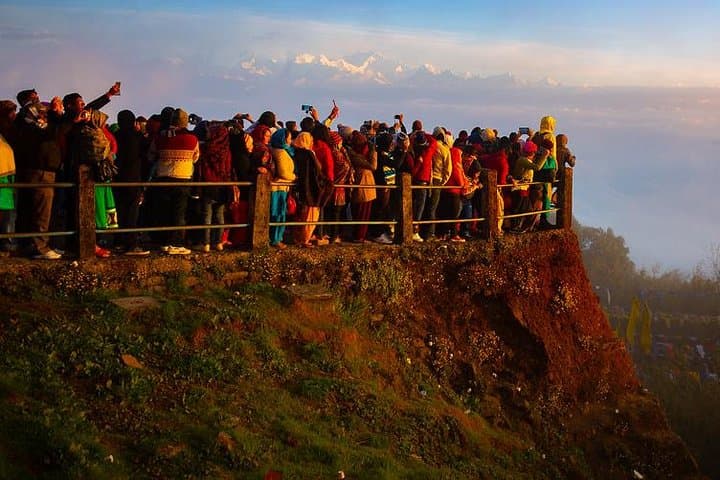
A pre-dawn hush hangs at Tiger Hill as headlights thread the narrow road and a pale ribbon of light lifts off the eastern horizon. You stand with a small crowd while Kanchenjunga looms, its fluted ridges catching the first gold; below, tea bushes fold down the slopes like a living carpet. The road trip that follows stitches together steam-era railways, colonial tea estates, Buddhist monasteries and the carved valleys between Darjeeling and Gangtok.
Verified experiences and guided adventures in the surrounding area.
Operated by I Am Himalaya · Darjeeling, West Bengal
A pre-dawn hush hangs at Tiger Hill as headlights thread the narrow road and a pale ribbon of light lifts off the eastern horizon. You stand with a small crowd while Kanchenjunga looms, its fluted ridges catching the first gold; below, tea bushes fold down the slopes like a living carpet. The road trip that follows stitches together steam-era railways, colonial tea estates, Buddhist monasteries and the carved valleys between Darjeeling and Gangtok.
Darjeeling grew under the British as a cooler retreat and the tea industry that followed shaped its terraces and economy; Ghum holds one of India’s highest railway stations and a small museum that preserves the toy train’s steam-era charm. Geologically you’re in the Lesser Himalaya—young, folded rock and steep river-cut valleys—so expect frequent gradient changes, switchbacks and sudden viewpoints.
Culturally the route moves from Nepali-speaking hill towns into Sikkim’s Tibetan-influenced monasteries; foreign visitors will need an Inner Line Permit to enter Sikkim, which the guide arranges. Practicalities matter: the journey is driven, with long car hours (Bagdogra–Darjeeling ≈3 hrs, Darjeeling–Gangtok ≈5 hrs), short walks at sights, and modest altitude (Darjeeling ~2,000 m). Roads can be wet and narrow; travel light but bring warm layers for early mornings, a daypack for temple visits, and comfortable shoes for cobbled paths.
Expect crisp air, the scent of sun-warmed tea leaves, and frequent stops for views and photography. The trip is accessible to most travelers who tolerate vehicle travel and short, uneven walks—an efficient way to experience Himalayan landscapes without high-altitude trekking.
easy.
6 days.
Suitable for travelers in light to moderate fitness who can handle multiple hours in a vehicle and short, uneven walks at attractions.
Yes—foreign nationals must have an Inner Line Permit to enter Sikkim; the tour operator typically arranges this if you provide passport and visa details in advance.
Not always; the heritage steam engine runs when available and reserved, otherwise diesel or regular services operate—packages often include toy train tickets but steam is subject to scheduling.
Darjeeling sits around 2,000 m and Gangtok around 1,600 m; these are moderate elevations—most travelers experience no serious altitude sickness but stay hydrated and take it easy on the first day.
Yes—this itinerary includes the listed 3-star hotels, daily breakfasts and several dinners as specified; check the booking for exact meal counts and included entrance fees.
Darjeeling developed as a British hill station in the 19th century and the tea estates established then continue to shape the landscape; Sikkim was an independent kingdom until its 1975 integration into India.
High-elevation ecosystems and tea slopes are fragile—respect trails, avoid single-use plastics and follow permit and park rules to reduce impact.
I Am Himalaya operates guided outdoor trips and adventures with an emphasis on safety, stewardship, and memorable experiences.
A pre-dawn hush hangs at Tiger Hill as headlights thread the narrow road and a pale ribbon of light lifts off the eastern horizon. You stand with a small crowd while Kanchenjunga looms, its fluted ridges catching the first gold; below, tea bushes fold down the slopes like a living carpet. The road trip that follows stitches together steam-era railways, colonial tea estates, Buddhist monasteries and the carved valleys between Darjeeling and Gangtok.
A pre-dawn hush hangs at Tiger Hill as headlights thread the narrow road and a pale ribbon of light lifts off the eastern horizon. You stand with a small crowd while Kanchenjunga looms, its fluted ridges catching the first gold; below, tea bushes fold down the slopes like a living carpet. The road trip that follows stitches together steam-era railways, colonial tea estates, Buddhist monasteries and the carved valleys between Darjeeling and Gangtok.
Darjeeling grew under the British as a cooler retreat and the tea industry that followed shaped its terraces and economy; Ghum holds one of India’s highest railway stations and a small museum that preserves the toy train’s steam-era charm. Geologically you’re in the Lesser Himalaya—young, folded rock and steep river-cut valleys—so expect frequent gradient changes, switchbacks and sudden viewpoints.
Culturally the route moves from Nepali-speaking hill towns into Sikkim’s Tibetan-influenced monasteries; foreign visitors will need an Inner Line Permit to enter Sikkim, which the guide arranges. Practicalities matter: the journey is driven, with long car hours (Bagdogra–Darjeeling ≈3 hrs, Darjeeling–Gangtok ≈5 hrs), short walks at sights, and modest altitude (Darjeeling ~2,000 m). Roads can be wet and narrow; travel light but bring warm layers for early mornings, a daypack for temple visits, and comfortable shoes for cobbled paths.
Expect crisp air, the scent of sun-warmed tea leaves, and frequent stops for views and photography. The trip is accessible to most travelers who tolerate vehicle travel and short, uneven walks—an efficient way to experience Himalayan landscapes without high-altitude trekking.