THE ADVENTURE COLLECTIVE® · Independent discovery and booking for outdoor travel

Spend a focused half-day at Dariva, Sarajevo’s accessible limestone climbing area. Guided instruction, routes from 4a–7c, and an easy approach make this a go-to experience for beginners and seasoned climbers alike.
Spend a focused half-day at Dariva, Sarajevo’s accessible limestone climbing area. Guided instruction, routes from 4a–7c, and an easy approach make this a go-to experience for beginners and seasoned climbers alike.
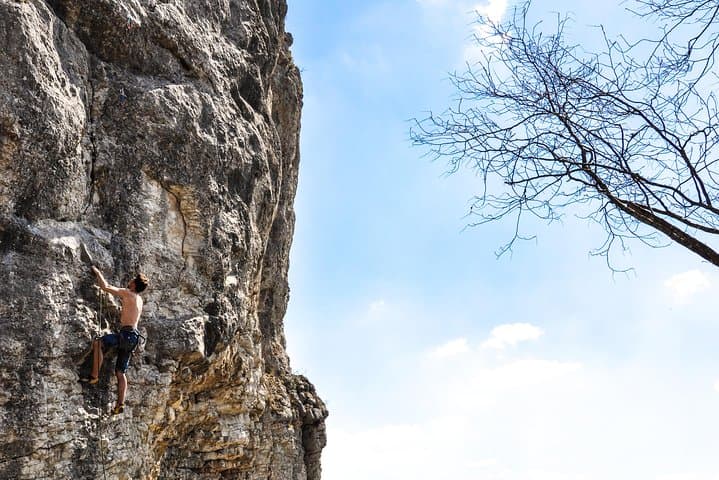
You arrive at the Torus Tours office on Obala Isa-bega Ishakovica and, in an hour, the city’s bustle peels away as the van threads a narrow river canyon. The Miljacka lowers its voice and ancient limestone walls begin to rise — Dariva announces itself with vertical faces streaked by centuries of rain and a wind that seems to test every foothold.
Verified experiences and guided adventures in the surrounding area.
Operated by Torus Tours · Sarajevo, Sarajevo Canton
You arrive at the Torus Tours office on Obala Isa-bega Ishakovica and, in an hour, the city’s bustle peels away as the van threads a narrow river canyon. The Miljacka lowers its voice and ancient limestone walls begin to rise — Dariva announces itself with vertical faces streaked by centuries of rain and a wind that seems to test every foothold.
Dariva was instrumental in the rebirth of sports climbing in Bosnia and Herzegovina after the war; its routes — from friendly 4a slabs to sustained 7c challenges — chart both the technical progression of the sport and the care of a local climbing community that bolted and cleaned lines here in the 1990s and 2000s. Geologically, the rock is compact limestone: pockets, tufas, and sharp edges that reward friction and precise footwork. Culturally the area sits at the edge of Sarajevo’s suburban sprawl, where river trails, small farms, and wartime history meet outdoor life.
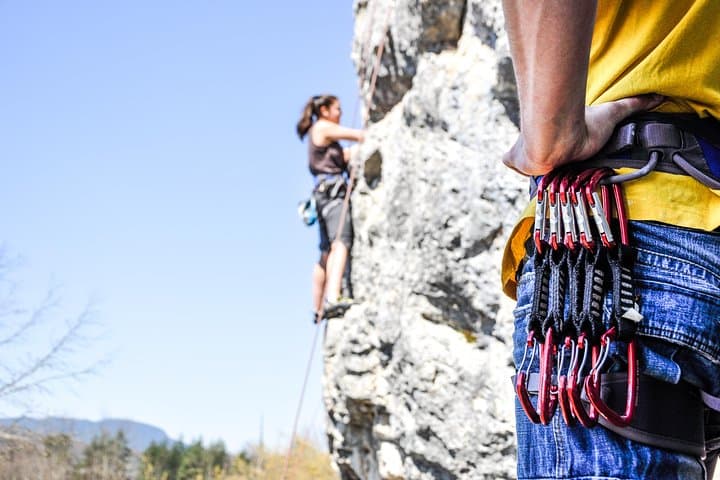
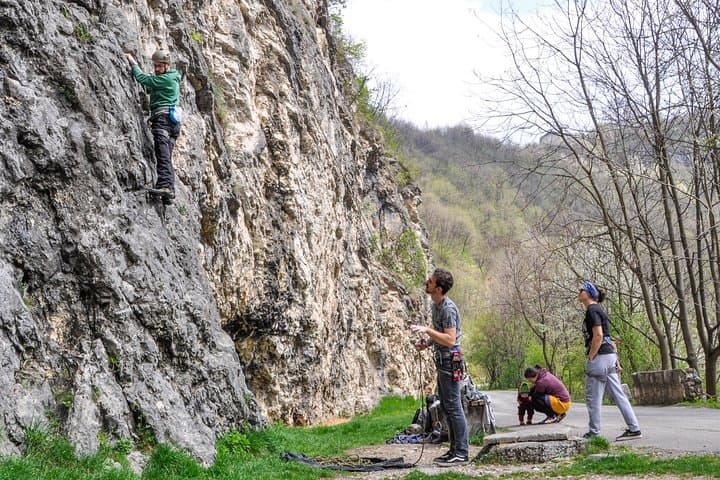
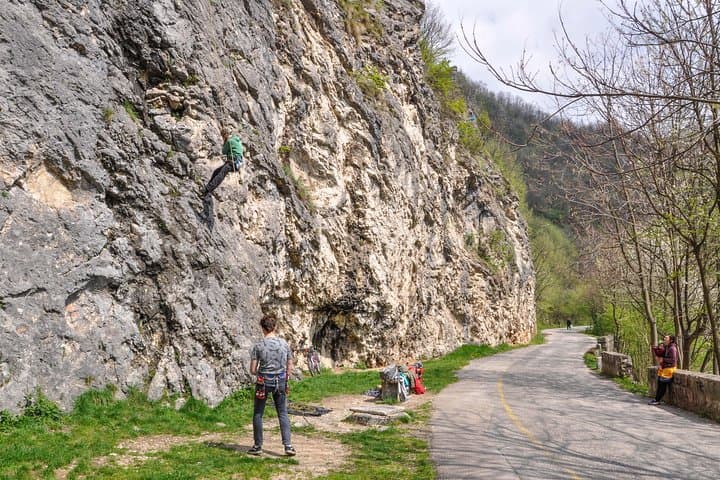
The half-day tour (3–5 hours) is structured for variety: a short forested approach, route selection to match your level, on-the-rock instruction, and multiple top-rope or sport climbs. Expect routes in the 10–30 meter range and an accessible belay structure — anchors are maintained by local groups, but your guide will brief you on equipment and anchor checks before you clip a single quickdraw. The air smells of leaf mold and limestone; the river below dares you to relax as you focus on your next move.
Practical edge: wear approach shoes or light hiking trainers for the walk-in, climbing shoes if you own them (rental is available but often one-size fits awkwardly), and dress in layers — canyon shade cools quickly. Hydrate well before and bring at least 1–2 liters; the guide carries a small first-aid kit and rescue plan but good preparation speeds learning and reduces risk. Mornings or late afternoons are best for cooler rock and better light; mid-day sun can bake exposed faces.
Guides tailor routes to your ability — beginners will learn basic knots (Figure-8), belay technique, and rope etiquette; stronger climbers can work harder sport lines. Pickup from most Sarajevo hotels is available and the meeting point returns you to the city with time left for a coffee in Baščaršija or a stroll along the river.
Whether you’re after an introduction or a few hard moves on Bosnian limestone, Dariva delivers a compact climbing experience: technical, scenic, and rooted in local climbing history. Bring curiosity, steady feet, and a readiness to learn — the rock will do the rest.
moderate.
3–5 hours.
Moderate fitness—comfortable standing, walking on uneven ground, and basic upper-body engagement for pulling on holds.
No — guides teach basic knots, belaying and route selection; beginners are welcome and handled separately from advanced climbers.
Yes — rock climbing equipment (harnesses, helmets, ropes) is included in the price, though you can bring personal shoes or chalk.
Expect a short 10–25 minute approach over uneven, sometimes rocky trails; good approach shoes make it easier.
Tour is family-friendly but not recommended for those with spinal or serious heart conditions; children should be coordinated and age-assessed by the operator.
Yes — the operator offers pickup from most city hotels (you’ll confirm pickup point when booking); otherwise meet at the Torus Tours office on Obala Isa-bega Ishakovica 3.
The tour can be canceled for weather; full refunds are available if canceled at least 24 hours before departure.
Dariva played a central role in post-war development of Bosnian sports climbing; local clubs established many of the bolted routes and maintain the area.
Climbers are asked to minimize chalk use, stick to established trails to prevent erosion, and pack out any waste to protect the river canyon ecosystem.
Torus Tours operates guided outdoor trips and adventures with an emphasis on safety, stewardship, and memorable experiences.
You arrive at the Torus Tours office on Obala Isa-bega Ishakovica and, in an hour, the city’s bustle peels away as the van threads a narrow river canyon. The Miljacka lowers its voice and ancient limestone walls begin to rise — Dariva announces itself with vertical faces streaked by centuries of rain and a wind that seems to test every foothold.
You arrive at the Torus Tours office on Obala Isa-bega Ishakovica and, in an hour, the city’s bustle peels away as the van threads a narrow river canyon. The Miljacka lowers its voice and ancient limestone walls begin to rise — Dariva announces itself with vertical faces streaked by centuries of rain and a wind that seems to test every foothold.
Dariva was instrumental in the rebirth of sports climbing in Bosnia and Herzegovina after the war; its routes — from friendly 4a slabs to sustained 7c challenges — chart both the technical progression of the sport and the care of a local climbing community that bolted and cleaned lines here in the 1990s and 2000s. Geologically, the rock is compact limestone: pockets, tufas, and sharp edges that reward friction and precise footwork. Culturally the area sits at the edge of Sarajevo’s suburban sprawl, where river trails, small farms, and wartime history meet outdoor life.
The half-day tour (3–5 hours) is structured for variety: a short forested approach, route selection to match your level, on-the-rock instruction, and multiple top-rope or sport climbs. Expect routes in the 10–30 meter range and an accessible belay structure — anchors are maintained by local groups, but your guide will brief you on equipment and anchor checks before you clip a single quickdraw. The air smells of leaf mold and limestone; the river below dares you to relax as you focus on your next move.
Practical edge: wear approach shoes or light hiking trainers for the walk-in, climbing shoes if you own them (rental is available but often one-size fits awkwardly), and dress in layers — canyon shade cools quickly. Hydrate well before and bring at least 1–2 liters; the guide carries a small first-aid kit and rescue plan but good preparation speeds learning and reduces risk. Mornings or late afternoons are best for cooler rock and better light; mid-day sun can bake exposed faces.
Guides tailor routes to your ability — beginners will learn basic knots (Figure-8), belay technique, and rope etiquette; stronger climbers can work harder sport lines. Pickup from most Sarajevo hotels is available and the meeting point returns you to the city with time left for a coffee in Baščaršija or a stroll along the river.
Whether you’re after an introduction or a few hard moves on Bosnian limestone, Dariva delivers a compact climbing experience: technical, scenic, and rooted in local climbing history. Bring curiosity, steady feet, and a readiness to learn — the rock will do the rest.