THE ADVENTURE COLLECTIVE® · Independent discovery and booking for outdoor travel

Escape Seoul for a full-day exploration of Guinsa Temple’s terraces, the karst drama of Ondal Cave, and the three stone pillars of Dodamsambong. This guided day trip mixes cultural immersion with short walks and riverside views—ideal for travelers with moderate fitness.
Escape Seoul for a full-day exploration of Guinsa Temple’s terraces, the karst drama of Ondal Cave, and the three stone pillars of Dodamsambong. This guided day trip mixes cultural immersion with short walks and riverside views—ideal for travelers with moderate fitness.
A morning coach peels away from Seoul and the city’s hard angles soften into river valleys and folded ridgelines. By midmorning the bus threads a narrow gorge and Guinsa Temple appears—tiers of crimson and white buildings stacked against a pine-and-hardwood slope, incense drifting like a quiet invitation.
Verified experiences and guided adventures in the surrounding area.
Operated by Lecirt · Danyang, Chungcheongbuk-do
A morning coach peels away from Seoul and the city’s hard angles soften into river valleys and folded ridgelines. By midmorning the bus threads a narrow gorge and Guinsa Temple appears—tiers of crimson and white buildings stacked against a pine-and-hardwood slope, incense drifting like a quiet invitation.
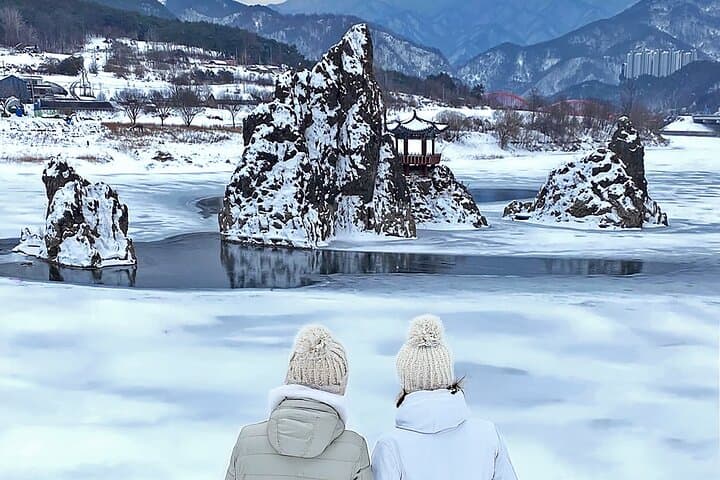
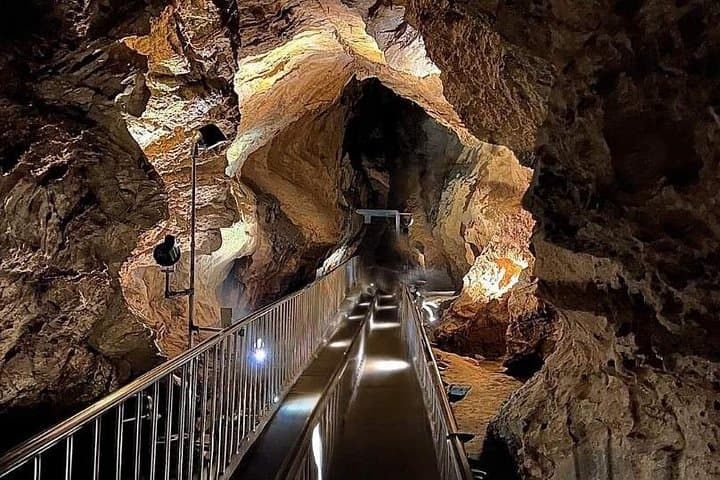
Guinsa grew into one of Korea’s largest temple complexes during the 20th century and functions today as an active monastic center where visitors can sample traditional temple vegetarian fare. Geology takes the stage downstream: Dodamsambong’s three rocky pillars puncture the Namhangang River, limestone formations worn into sculptural columns, while Ondal Cave and its adjacent film-set park sit on karst terrain carved by groundwater over millennia.
Expect mostly short walks: 1–3 km around temple terraces (stone steps and paved paths), a flat riverside boardwalk to the Dodamsambong viewpoint, and a brief cave passage with uneven flooring. Total tour time is a long day—roughly 12–13 hours round-trip from Seoul—including multiple short walks and some uphill stone steps that together may total 100–200 m of cumulative elevation gain.
Practical edge: wear grippy walking shoes, bring a light waterproof layer and 1–2 liters of water, and carry cash for lunch if you skip the included options. The itinerary suits travelers with moderate fitness; those with knee issues should plan accordingly. Aim for early pickup points listed in Seoul to maximize time on-site and avoid late-afternoon traffic on the return.
moderate.
12–13 hours.
Suitable for travelers who can handle multiple short uphill sections and several hours on their feet; not ideal for those with knee problems.
The tour runs about 12–13 hours round-trip from Seoul; common pickup points include Hongik University, Myeongdong, and Dongdaemun with early-morning departures—check your booking for exact times.
The itinerary notes lunch time but meal cost is typically not included—plan to bring cash or buy food at designated stops unless specified otherwise.
Ondal Cave involves a short, uneven passage with low ceilings in places; a moderate level of mobility is recommended and sturdy shoes are advised.
Infants may join but must sit on an adult’s lap; the tour requires moderate walking and some uphill steps so consider the child’s mobility and stamina.
Guinsa developed into a major modern temple complex in the 20th century and serves as an active monastic center where visitors can observe contemporary Buddhist practice.
The river, cave and temple areas are managed to balance tourism with preservation—stay on paths, avoid feeding wildlife, and pack out waste to reduce impact.
Lecirt operates guided outdoor trips and adventures with an emphasis on safety, stewardship, and memorable experiences.
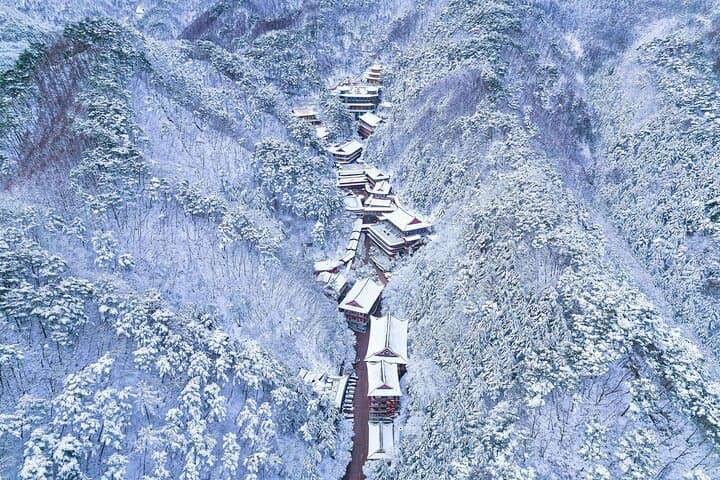
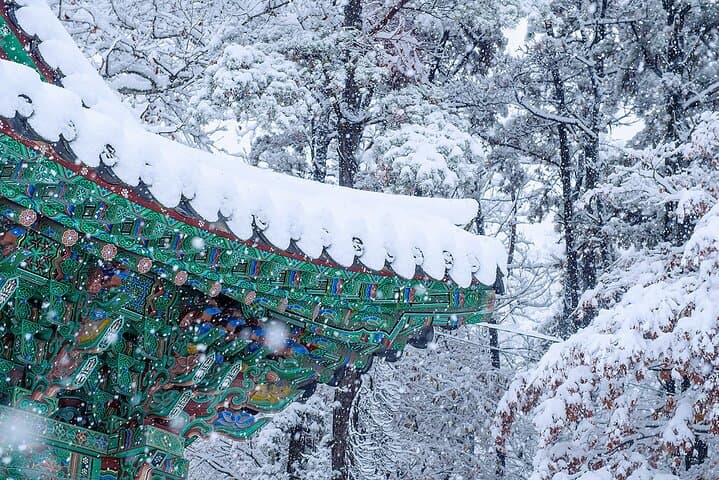
A morning coach peels away from Seoul and the city’s hard angles soften into river valleys and folded ridgelines. By midmorning the bus threads a narrow gorge and Guinsa Temple appears—tiers of crimson and white buildings stacked against a pine-and-hardwood slope, incense drifting like a quiet invitation.
A morning coach peels away from Seoul and the city’s hard angles soften into river valleys and folded ridgelines. By midmorning the bus threads a narrow gorge and Guinsa Temple appears—tiers of crimson and white buildings stacked against a pine-and-hardwood slope, incense drifting like a quiet invitation.
Guinsa grew into one of Korea’s largest temple complexes during the 20th century and functions today as an active monastic center where visitors can sample traditional temple vegetarian fare. Geology takes the stage downstream: Dodamsambong’s three rocky pillars puncture the Namhangang River, limestone formations worn into sculptural columns, while Ondal Cave and its adjacent film-set park sit on karst terrain carved by groundwater over millennia.
Expect mostly short walks: 1–3 km around temple terraces (stone steps and paved paths), a flat riverside boardwalk to the Dodamsambong viewpoint, and a brief cave passage with uneven flooring. Total tour time is a long day—roughly 12–13 hours round-trip from Seoul—including multiple short walks and some uphill stone steps that together may total 100–200 m of cumulative elevation gain.
Practical edge: wear grippy walking shoes, bring a light waterproof layer and 1–2 liters of water, and carry cash for lunch if you skip the included options. The itinerary suits travelers with moderate fitness; those with knee issues should plan accordingly. Aim for early pickup points listed in Seoul to maximize time on-site and avoid late-afternoon traffic on the return.