THE ADVENTURE COLLECTIVE® · Independent discovery and booking for outdoor travel

A full-day speedboat journey from Bucharest that reaches the heart of the UNESCO-listed Danube Delta. Expect reed-lined channels, close bird encounters, and practical guidance for a long but highly rewarding day on the water.
A full-day speedboat journey from Bucharest that reaches the heart of the UNESCO-listed Danube Delta. Expect reed-lined channels, close bird encounters, and practical guidance for a long but highly rewarding day on the water.
Morning light slices across the reedbeds as the speedboat lifts off the water and drives you into a braided maze of channels. Reeds lean like watchful sentries and the river seems to breathe, pushing you deeper into a place where water maps the land and birds write the margins.
Verified experiences and guided adventures in the surrounding area.
Morning light slices across the reedbeds as the speedboat lifts off the water and drives you into a braided maze of channels. Reeds lean like watchful sentries and the river seems to breathe, pushing you deeper into a place where water maps the land and birds write the margins.
Geology here is patient: the Danube has built the delta over millennia, depositing silt that created islands, lagoons and a network of slow-flowing channels. Culturally the delta is layered too — Lipovan and Romanian fishing communities have read the waters for generations, their wooden boats and simple reed lodges part of a pragmatic rhythm.
Expect close-up wildlife viewing — pelicans wheel like slow clouds, herons hold statuesque vigil, and cormorants flash black along channel edges. Guides point out reed islands, floating mats of lilies and the small openings where otters slip unseen. The UNESCO designation protects this fragile wetland, so tours stay in channels and avoid sensitive nesting areas.
Practical notes: this is a full-day outing from Bucharest with hotel pickup and a Tulcea boarding. Bring binoculars, sun protection and a light waterproof layer; speedboat wakes and a delta breeze make conditions changeable. Photography works best with a mid-range zoom; keep movement slow during bird watches to avoid startling wildlife. If you’re prone to motion sickness, take precautions before boarding. The pace alternates between active spotting and quiet drifting — come prepared to move, but mostly to observe.
easy.
12 hours.
Suitable for most fitness levels; requires getting on/off a speedboat and brief walking on piers.
The tour departs early from Bucharest with coach transfer to Tulcea; total excursion time is about 12 hours (including transport).
Yes — common sightings include Dalmatian pelicans, herons and cormorants, though exact encounters depend on season and weather.
The operator notes it’s suitable for most ages but not recommended for pregnant travelers or those with serious heart conditions; check the booking restrictions before reserving.
Tours may be canceled for safety in poor weather; the cancellation policy usually allows full refunds if canceled more than 24 hours in advance.
The delta formed as Danube sediments accumulated over millennia; the area has long been home to fishing communities and distinct Lipovan cultural traditions.
The Danube Delta is a protected UNESCO site; follow guide instructions to avoid disturbing nesting birds and reduce plastic and noise pollution.
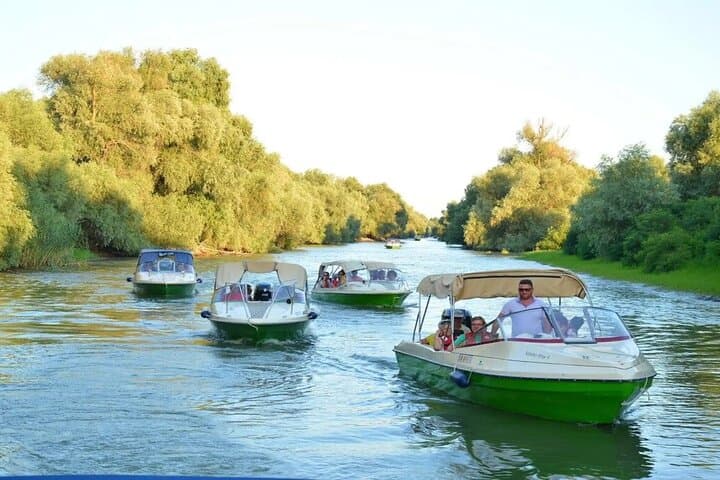
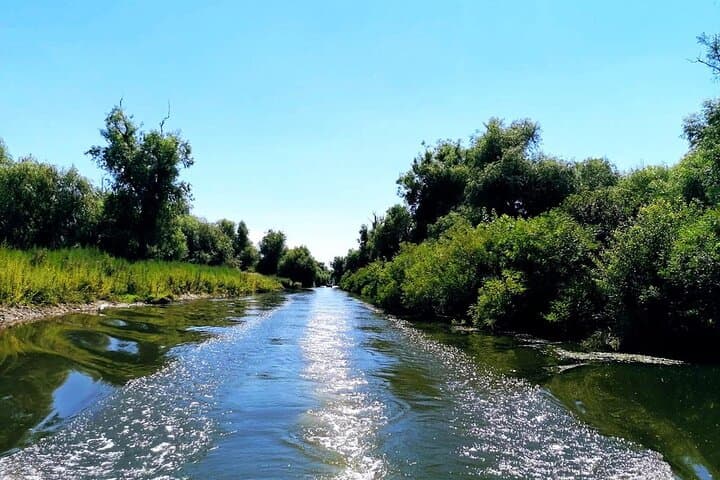


Morning light slices across the reedbeds as the speedboat lifts off the water and drives you into a braided maze of channels. Reeds lean like watchful sentries and the river seems to breathe, pushing you deeper into a place where water maps the land and birds write the margins.
Morning light slices across the reedbeds as the speedboat lifts off the water and drives you into a braided maze of channels. Reeds lean like watchful sentries and the river seems to breathe, pushing you deeper into a place where water maps the land and birds write the margins.
Geology here is patient: the Danube has built the delta over millennia, depositing silt that created islands, lagoons and a network of slow-flowing channels. Culturally the delta is layered too — Lipovan and Romanian fishing communities have read the waters for generations, their wooden boats and simple reed lodges part of a pragmatic rhythm.
Expect close-up wildlife viewing — pelicans wheel like slow clouds, herons hold statuesque vigil, and cormorants flash black along channel edges. Guides point out reed islands, floating mats of lilies and the small openings where otters slip unseen. The UNESCO designation protects this fragile wetland, so tours stay in channels and avoid sensitive nesting areas.
Practical notes: this is a full-day outing from Bucharest with hotel pickup and a Tulcea boarding. Bring binoculars, sun protection and a light waterproof layer; speedboat wakes and a delta breeze make conditions changeable. Photography works best with a mid-range zoom; keep movement slow during bird watches to avoid startling wildlife. If you’re prone to motion sickness, take precautions before boarding. The pace alternates between active spotting and quiet drifting — come prepared to move, but mostly to observe.