THE ADVENTURE COLLECTIVE® · Independent discovery and booking for outdoor travel

Step into Manrique’s streets to watch a neighborhood transform through music and movement. This two-hour visit to Unión Latina and UVA La Armonía combines performance, a short documentary, and a hands-on dance class led by local instructors.
Step into Manrique’s streets to watch a neighborhood transform through music and movement. This two-hour visit to Unión Latina and UVA La Armonía combines performance, a short documentary, and a hands-on dance class led by local instructors.
A narrow street in Manrique hums before the tour begins — radio bass threaded through open doorways, children practicing turns in doorways, and painted murals watching like patient crowds. Participants meet at the Plaza Manrique, where concrete and color meet, and follow a local guide into a neighborhood rebuilt around music and movement.
Verified experiences and guided adventures in the surrounding area.
Operated by Impulse Travel · Medellín, Antioquia
A narrow street in Manrique hums before the tour begins — radio bass threaded through open doorways, children practicing turns in doorways, and painted murals watching like patient crowds. Participants meet at the Plaza Manrique, where concrete and color meet, and follow a local guide into a neighborhood rebuilt around music and movement.
Manrique sits on the northeastern slope of the Aburrá Valley, a district shaped by migration and community-led projects since the late 20th century. The geology of the valley — steep inclines and compacted urban pockets — has influenced how residents gather: plazas, UVAs (urban social spaces) and small academies become public stages. Unión Latina is one such academy, founded by a neighborhood dancer and grown into a social program that has steered thousands of youngsters toward performance and away from past conflict.
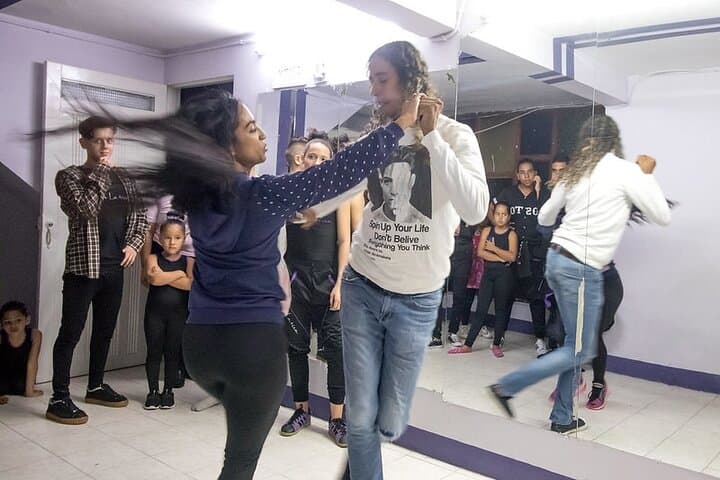
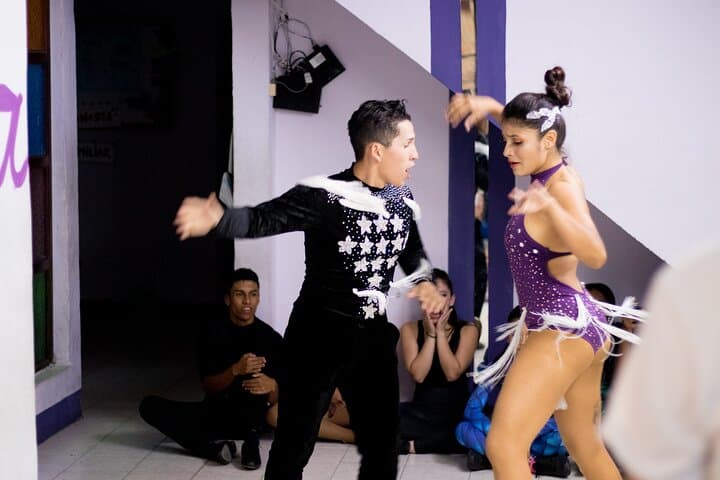
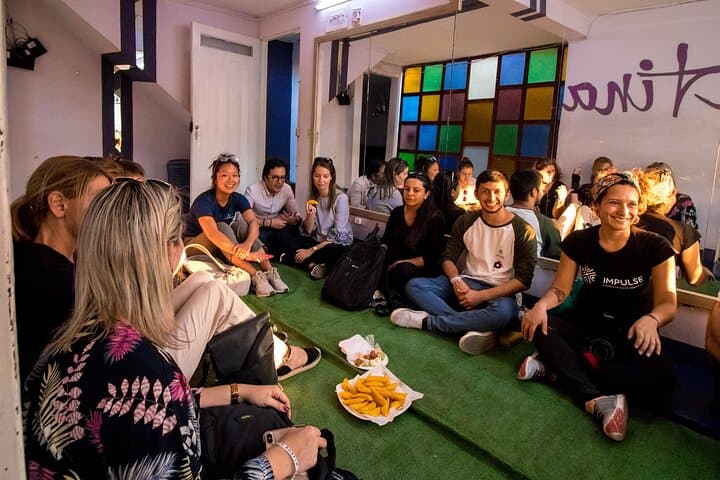
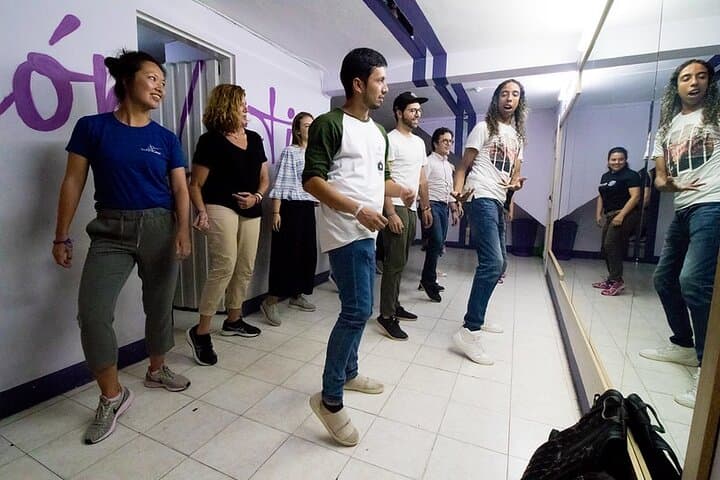
On this two-hour visit expect a short documentary screening, a guided walkthrough of dance practice, a live performance and an introductory class where you’ll try basic steps. The rhythm is immediate: percussion daring you forward, sneakers marking time on concrete.
Practical guidance: arrive wearing supportive shoes and light layers; sessions are active but accessible for most fitness levels. Bring a refillable water bottle and small cash for snacks or donations. Photography may be welcomed but ask before filming performances; respect young performers and instructors. Tours often run rain or shine, but cancelations can occur with bad weather — plan flexible transport and leave a two-hour window for travel in Medellín’s traffic.
easy.
2 hours.
Suitable for most people with basic mobility; involves standing and light movement.
Yes; the program is family-friendly and designed around youth projects, though younger children should be supervised during active sessions.
No prior experience is required—the class covers beginner steps and focuses on participation rather than skill level.
Many community spaces have uneven surfaces and steps; contact the operator in advance to discuss accessibility needs and possible accommodations.
Guides typically speak Spanish; some operators may provide English-speaking guides if requested—ask when booking.
Manrique evolved from informal settlements into a neighborhood defined by strong community initiatives; cultural programs like Unión Latina grew in response to social challenges in the late 20th century.
Support community-run projects, avoid leaving waste in public spaces, and follow guides’ instructions to minimize impact on shared urban facilities.
Impulse Travel operates guided outdoor trips and adventures with an emphasis on safety, stewardship, and memorable experiences.
A narrow street in Manrique hums before the tour begins — radio bass threaded through open doorways, children practicing turns in doorways, and painted murals watching like patient crowds. Participants meet at the Plaza Manrique, where concrete and color meet, and follow a local guide into a neighborhood rebuilt around music and movement.
A narrow street in Manrique hums before the tour begins — radio bass threaded through open doorways, children practicing turns in doorways, and painted murals watching like patient crowds. Participants meet at the Plaza Manrique, where concrete and color meet, and follow a local guide into a neighborhood rebuilt around music and movement.
Manrique sits on the northeastern slope of the Aburrá Valley, a district shaped by migration and community-led projects since the late 20th century. The geology of the valley — steep inclines and compacted urban pockets — has influenced how residents gather: plazas, UVAs (urban social spaces) and small academies become public stages. Unión Latina is one such academy, founded by a neighborhood dancer and grown into a social program that has steered thousands of youngsters toward performance and away from past conflict.
On this two-hour visit expect a short documentary screening, a guided walkthrough of dance practice, a live performance and an introductory class where you’ll try basic steps. The rhythm is immediate: percussion daring you forward, sneakers marking time on concrete.
Practical guidance: arrive wearing supportive shoes and light layers; sessions are active but accessible for most fitness levels. Bring a refillable water bottle and small cash for snacks or donations. Photography may be welcomed but ask before filming performances; respect young performers and instructors. Tours often run rain or shine, but cancelations can occur with bad weather — plan flexible transport and leave a two-hour window for travel in Medellín’s traffic.