THE ADVENTURE COLLECTIVE® · Independent discovery and booking for outdoor travel

Glide through Damnoen Saduak’s canal lanes, watch vendors collapse stalls for a passing train at Mae Klong, and sample coconut nectar at a working farm—an efficient, sensory-packed day trip from Bangkok.
Glide through Damnoen Saduak’s canal lanes, watch vendors collapse stalls for a passing train at Mae Klong, and sample coconut nectar at a working farm—an efficient, sensory-packed day trip from Bangkok.
The motorboat slips forward and the market opens like a living map—vendors calling, lacquered bowls bobbing, steam rising from noodle pots. Early light cuts across the narrow canals of Damnoen Saduak and you feel the pace of commerce set by the water.
Verified experiences and guided adventures in the surrounding area.
Operated by Thailand Insight Travel · Damnoen Saduak, Ratchaburi
The motorboat slips forward and the market opens like a living map—vendors calling, lacquered bowls bobbing, steam rising from noodle pots. Early light cuts across the narrow canals of Damnoen Saduak and you feel the pace of commerce set by the water.
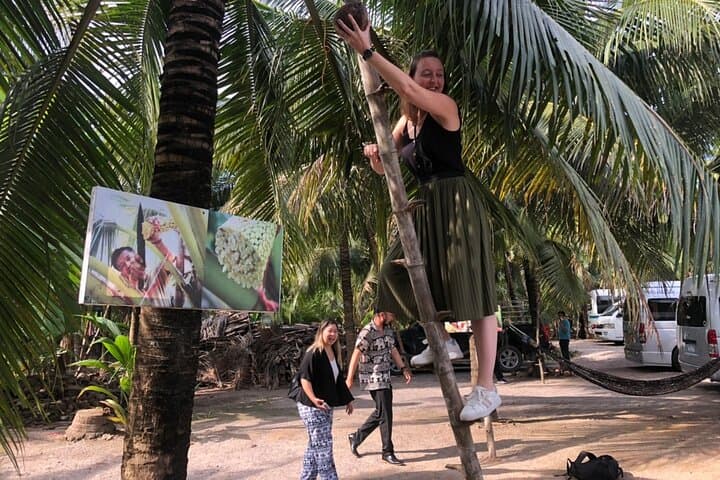
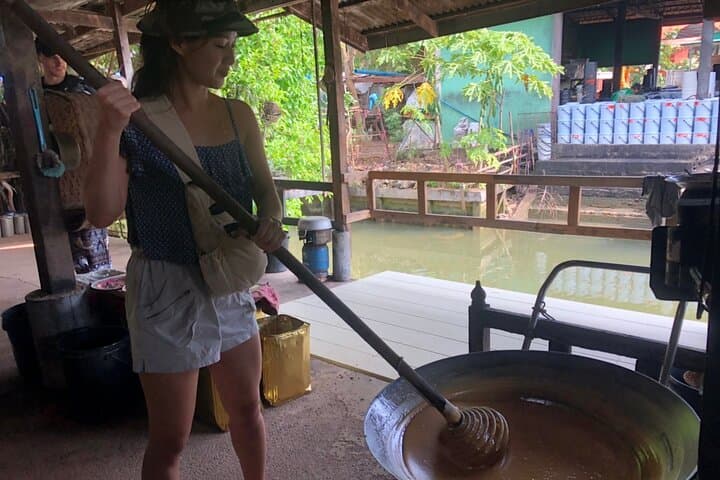
This full-day outing pairs the century-old waterborne trading culture of Damnoen Saduak with the theatrical cadence of Mae Klong Railway Market. The canals here trace a regional history where canals and later railroads became arteries of trade; boats and baskets are still primary tools. Geology is subtle: a flat river plain fed by the Mae Klong watershed, the landscape shaped for rice and coconut cultivation rather than dramatic elevation. At a local coconut farm you’ll see traditional nectar and palm-sugar production—hands-on techniques passed between generations.
Culture in this corridor is tactile: bargaining over boat-side snacks, vendors folding awnings in choreographed seconds as a train screams through, and garden-style restaurants like Kwan Damnoen offering the kind of fresh, home-style cooking that anchors a touring day.
Practical side: expect 6–8 hours door-to-door from central Bangkok, a mix of short walking, boat time, and one train approach to Mae Klong. Bring small bills, sun protection, and comfortable shoes; cameras and a steady hand reward quick-moving scenes. Plan mornings for cooler light and lighter crowds, and be ready to move when vendors clear space for the train—this is tourism at the speed of local life.
easy.
6–8 hours.
Suitable for most fitness levels; involves short walks, boarding a motorboat, and standing during market visits.
The tour is about 6–8 hours roundtrip including hotel pickup and drop-off; actual market time and travel windows depend on traffic and boat conditions.
Yes—motorboat rides through Damnoen Saduak’s canals are part of the itinerary provided by the tour operator.
Yes—this experience is family-friendly; infants under 1 year typically travel free, but keep close watch near water and busy docks.
Absolutely—markets are cash-based for most stalls; bring small bills and be prepared to negotiate politely for souvenirs and snacks.
Damnoen Saduak grew where canals became the principal trade routes outside Bangkok, while Mae Klong’s market developed alongside the railway—both reflect how transport shaped regional commerce.
Tourism concentrates impacts on fragile canal ecosystems and plastic waste; bring reusable containers, avoid single-use plastics, and buy from local producers to support sustainable livelihoods.
Thailand Insight Travel operates guided outdoor trips and adventures with an emphasis on safety, stewardship, and memorable experiences.
The motorboat slips forward and the market opens like a living map—vendors calling, lacquered bowls bobbing, steam rising from noodle pots. Early light cuts across the narrow canals of Damnoen Saduak and you feel the pace of commerce set by the water.
The motorboat slips forward and the market opens like a living map—vendors calling, lacquered bowls bobbing, steam rising from noodle pots. Early light cuts across the narrow canals of Damnoen Saduak and you feel the pace of commerce set by the water.
This full-day outing pairs the century-old waterborne trading culture of Damnoen Saduak with the theatrical cadence of Mae Klong Railway Market. The canals here trace a regional history where canals and later railroads became arteries of trade; boats and baskets are still primary tools. Geology is subtle: a flat river plain fed by the Mae Klong watershed, the landscape shaped for rice and coconut cultivation rather than dramatic elevation. At a local coconut farm you’ll see traditional nectar and palm-sugar production—hands-on techniques passed between generations.
Culture in this corridor is tactile: bargaining over boat-side snacks, vendors folding awnings in choreographed seconds as a train screams through, and garden-style restaurants like Kwan Damnoen offering the kind of fresh, home-style cooking that anchors a touring day.
Practical side: expect 6–8 hours door-to-door from central Bangkok, a mix of short walking, boat time, and one train approach to Mae Klong. Bring small bills, sun protection, and comfortable shoes; cameras and a steady hand reward quick-moving scenes. Plan mornings for cooler light and lighter crowds, and be ready to move when vendors clear space for the train—this is tourism at the speed of local life.