THE ADVENTURE COLLECTIVE® · Independent discovery and booking for outdoor travel

Float through wooden canals and shop from longtail boats at Damnoen Saduak, then extend your day to swim beneath Erawan’s emerald tiers. This private tour combines hands-on market culture, a coconut sugar farm visit, and optional natural swimming in a single day.
Float through wooden canals and shop from longtail boats at Damnoen Saduak, then extend your day to swim beneath Erawan’s emerald tiers. This private tour combines hands-on market culture, a coconut sugar farm visit, and optional natural swimming in a single day.
You step off the minivan into humid air threaded with diesel, coconut smoke and the chatter of vendors. Narrow canals run like veins through wooden stalls; longtail boats bob and lean as sellers paddle past stacked baskets of tropical fruit and steaming noodles. The market is kinetic — a marketplace built on water and movement, inviting you to move with it.
Verified experiences and guided adventures in the surrounding area.
Operated by T V G TRAVEL AND TOURISM L.L.C · Damnoen Saduak, Ratchaburi
You step off the minivan into humid air threaded with diesel, coconut smoke and the chatter of vendors. Narrow canals run like veins through wooden stalls; longtail boats bob and lean as sellers paddle past stacked baskets of tropical fruit and steaming noodles. The market is kinetic — a marketplace built on water and movement, inviting you to move with it.
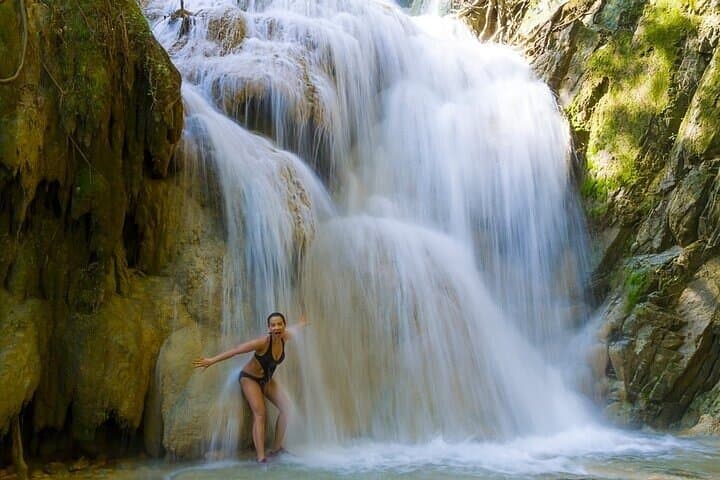
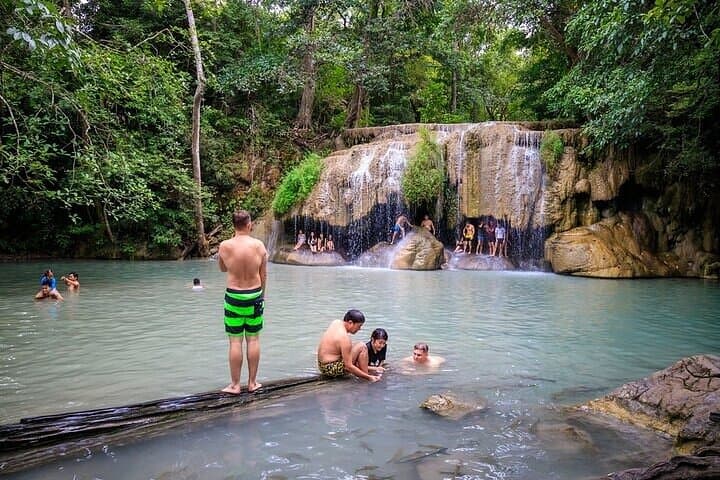
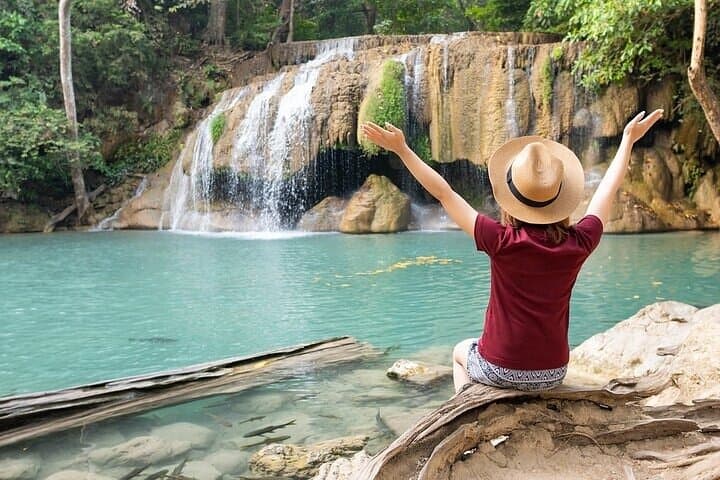
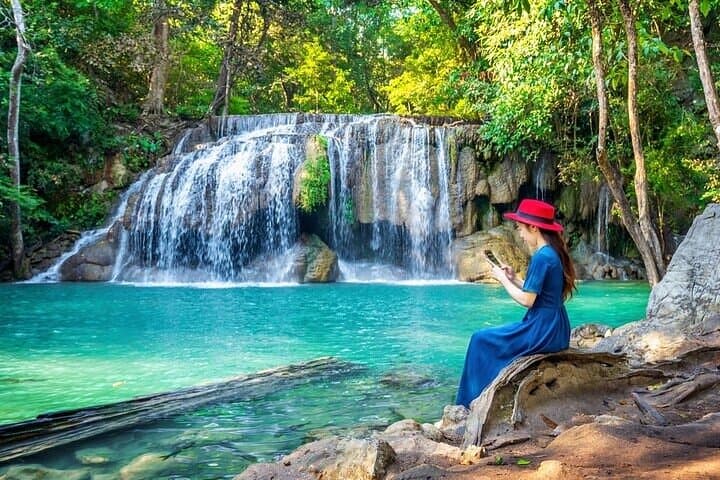
The Mae Klong Railway Market nearby offers a counterpoint: produce laid on tracks that vanish for passing trains, a living example of commerce adapting to infrastructure. This region sits on low alluvial plains carved by the Mae Klong river system; soils and waterways have long supported rice, orchards and the small-scale crafts you’ll see at the coconut sugar farm. Head west to Kanchanaburi and the limestone and shale of the Tenasserim Hills give rise to Erawan’s seven tiers, each emerald pool framed by moss and limestone terraces.
Culturally, the area blends riverine trade with Buddhist temple life and wartime history — the Bridge on the River Kwai is a short drive and offers a sobering historical context to the natural beauty.
Practical guidance: arrive early to avoid crowds and mid-day heat, wear closed-toe shoes for uneven piers and market walkways, and bring cash in small notes for bargaining. If you pick Option B, pack swimwear and a towel for Erawan’s natural pools; lifeguards are limited and some tiers require rock-hopping. Stay hydrated, use reef-safe sunscreen if swimming, and respect boat operators’ instructions when boarding. The tour balances cultural immersion with a short, scenic nature stop — compact, active, and photograph-ready.
easy.
6–10 hours.
Suitable for most fitness levels; expect moderate walking, short boat transfers, and some stair/rock scrambles at Erawan if chosen.
Yes — the tour includes hotel pickup and drop-off from central Bangkok; confirm your pickup point at booking.
Yes, several tiers are swimmable and popular for cooling off; bring swimwear and be prepared for uneven rocks and variable currents.
Typical stops at Damnoen Saduak last about 60–120 minutes depending on the itinerary option, allowing for boat rides and shopping.
Yes — vendors quickly pull back awnings and goods before the train passes; it’s a managed, regular occurrence, but keep children close.
The Mae Klong and Damnoen markets grew from river trade networks; nearby Kanchanaburi later became notable for its WWII-era bridge and rail history.
Tour operators encourage minimizing plastic waste around canals and following park rules at Erawan to protect water quality and native vegetation.
T V G TRAVEL AND TOURISM L.L.C operates guided outdoor trips and adventures with an emphasis on safety, stewardship, and memorable experiences.
You step off the minivan into humid air threaded with diesel, coconut smoke and the chatter of vendors. Narrow canals run like veins through wooden stalls; longtail boats bob and lean as sellers paddle past stacked baskets of tropical fruit and steaming noodles. The market is kinetic — a marketplace built on water and movement, inviting you to move with it.
You step off the minivan into humid air threaded with diesel, coconut smoke and the chatter of vendors. Narrow canals run like veins through wooden stalls; longtail boats bob and lean as sellers paddle past stacked baskets of tropical fruit and steaming noodles. The market is kinetic — a marketplace built on water and movement, inviting you to move with it.
The Mae Klong Railway Market nearby offers a counterpoint: produce laid on tracks that vanish for passing trains, a living example of commerce adapting to infrastructure. This region sits on low alluvial plains carved by the Mae Klong river system; soils and waterways have long supported rice, orchards and the small-scale crafts you’ll see at the coconut sugar farm. Head west to Kanchanaburi and the limestone and shale of the Tenasserim Hills give rise to Erawan’s seven tiers, each emerald pool framed by moss and limestone terraces.
Culturally, the area blends riverine trade with Buddhist temple life and wartime history — the Bridge on the River Kwai is a short drive and offers a sobering historical context to the natural beauty.
Practical guidance: arrive early to avoid crowds and mid-day heat, wear closed-toe shoes for uneven piers and market walkways, and bring cash in small notes for bargaining. If you pick Option B, pack swimwear and a towel for Erawan’s natural pools; lifeguards are limited and some tiers require rock-hopping. Stay hydrated, use reef-safe sunscreen if swimming, and respect boat operators’ instructions when boarding. The tour balances cultural immersion with a short, scenic nature stop — compact, active, and photograph-ready.