THE ADVENTURE COLLECTIVE® · Independent discovery and booking for outdoor travel

Experience two of Thailand’s most kinetic markets in one day: paddle through Damnoen Saduak’s canal trade and watch a train slice through Maeklong’s umbrella market. This practical day trip pairs market browsing with a temple visit and local lunch.
Experience two of Thailand’s most kinetic markets in one day: paddle through Damnoen Saduak’s canal trade and watch a train slice through Maeklong’s umbrella market. This practical day trip pairs market browsing with a temple visit and local lunch.
At first light the canal is a ribbon of movement: long-tail boats carve reflections, vendors push trays of grilled banana and fragrant curries close enough to touch, and the air tastes of sugar and river mud. By midmorning the scene snaps eastward to Maeklong, where a full-sized train threads through an alley of umbrellas and stacked produce, obliging vendors to fold awnings in a practiced pause before the engine roars past.
Verified experiences and guided adventures in the surrounding area.
Operated by TakeMeTour · Damnoen Saduak, Ratchaburi
At first light the canal is a ribbon of movement: long-tail boats carve reflections, vendors push trays of grilled banana and fragrant curries close enough to touch, and the air tastes of sugar and river mud. By midmorning the scene snaps eastward to Maeklong, where a full-sized train threads through an alley of umbrellas and stacked produce, obliging vendors to fold awnings in a practiced pause before the engine roars past.
These places grew from the rhythms of water and rail. Damnoen Saduak sits on the flat alluvial plains fed by the Mae Klong watershed—canals, piers and wooden walkways organize commerce—and Maeklong’s market rose where the railway met local trade in the early 20th century. The culture is pragmatic and performative: loud bargaining, dishes cooked to order, and a persistent economy timed to tides and timetables. Wat Bang Kung nearby is notable for a small shrine slowly reclaimed by a banyan’s roots, a quiet counterpoint to market clamor.
Practically, plan for a 6–7 hour outing with short boat rides, plenty of standing and easy walking on uneven docks and packed earth. Bring small-denomination cash, wear grippy closed-toe shoes, and expect crowds and strong sun by late morning. Photography is welcome but ask before taking portraits; at the temple cover shoulders and knees and remove shoes at the shrine. Guides typically provide air-conditioned transfers and lunch; leaving Bangkok around 6:00–7:00 AM hits peak activity and cooler temperatures. Finally, minimize plastic waste and keep belongings secure on narrow boats—these markets reward curiosity and attention in equal measure.
easy.
6–7 hours.
Suitable for most fitness levels; requires short walking and standing on uneven surfaces.
Most operators include air-conditioned pickup and drop-off from central Bangkok; check your booking confirmation for exact pickup points.
Yes, this itinerary notes a local lunch is included as part of the tour package.
The tour involves uneven docks, boat steps and standing in crowded markets; it’s marked as physically easy but not recommended for those with serious spinal or heart conditions.
Yes—vendors momentarily retract stalls and the crowd steps back in a practiced routine; follow guide instructions and keep a safe distance.
These markets reflect centuries of river trade and the regional impact of Thailand’s early 20th-century railway expansion, which brought market activity directly to the tracks.
Waterways are sensitive—avoid single-use plastics, dispose of food waste responsibly, and respect vendors’ efforts to keep canals clear of debris.
TakeMeTour operates guided outdoor trips and adventures with an emphasis on safety, stewardship, and memorable experiences.
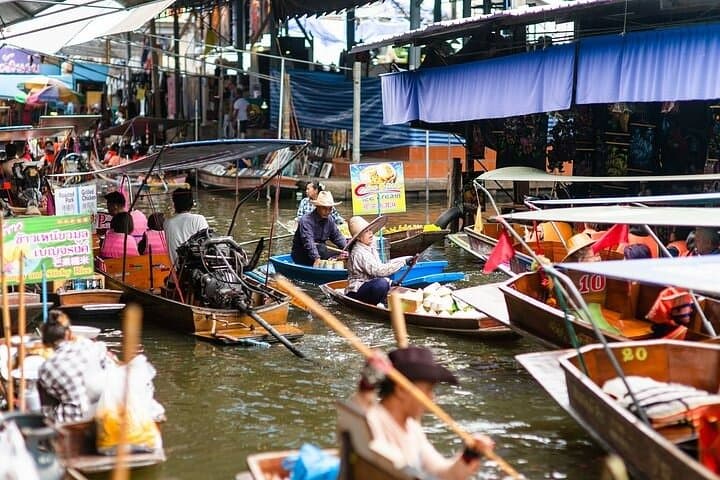
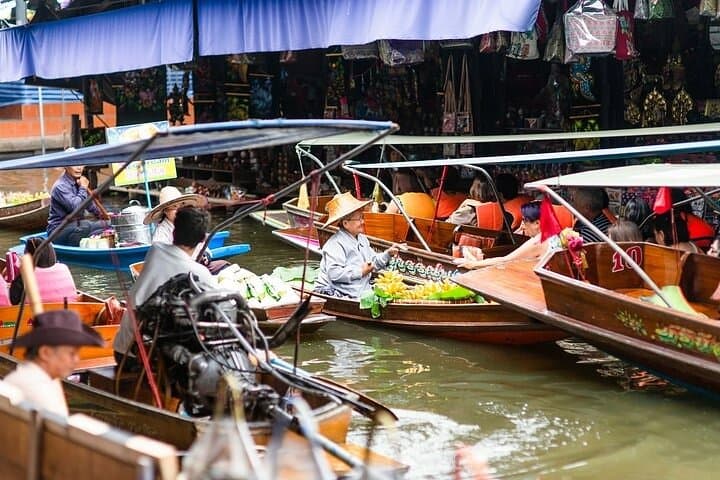
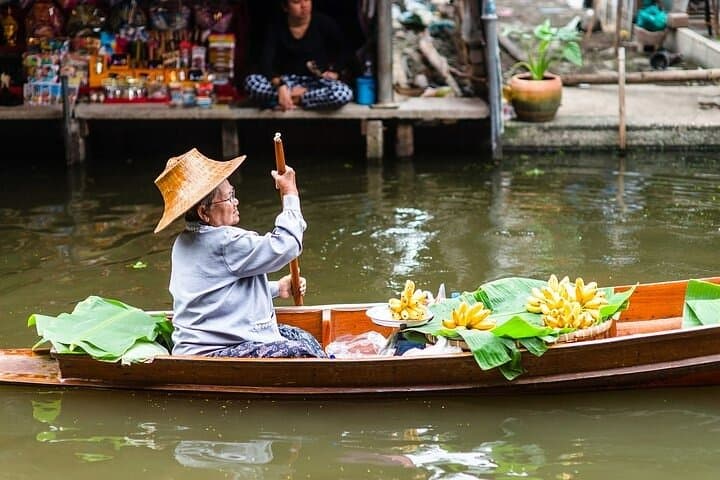
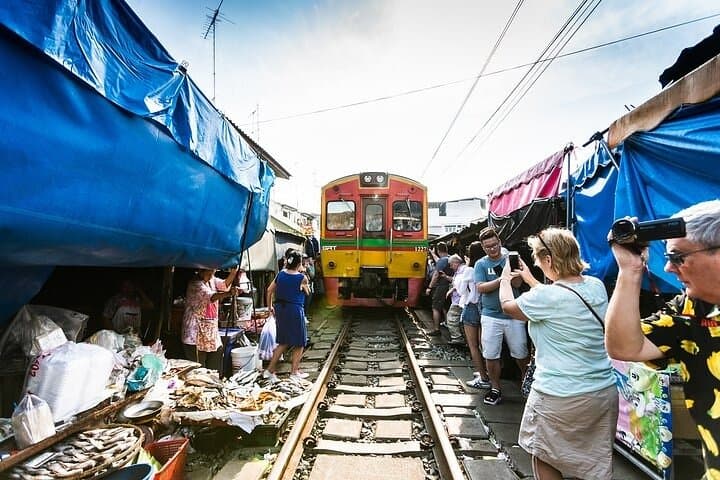
At first light the canal is a ribbon of movement: long-tail boats carve reflections, vendors push trays of grilled banana and fragrant curries close enough to touch, and the air tastes of sugar and river mud. By midmorning the scene snaps eastward to Maeklong, where a full-sized train threads through an alley of umbrellas and stacked produce, obliging vendors to fold awnings in a practiced pause before the engine roars past.
At first light the canal is a ribbon of movement: long-tail boats carve reflections, vendors push trays of grilled banana and fragrant curries close enough to touch, and the air tastes of sugar and river mud. By midmorning the scene snaps eastward to Maeklong, where a full-sized train threads through an alley of umbrellas and stacked produce, obliging vendors to fold awnings in a practiced pause before the engine roars past.
These places grew from the rhythms of water and rail. Damnoen Saduak sits on the flat alluvial plains fed by the Mae Klong watershed—canals, piers and wooden walkways organize commerce—and Maeklong’s market rose where the railway met local trade in the early 20th century. The culture is pragmatic and performative: loud bargaining, dishes cooked to order, and a persistent economy timed to tides and timetables. Wat Bang Kung nearby is notable for a small shrine slowly reclaimed by a banyan’s roots, a quiet counterpoint to market clamor.
Practically, plan for a 6–7 hour outing with short boat rides, plenty of standing and easy walking on uneven docks and packed earth. Bring small-denomination cash, wear grippy closed-toe shoes, and expect crowds and strong sun by late morning. Photography is welcome but ask before taking portraits; at the temple cover shoulders and knees and remove shoes at the shrine. Guides typically provide air-conditioned transfers and lunch; leaving Bangkok around 6:00–7:00 AM hits peak activity and cooler temperatures. Finally, minimize plastic waste and keep belongings secure on narrow boats—these markets reward curiosity and attention in equal measure.