THE ADVENTURE COLLECTIVE® · Independent discovery and booking for outdoor travel

Climb Damian (Gou Po) Hill for a half-day private tour that delivers the iconic First Bend Li River view. Expect steep stone steps, panoramic karst peaks, and a sunrise that paints the river like glass.
Climb Damian (Gou Po) Hill for a half-day private tour that delivers the iconic First Bend Li River view. Expect steep stone steps, panoramic karst peaks, and a sunrise that paints the river like glass.
On the stone steps up Damian (Gou Po) Hill the Li River widens into a green mirror and the karst peaks lean in as if to watch. Climbers move in steady rhythm—breathing, stepping, pausing to let clouds slide over the limestone ribs. From the summit the river makes its famous bow, the first bend—Xingping’s boats like small commas on a vast page.
Verified experiences and guided adventures in the surrounding area.
Operated by happychinatours · Yangshuo, Guangxi
On the stone steps up Damian (Gou Po) Hill the Li River widens into a green mirror and the karst peaks lean in as if to watch. Climbers move in steady rhythm—breathing, stepping, pausing to let clouds slide over the limestone ribs. From the summit the river makes its famous bow, the first bend—Xingping’s boats like small commas on a vast page.
The ridge is part of the Guilin karst landscape carved over millions of years as water dissolved limestone into towers and caves. Local fishing families and bamboo rafters have used these bends for generations; the view here has been a canvas for Chinese painters since the Tang dynasty. Snail Hill and the old walled hill across the water are regional landmarks, their names tied to village histories and seasonal floods.
Expect steep stone steps—about 1,250 counted by guides—and roughly 400 meters of vertical effort on the ascent and descent. Trails are exposed in places; rain turns steps slick. The climb rewards you with layered light, river reflections, and a panoramic census of peaks and paddies that shift with the sun.
Practical edge: start early to avoid midday heat and get the best light, wear shoes with firm grip, and carry 1–2 liters of water. If you travel in a private tour, confirm pickup times and ask the guide about local weather—visibility can evaporate in mist. Leave no trace on stepped trails; many villagers depend on the flow of responsible visitors. This half-day outing pairs well with lunch in West Street afterward, turning exertion into a river-side reward.
challenging.
4–5 hours.
Good cardiovascular fitness and stair-climbing endurance; able to manage sustained steep ascents/descents.
The climb is challenging—about 1,250 stone steps and roughly 400 meters of vertical effort; participants should be comfortable with long stair climbs.
Early morning on clear days provides the best light and calm river reflections; arrive before sunrise for the top vantage point.
Not recommended for those with spinal, heart, or serious mobility issues; children must be accompanied by an adult.
Private tours typically include pickup, a local English-speaking guide, and the Damian Hill charge—confirm details with the operator at booking.
The Li River’s first bend has been painted and written about for centuries; local villages developed around river transport, fishing, and rice terraces shaped by annual flood cycles.
Foot traffic and erosion are primary concerns—stick to steps, avoid widening paths, and support local guides who practice leave-no-trace principles.
happychinatours operates guided outdoor trips and adventures with an emphasis on safety, stewardship, and memorable experiences.
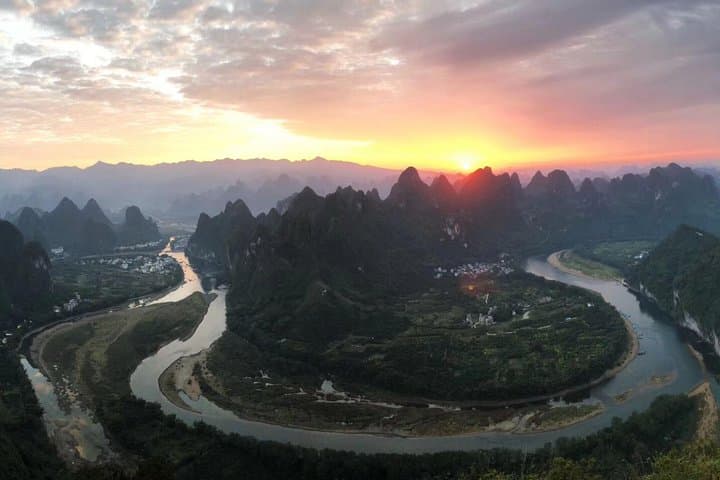

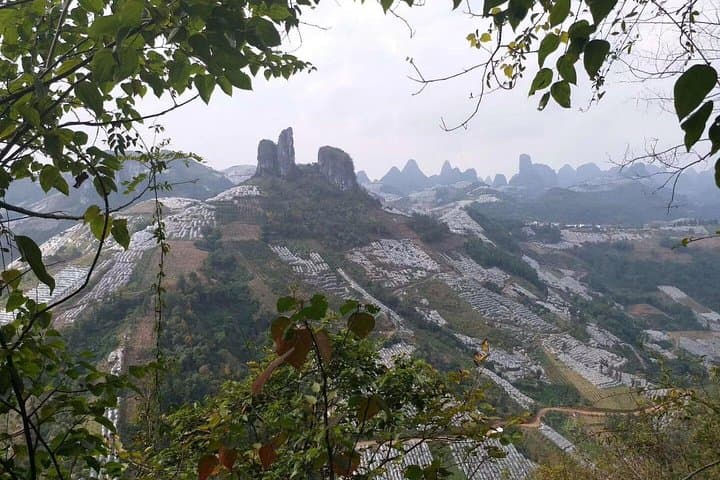

On the stone steps up Damian (Gou Po) Hill the Li River widens into a green mirror and the karst peaks lean in as if to watch. Climbers move in steady rhythm—breathing, stepping, pausing to let clouds slide over the limestone ribs. From the summit the river makes its famous bow, the first bend—Xingping’s boats like small commas on a vast page.
On the stone steps up Damian (Gou Po) Hill the Li River widens into a green mirror and the karst peaks lean in as if to watch. Climbers move in steady rhythm—breathing, stepping, pausing to let clouds slide over the limestone ribs. From the summit the river makes its famous bow, the first bend—Xingping’s boats like small commas on a vast page.
The ridge is part of the Guilin karst landscape carved over millions of years as water dissolved limestone into towers and caves. Local fishing families and bamboo rafters have used these bends for generations; the view here has been a canvas for Chinese painters since the Tang dynasty. Snail Hill and the old walled hill across the water are regional landmarks, their names tied to village histories and seasonal floods.
Expect steep stone steps—about 1,250 counted by guides—and roughly 400 meters of vertical effort on the ascent and descent. Trails are exposed in places; rain turns steps slick. The climb rewards you with layered light, river reflections, and a panoramic census of peaks and paddies that shift with the sun.
Practical edge: start early to avoid midday heat and get the best light, wear shoes with firm grip, and carry 1–2 liters of water. If you travel in a private tour, confirm pickup times and ask the guide about local weather—visibility can evaporate in mist. Leave no trace on stepped trails; many villagers depend on the flow of responsible visitors. This half-day outing pairs well with lunch in West Street afterward, turning exertion into a river-side reward.