THE ADVENTURE COLLECTIVE® · Independent discovery and booking for outdoor travel

Paddle through the silent canals of Damas Island’s mangroves, less than 20 minutes from Quepos. This guided 3–4 hour tour pairs wildlife viewing—sloths, monkeys, herons—with local ecological insight; choose a kayak or covered boat for the same price.
Paddle through the silent canals of Damas Island’s mangroves, less than 20 minutes from Quepos. This guided 3–4 hour tour pairs wildlife viewing—sloths, monkeys, herons—with local ecological insight; choose a kayak or covered boat for the same price.
The paddle slips forward under a green canopy where root trunks reach like the ribs of an old ship; mangrove prop roots rise and fall with the estuary’s slow breath, daring you into a quieter world. On Damas Island, just minutes from Quepos, kayakers and passengers in covered motorized boats thread silent canals, spotting sloths tucked in the branches, white-faced capuchins moving through the canopy, and herons standing like sentries along mudflats.
Verified experiences and guided adventures in the surrounding area.
Operated by Dantes Water Sports · Quepos, Puntarenas
The paddle slips forward under a green canopy where root trunks reach like the ribs of an old ship; mangrove prop roots rise and fall with the estuary’s slow breath, daring you into a quieter world. On Damas Island, just minutes from Quepos, kayakers and passengers in covered motorized boats thread silent canals, spotting sloths tucked in the branches, white-faced capuchins moving through the canopy, and herons standing like sentries along mudflats.
Geology and human history converge here: estuarine sediments fed by nearby rivers built the mangrove platforms that protect Costa Rica’s Pacific coast. Local fishing communities have long relied on these nurseries—young fish and crustaceans use the roots as cover—so the mangroves are both ecological infrastructure and cultural lifeline.
Expect a guided, 3–4 hour outing that balances interpretation with steady paddling. Guides point out species, explain tidal dynamics and the mangroves’ role in filtering pollution and preventing erosion, and navigate channels where the current will gently push your kayak. Choose a single or double kayak, or sit back in a covered boat for the same price.
Practical notes: wear quick-dry clothing and water shoes, bring sun protection and a small dry bag for essentials. Morning trips have calmer water and higher bird activity; the guides provide life jackets and transport from Quepos or Manuel Antonio. Be prepared for occasional mosquitoes and a light tropical rain during the wet season; respect wildlife—keep distance and avoid touching roots or animals. This is a modestly physical, enormously rewarding way to see how coastal ecosystems function and to witness wildlife up close without leaving a footprint.
moderate.
3–4 hours.
Moderate fitness: able to sit and paddle for up to two hours intermittently; boat option reduces exertion.
No—basic paddling instruction and life jackets are provided; the route uses calm estuary channels suited to beginners with moderate fitness.
Typically you choose at booking; operators may allow swaps based on availability but confirm before departure.
Common sightings include white-faced capuchin monkeys, three-toed sloths, kingfishers, herons and small estuarine fish; wildlife sightings aren’t guaranteed but are frequent.
Tours run in light rain, but heavy storms or high winds can cancel for safety—operators will notify you and offer refunds or rescheduling per policy.
Local communities have used the Damas estuary for fishing and small-scale harvesting for generations; the mangroves also formed naturally from sediment deposition along the Pacific coast.
Mangroves here are vital carbon sinks and coastal buffers—stay on marked channels, avoid disturbing roots, and pack out all trash to reduce impact.
Dantes Water Sports operates guided outdoor trips and adventures with an emphasis on safety, stewardship, and memorable experiences.
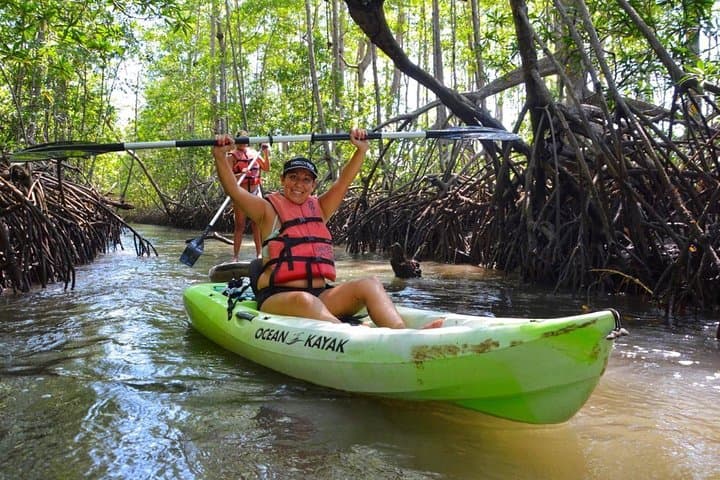
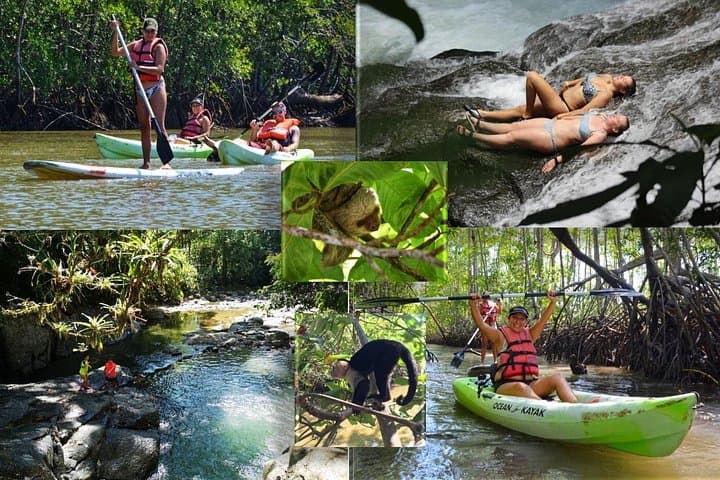
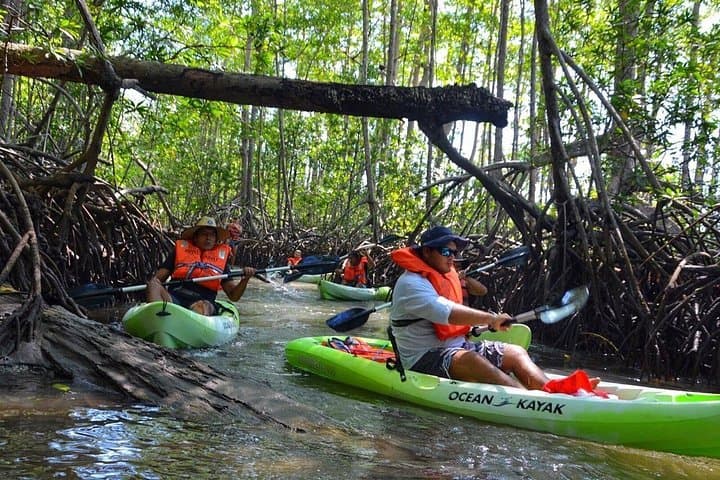
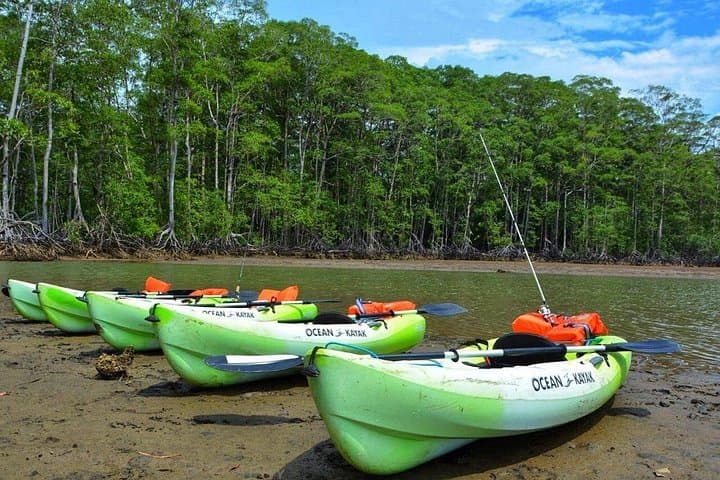
The paddle slips forward under a green canopy where root trunks reach like the ribs of an old ship; mangrove prop roots rise and fall with the estuary’s slow breath, daring you into a quieter world. On Damas Island, just minutes from Quepos, kayakers and passengers in covered motorized boats thread silent canals, spotting sloths tucked in the branches, white-faced capuchins moving through the canopy, and herons standing like sentries along mudflats.
The paddle slips forward under a green canopy where root trunks reach like the ribs of an old ship; mangrove prop roots rise and fall with the estuary’s slow breath, daring you into a quieter world. On Damas Island, just minutes from Quepos, kayakers and passengers in covered motorized boats thread silent canals, spotting sloths tucked in the branches, white-faced capuchins moving through the canopy, and herons standing like sentries along mudflats.
Geology and human history converge here: estuarine sediments fed by nearby rivers built the mangrove platforms that protect Costa Rica’s Pacific coast. Local fishing communities have long relied on these nurseries—young fish and crustaceans use the roots as cover—so the mangroves are both ecological infrastructure and cultural lifeline.
Expect a guided, 3–4 hour outing that balances interpretation with steady paddling. Guides point out species, explain tidal dynamics and the mangroves’ role in filtering pollution and preventing erosion, and navigate channels where the current will gently push your kayak. Choose a single or double kayak, or sit back in a covered boat for the same price.
Practical notes: wear quick-dry clothing and water shoes, bring sun protection and a small dry bag for essentials. Morning trips have calmer water and higher bird activity; the guides provide life jackets and transport from Quepos or Manuel Antonio. Be prepared for occasional mosquitoes and a light tropical rain during the wet season; respect wildlife—keep distance and avoid touching roots or animals. This is a modestly physical, enormously rewarding way to see how coastal ecosystems function and to witness wildlife up close without leaving a footprint.