THE ADVENTURE COLLECTIVE® · Independent discovery and booking for outdoor travel

Explore Isla Damas by kayak on a four-hour eco-tour from Manuel Antonio. Paddle narrow mangrove channels, spot monkeys and herons, and learn why these wetlands matter to local communities.
Explore Isla Damas by kayak on a four-hour eco-tour from Manuel Antonio. Paddle narrow mangrove channels, spot monkeys and herons, and learn why these wetlands matter to local communities.
Paddling out before the sun climbs fully over the Pacific, the mangrove channels of Isla Damas close around you like a quiet maze. Narrow waterways thread through gnarled prop roots; tidal currents nudge the kayak and birds call from low branches. The guide steers gently, pointing to a white-faced capuchin paused on a limb and a heron stalking a shallow bend.
Verified experiences and guided adventures in the surrounding area.
Operated by Tucanes Tours · Quepos, Puntarenas
Paddling out before the sun climbs fully over the Pacific, the mangrove channels of Isla Damas close around you like a quiet maze. Narrow waterways thread through gnarled prop roots; tidal currents nudge the kayak and birds call from low branches. The guide steers gently, pointing to a white-faced capuchin paused on a limb and a heron stalking a shallow bend.
This stretch of Costa Rica’s central Pacific coast sits within one of Central America’s largest mangrove systems. Geologically, the estuary formed where mountain-fed rivers meet the sea, dropping sediment that roots the mangroves and creates sheltered channels. Culturally, local fishing communities have long relied on these wetlands for nursery habitat and protection from storms; conservation efforts here emphasize ecological education and low-impact access.
Expect a four-hour outing that moves at the tide and the wildlife’s pace. The route balances open estuary paddling with narrower creeks where canoe-length kayaks slip through the roots. Sightings commonly include howler and capuchin monkeys, egrets, herons, kingfishers, and lizards; guides interpret behavior and point out subtle habitat signs.
Practical notes: wear quick-dry clothing and reef-safe sunscreen, bring a waterproof camera and insect repellent, and plan for changing light—early morning and late afternoon are best for birds. Basic tandem-kayak skills and moderate fitness make the trip more enjoyable. The tour includes hotel pickup, bottled water, a meal, and an interpretive guide—ideal for travelers who want wildlife close but prefer an eco-friendly, low-impact approach.
moderate.
4 hours.
Moderate fitness with ability to paddle for 2–3 hours intermittently; comfort sitting in a tandem kayak required
The outing is about 4 hours and typically includes hotel pickup, a bilingual guide, bottled water, and a meal at the operation center.
No advanced skills are required—basic paddling and balance suffice; guides provide instruction and tandem kayaks are common for less experienced paddlers.
Common sightings include white-faced capuchin and howler monkeys, egrets, herons, kingfishers, and various lizards; sightings are never guaranteed but guides increase chances by choosing active channels and times.
Yes—children 8 and older may participate and typically share a tandem kayak with an adult; check operator minimums and safety briefings before booking.
The Damas mangroves formed where river sediment meets the Pacific, creating nursery habitat long used by local fishing communities; recent eco-tourism supports conservation and education.
Operators emphasize low-impact practices—stay in kayaks, do not feed wildlife, and use biodegradable products to protect fragile mangrove and marine habitats.
Tucanes Tours operates guided outdoor trips and adventures with an emphasis on safety, stewardship, and memorable experiences.
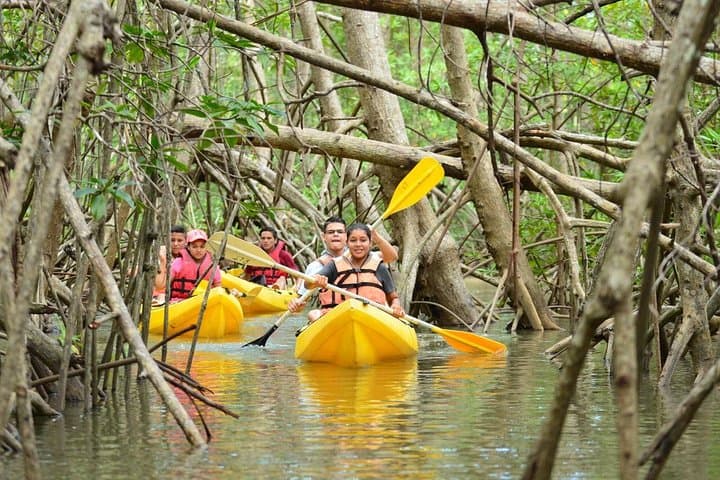
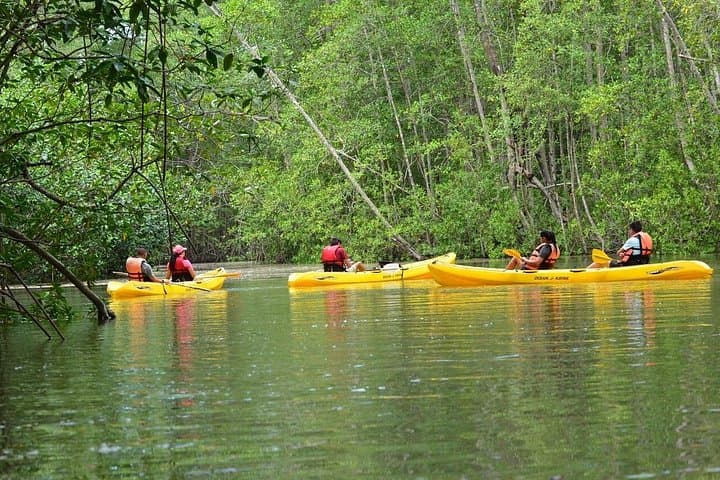

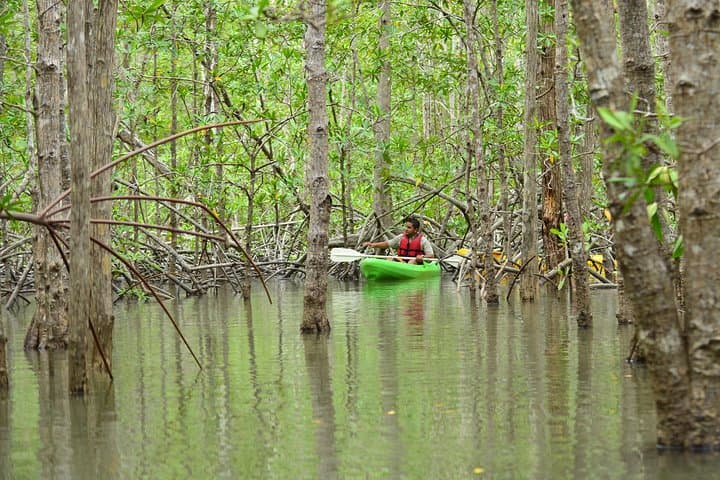
Paddling out before the sun climbs fully over the Pacific, the mangrove channels of Isla Damas close around you like a quiet maze. Narrow waterways thread through gnarled prop roots; tidal currents nudge the kayak and birds call from low branches. The guide steers gently, pointing to a white-faced capuchin paused on a limb and a heron stalking a shallow bend.
Paddling out before the sun climbs fully over the Pacific, the mangrove channels of Isla Damas close around you like a quiet maze. Narrow waterways thread through gnarled prop roots; tidal currents nudge the kayak and birds call from low branches. The guide steers gently, pointing to a white-faced capuchin paused on a limb and a heron stalking a shallow bend.
This stretch of Costa Rica’s central Pacific coast sits within one of Central America’s largest mangrove systems. Geologically, the estuary formed where mountain-fed rivers meet the sea, dropping sediment that roots the mangroves and creates sheltered channels. Culturally, local fishing communities have long relied on these wetlands for nursery habitat and protection from storms; conservation efforts here emphasize ecological education and low-impact access.
Expect a four-hour outing that moves at the tide and the wildlife’s pace. The route balances open estuary paddling with narrower creeks where canoe-length kayaks slip through the roots. Sightings commonly include howler and capuchin monkeys, egrets, herons, kingfishers, and lizards; guides interpret behavior and point out subtle habitat signs.
Practical notes: wear quick-dry clothing and reef-safe sunscreen, bring a waterproof camera and insect repellent, and plan for changing light—early morning and late afternoon are best for birds. Basic tandem-kayak skills and moderate fitness make the trip more enjoyable. The tour includes hotel pickup, bottled water, a meal, and an interpretive guide—ideal for travelers who want wildlife close but prefer an eco-friendly, low-impact approach.