THE ADVENTURE COLLECTIVE® · Independent discovery and booking for outdoor travel

Step onto a multimedia bus that retells the April 7, 1900 Austin Dam collapse through archival images and live narration. This 75-minute downtown loop combines concise history with practical insights about Austin’s river, geology, and civic evolution.
Step onto a multimedia bus that retells the April 7, 1900 Austin Dam collapse through archival images and live narration. This 75-minute downtown loop combines concise history with practical insights about Austin’s river, geology, and civic evolution.
The bus idles on the porch at the corner of 3rd Street and Red River, doors open to the city's heat and soundtrack. Inside, seats face a screen and a storyteller whose voice threads archival images into the roar of the engine — a compact, cinematic ride that asks you to look at Austin's river and its industrial past differently.
Verified experiences and guided adventures in the surrounding area.
Operated by The Original Austin Ghost Tours · Austin, Texas
The bus idles on the porch at the corner of 3rd Street and Red River, doors open to the city's heat and soundtrack. Inside, seats face a screen and a storyteller whose voice threads archival images into the roar of the engine — a compact, cinematic ride that asks you to look at Austin's river and its industrial past differently.
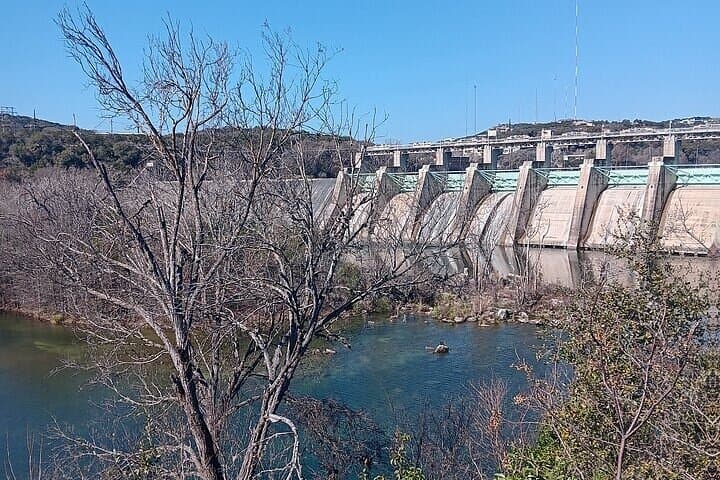
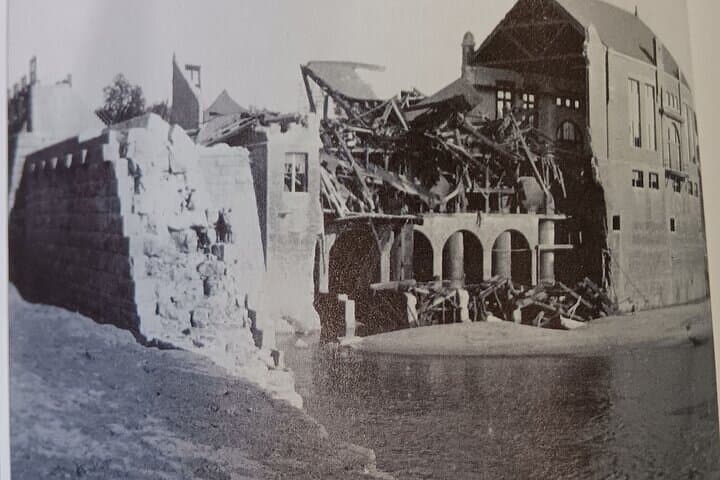
On April 7, 1900 the Austin Dam on the Colorado River failed under pressure; the tour revisits that event with researched narration and visuals, placing the collapse in the era of expanding hydroelectric ambitions and early urban industry. Geologically, the story is shaped by the Colorado River and surrounding limestone benches that channel floodwaters through downtown lowlands. Culturally the presentation ties to Austin’s civic memory — a city quick to remix its past into music, museums, and public conversation.
Practically, expect a 75-minute guided multimedia loop that travels city streets and pauses only for context, not disembarkation. The route keeps you near downtown landmarks; the experience is designed for mixed ages and physical abilities — infants on laps are permitted and service animals allowed. Arrive 10–15 minutes early to claim seating and test audio devices. Summer rides get loud and hot outside, so hydrate and bring sun protection for the short walk to the bus. Tickets are mobile-friendly and refunds require 24-hour cancellation. For history-minded travelers this is a concentrated, accessible way to encounter a dramatic engineering failure and see how rivers continue to shape Austin’s urban fabric.
easy.
1–1.5 hours.
Suitable for all fitness levels; the trip is seated and requires only short walks to/from the bus
Meet on the porch at the corner of 3rd Street and Red River in downtown Austin; guides board from that location before departure.
Yes — the experience is suitable for children; infants must sit on an adult’s lap and the presentation is non-physical.
Service animals are allowed; other pets are not typically accepted on this public bus tour.
For a full refund cancel at least 24 hours before the scheduled departure; same-day cancellations are non-refundable.
The tour centers on the April 7, 1900 Austin Dam failure and places it within the region's industrialization and early hydroelectric ambitions.
Downtown river corridors are sensitive to erosion and urban runoff; staying on public routes and supporting local clean-river initiatives helps protect habitat and water quality.
The Original Austin Ghost Tours operates guided outdoor trips and adventures with an emphasis on safety, stewardship, and memorable experiences.


The bus idles on the porch at the corner of 3rd Street and Red River, doors open to the city's heat and soundtrack. Inside, seats face a screen and a storyteller whose voice threads archival images into the roar of the engine — a compact, cinematic ride that asks you to look at Austin's river and its industrial past differently.
The bus idles on the porch at the corner of 3rd Street and Red River, doors open to the city's heat and soundtrack. Inside, seats face a screen and a storyteller whose voice threads archival images into the roar of the engine — a compact, cinematic ride that asks you to look at Austin's river and its industrial past differently.
On April 7, 1900 the Austin Dam on the Colorado River failed under pressure; the tour revisits that event with researched narration and visuals, placing the collapse in the era of expanding hydroelectric ambitions and early urban industry. Geologically, the story is shaped by the Colorado River and surrounding limestone benches that channel floodwaters through downtown lowlands. Culturally the presentation ties to Austin’s civic memory — a city quick to remix its past into music, museums, and public conversation.
Practically, expect a 75-minute guided multimedia loop that travels city streets and pauses only for context, not disembarkation. The route keeps you near downtown landmarks; the experience is designed for mixed ages and physical abilities — infants on laps are permitted and service animals allowed. Arrive 10–15 minutes early to claim seating and test audio devices. Summer rides get loud and hot outside, so hydrate and bring sun protection for the short walk to the bus. Tickets are mobile-friendly and refunds require 24-hour cancellation. For history-minded travelers this is a concentrated, accessible way to encounter a dramatic engineering failure and see how rivers continue to shape Austin’s urban fabric.