THE ADVENTURE COLLECTIVE® · Independent discovery and booking for outdoor travel

A one‑hour fixed‑wing circuit from Brač reveals Zlatni rat, Hvar’s towns, Šolta’s cliffs and Split’s waterfront from above. Ideal for photographers and short onshore itineraries, this flight pairs geological perspective with island history.
A one‑hour fixed‑wing circuit from Brač reveals Zlatni rat, Hvar’s towns, Šolta’s cliffs and Split’s waterfront from above. Ideal for photographers and short onshore itineraries, this flight pairs geological perspective with island history.
A small fixed-wing lifts from Brač Airport and the island falls away: white limestone ridges give way to the Adriatic’s deep blue, and Zlatni rat’s famous spit slices into the sea like a painter’s stroke. From the cabin window, vineyards, terraced fields and olive groves shrink while offshore villages cluster around calm bays.
Verified experiences and guided adventures in the surrounding area.
Operated by SplitAir · Bol, Split-Dalmatia County
A small fixed-wing lifts from Brač Airport and the island falls away: white limestone ridges give way to the Adriatic’s deep blue, and Zlatni rat’s famous spit slices into the sea like a painter’s stroke. From the cabin window, vineyards, terraced fields and olive groves shrink while offshore villages cluster around calm bays.
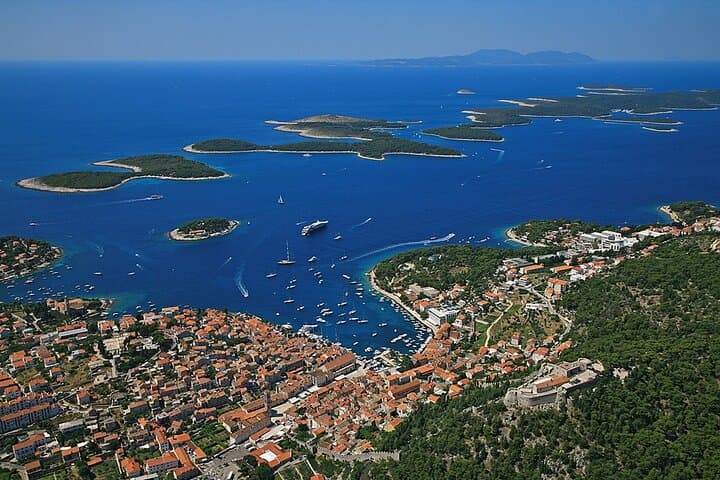
The islands here are products of karst geology—limestone cliffs, sea-carved coves and shallow channels that have shaped human settlement for millennia. Hvar’s fortified town and Tvrdalj castle recall Renaissance fishermen and poets; Šolta’s sheltered harbors once supported narrow-boat fishing communities still tending stone cottages. Split’s Roman core—visible from the air—reminds travelers this coastline has been a crossroads since antiquity.
Expect a one-hour scenic circuit that tracks Bol and Zlatni rat, follows Hvar’s northern towns (Vrboska, Jelsa, Starigrad), crosses the Hvar Channel to Šolta’s cliffs and returns over Split and the Brač Channel toward Supetar. The flight favors clear weather; pilots will highlight landmarks and point out the island observatory above Hvar.
Practical note: small aircraft mean limited baggage and strict weight/distribution rules; operators will request passenger weights at booking. Morning flights often bring calmer air and cleaner visibility. Bring windproof layers and a camera with a polarizer to cut glare. If you’re prone to motion sickness, take precautions before boarding—the horizon stays your best ally.
This flight is an efficient way to read the Dalmatian coastline from above: geological contours, human history and coastal culture appear at once, useful for both first-timers and returning travelers seeking a new vantage point.
easy.
60 minutes.
No special fitness required beyond basic mobility to board a small plane
The tour is scheduled for 60 minutes, covering Brač, Zlatni rat, Hvar, Šolta and Split in a circular route.
Yes—small aircraft require passenger weights at booking to ensure proper balance; operators will request this information.
Flights are typically cancelled in poor weather for safety; the operator usually issues full refunds if cancelled at least 24 hours prior to departure.
No—this is a panoramic fixed‑wing flight that passes over points of interest without ground stops.
The Hvar region contains Roman and Venetian layers; Tvrdalj castle was the 16th‑century summer residence of poet Petar Hektorović, reflecting the islands’ maritime culture.
Coastal karst and marine habitats are sensitive to development and tourism; choose operators that follow low‑impact routing and respect no‑fly zones over protected areas.
SplitAir operates guided outdoor trips and adventures with an emphasis on safety, stewardship, and memorable experiences.
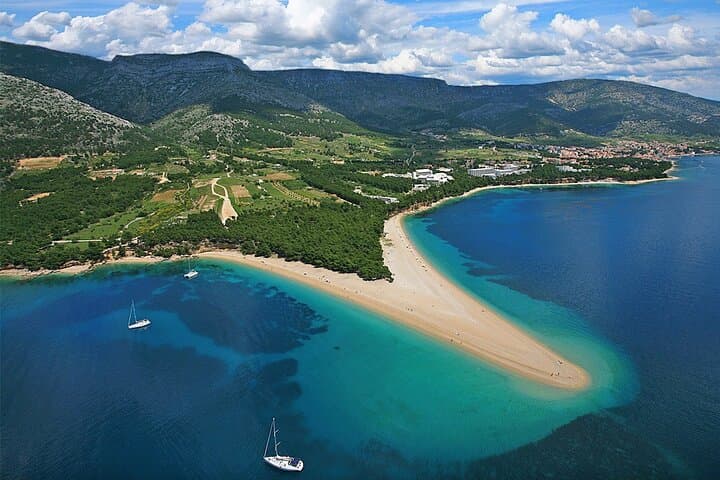

A small fixed-wing lifts from Brač Airport and the island falls away: white limestone ridges give way to the Adriatic’s deep blue, and Zlatni rat’s famous spit slices into the sea like a painter’s stroke. From the cabin window, vineyards, terraced fields and olive groves shrink while offshore villages cluster around calm bays.
A small fixed-wing lifts from Brač Airport and the island falls away: white limestone ridges give way to the Adriatic’s deep blue, and Zlatni rat’s famous spit slices into the sea like a painter’s stroke. From the cabin window, vineyards, terraced fields and olive groves shrink while offshore villages cluster around calm bays.
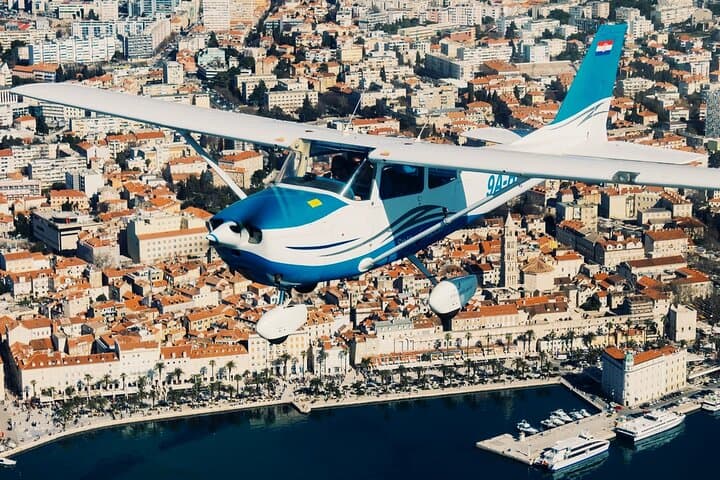
The islands here are products of karst geology—limestone cliffs, sea-carved coves and shallow channels that have shaped human settlement for millennia. Hvar’s fortified town and Tvrdalj castle recall Renaissance fishermen and poets; Šolta’s sheltered harbors once supported narrow-boat fishing communities still tending stone cottages. Split’s Roman core—visible from the air—reminds travelers this coastline has been a crossroads since antiquity.
Expect a one-hour scenic circuit that tracks Bol and Zlatni rat, follows Hvar’s northern towns (Vrboska, Jelsa, Starigrad), crosses the Hvar Channel to Šolta’s cliffs and returns over Split and the Brač Channel toward Supetar. The flight favors clear weather; pilots will highlight landmarks and point out the island observatory above Hvar.
Practical note: small aircraft mean limited baggage and strict weight/distribution rules; operators will request passenger weights at booking. Morning flights often bring calmer air and cleaner visibility. Bring windproof layers and a camera with a polarizer to cut glare. If you’re prone to motion sickness, take precautions before boarding—the horizon stays your best ally.
This flight is an efficient way to read the Dalmatian coastline from above: geological contours, human history and coastal culture appear at once, useful for both first-timers and returning travelers seeking a new vantage point.