THE ADVENTURE COLLECTIVE® · Independent discovery and booking for outdoor travel

Trek from Dharamsala into the Dhauladhar foothills to reach the snowline, sleep under star-lit mountain skies and explore Tibetan cultural sites tied to the Dalai Lama. This multi-day journey mixes steady alpine trekking with nightly camp life and local hospitality.
Trek from Dharamsala into the Dhauladhar foothills to reach the snowline, sleep under star-lit mountain skies and explore Tibetan cultural sites tied to the Dalai Lama. This multi-day journey mixes steady alpine trekking with nightly camp life and local hospitality.
Dawn breaks over the Dhauladhar range and the air tastes of wood smoke and chai. The trail leaves the bustle of McLeod Ganj behind, narrowing into mule tracks that climb through rhododendron groves and open meadows. Daypack light, breath steady, trekkers pass tiny villages where schoolchildren in crisp uniforms wave and women carry fodder on their heads.
Verified experiences and guided adventures in the surrounding area.
Operated by Manu Adventures India · Dharamsala, Himachal Pradesh
Dawn breaks over the Dhauladhar range and the air tastes of wood smoke and chai. The trail leaves the bustle of McLeod Ganj behind, narrowing into mule tracks that climb through rhododendron groves and open meadows. Daypack light, breath steady, trekkers pass tiny villages where schoolchildren in crisp uniforms wave and women carry fodder on their heads.
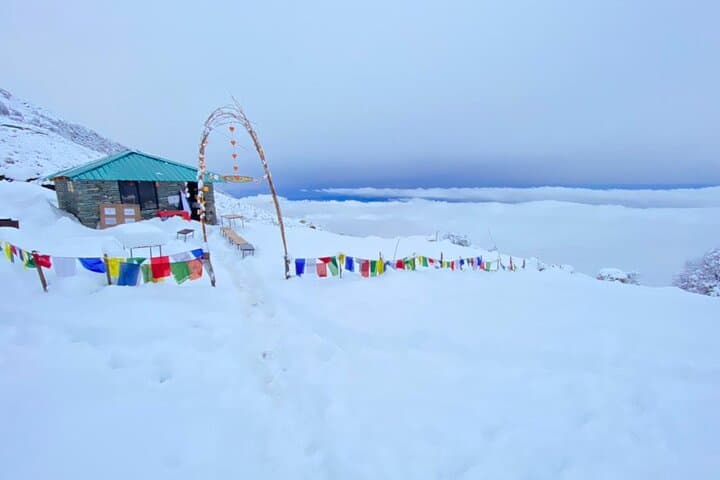
The route threads historical and cultural touchpoints: Dharamsala’s role as the Dalai Lama’s exile home since 1959 shapes local life, while nearby valleys show the collision of Siwalik foothills and the rising higher Himalaya—a geological edge where younger, steep peaks give way to carved river valleys. Traditional Tibetan craft stalls and prayer flags punctuate the landscape, and simple tea shops such as the famed “Magic View” offer rest and panorama.
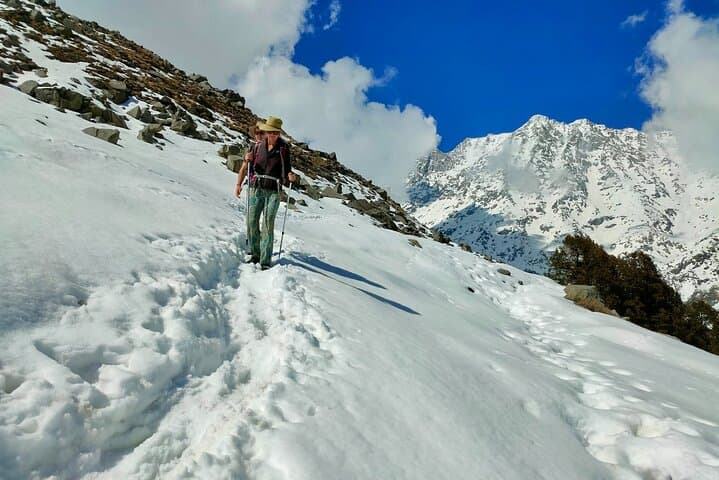
Practically, expect five days of active trekking on this section—most walking days are 4–5 hours—with trails alternating between forested switchbacks, grassy ridgelines, rocky scree and occasional river crossings. Nights are in communal camps or twin-share tents with basic washing facilities; baggage is mule-supported (10 kg allowance). The final alpine approach reaches the snowline on mixed rock and packed snow, so sturdy boots and layered insulation are essential.
Plan for variable weather: strong sun at midday, sharp cold after sunset, and sudden showers in shoulder seasons. Hydrate, use a guided support team for river crossings and altitude pacing, and respect local customs at monasteries. This itinerary pairs highland trekking with cultural immersion—rewarding for fit, curious travelers ready to trade comfort for close mountain rhythm.
challenging.
11 days.
Participants should have a high level of cardiovascular fitness and be comfortable hiking 4–6 hours on uneven terrain for consecutive days.
Expect consecutive days of 4–5 hours of walking with some steep or rocky stretches; the itinerary is aimed at fit trekkers rather than complete beginners.
Nights are in twin-share tents at camps with communal dining tents and basic washing/toilet facilities; bedding is provided but a sleeping liner is recommended.
Visits include the Dalai Lama’s temple complex in McLeod Ganj; seeing him is not guaranteed and depends on his public schedule.
No special permits are listed for the trek, but travelers should carry valid passport details and check health recommendations for India before travel.
Dharamsala became the center of the Tibetan government-in-exile after 1959 and the area blends local Himachali culture with Tibetan refugee communities and monasteries.
Trails cross fragile alpine meadows and rhododendron stands; stick to established paths, pack out waste and support local camp crews who follow low-impact camping practices.
Manu Adventures India operates guided outdoor trips and adventures with an emphasis on safety, stewardship, and memorable experiences.
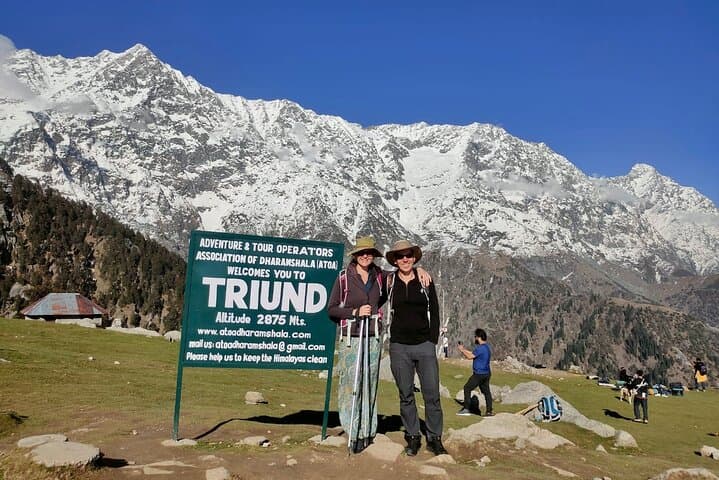
Dawn breaks over the Dhauladhar range and the air tastes of wood smoke and chai. The trail leaves the bustle of McLeod Ganj behind, narrowing into mule tracks that climb through rhododendron groves and open meadows. Daypack light, breath steady, trekkers pass tiny villages where schoolchildren in crisp uniforms wave and women carry fodder on their heads.
Dawn breaks over the Dhauladhar range and the air tastes of wood smoke and chai. The trail leaves the bustle of McLeod Ganj behind, narrowing into mule tracks that climb through rhododendron groves and open meadows. Daypack light, breath steady, trekkers pass tiny villages where schoolchildren in crisp uniforms wave and women carry fodder on their heads.
The route threads historical and cultural touchpoints: Dharamsala’s role as the Dalai Lama’s exile home since 1959 shapes local life, while nearby valleys show the collision of Siwalik foothills and the rising higher Himalaya—a geological edge where younger, steep peaks give way to carved river valleys. Traditional Tibetan craft stalls and prayer flags punctuate the landscape, and simple tea shops such as the famed “Magic View” offer rest and panorama.
Practically, expect five days of active trekking on this section—most walking days are 4–5 hours—with trails alternating between forested switchbacks, grassy ridgelines, rocky scree and occasional river crossings. Nights are in communal camps or twin-share tents with basic washing facilities; baggage is mule-supported (10 kg allowance). The final alpine approach reaches the snowline on mixed rock and packed snow, so sturdy boots and layered insulation are essential.
Plan for variable weather: strong sun at midday, sharp cold after sunset, and sudden showers in shoulder seasons. Hydrate, use a guided support team for river crossings and altitude pacing, and respect local customs at monasteries. This itinerary pairs highland trekking with cultural immersion—rewarding for fit, curious travelers ready to trade comfort for close mountain rhythm.