THE ADVENTURE COLLECTIVE® · Independent discovery and booking for outdoor travel

Feel the rush of a quad across Dakhla's coastal dunes, then trade speed for the slow sway of a camel along a glassy lagoon. This two-hour combo highlights desert tracks, lagoon views, and Sahrawi coastal culture.
Feel the rush of a quad across Dakhla's coastal dunes, then trade speed for the slow sway of a camel along a glassy lagoon. This two-hour combo highlights desert tracks, lagoon views, and Sahrawi coastal culture.
The wind arrives first — cool off the Atlantic, carrying salt and sand across a wide, low coastline where dunes meet a glassy lagoon. Riders will feel the quad's pulse underfoot as it skims packed sand, then slow to the deliberate sway of a camel tracing the waterline. It's an immediate contrast: throttle and dust, then quiet hoofbeats and a slow horizon.
Verified experiences and guided adventures in the surrounding area.
Operated by Go Booking Tours · Dakhla, Dakhla-Oued Ed-Dahab
The wind arrives first — cool off the Atlantic, carrying salt and sand across a wide, low coastline where dunes meet a glassy lagoon. Riders will feel the quad's pulse underfoot as it skims packed sand, then slow to the deliberate sway of a camel tracing the waterline. It's an immediate contrast: throttle and dust, then quiet hoofbeats and a slow horizon.
Geology here is plain and striking: a thin peninsula of wind-shaped sand and fossilized rock formed by strong Atlantic currents. Dakhla's human story follows the shore — fishing camps, Sahrawi culture, and a history of trade and colonial claims that left a practical patchwork of Arabic and Berber influences alongside Moroccan administration.
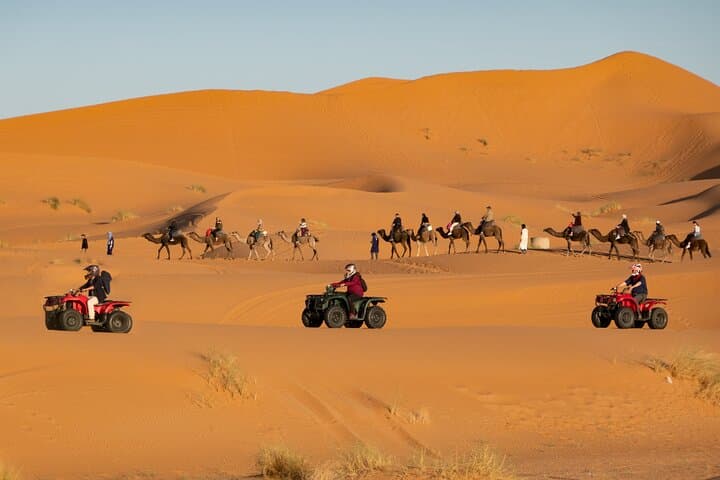
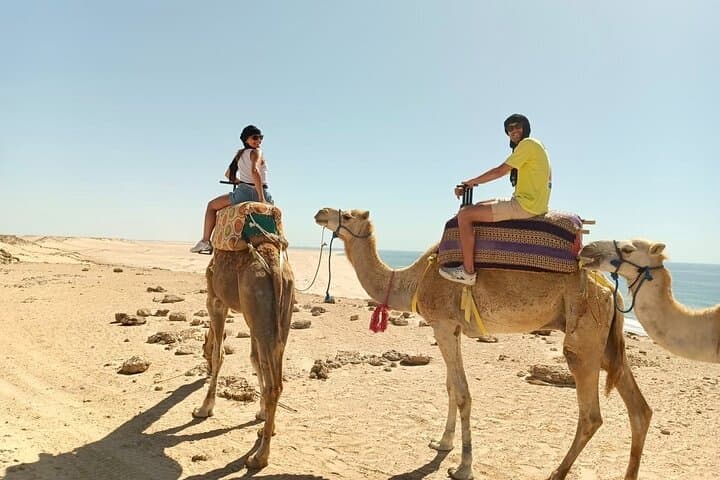
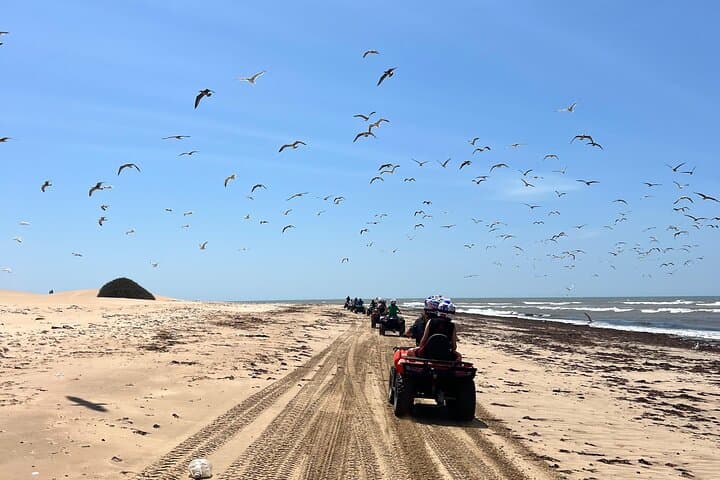
Expect a two-hour combination: an hour of quad riding over desert tracks and coastal flats, followed by an hour on a camel along the lagoon. Guides give safety briefings, helmets are provided, and the route highlights both wind-swept dunes and broad lagoon views where seabirds quarter the air.
Practical tips: dress for sun and wind — closed-toe shoes for the quad and a light scarf for blowing sand. Bring bottled water and a small pack for cameras; phones need protection from spray and grit. Physical demands are low but quads require basic balance and following guide commands. Respect local customs near villages and give space to wildlife and fishing gear.
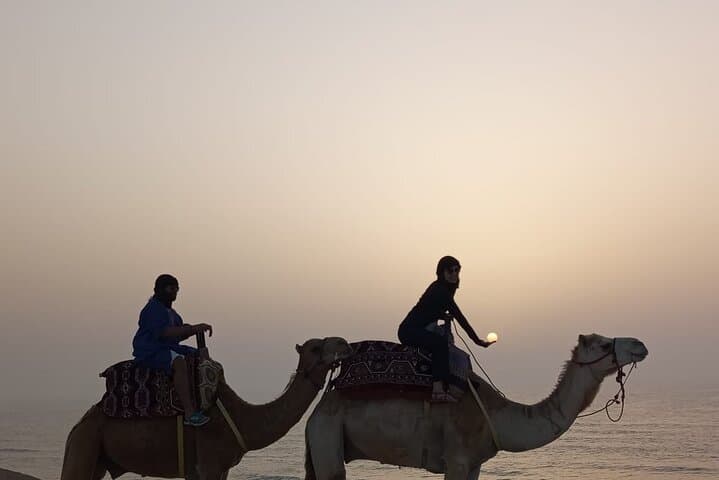
Timing matters: morning rides are cooler and flatter light for photos; late afternoon brings long shadows and calmer winds. The mix of high-energy riding and slow desert pace makes this a concise, sensory way to experience Dakhla's desert-lagoon edge.
moderate.
2 hours.
Suitable for most fitness levels; you should be able to climb onto a camel and handle light jostling on a quad.
The tour runs about two hours total: roughly one hour on the quad and one hour on the camel, including a safety briefing.
No — guides provide basic instruction and helmets; rides are suitable for beginners able to follow directions.
Operators typically ask about weight for camel safety and may have age restrictions for quads; you'll be asked during booking.
Closed-toe shoes, layered clothing for wind, sun protection, and a small daypack for water and camera gear are recommended.
Dakhla sits on a narrow Atlantic spit shaped by currents and colonial-era trade routes; the area blends Sahrawi culture and fishing traditions with modern kitesurf and tourism economies.
The lagoon and dunes are sensitive habitats for migratory birds and marine life; stay on designated tracks and avoid disturbing nesting areas to reduce impact.
Go Booking Tours operates guided outdoor trips and adventures with an emphasis on safety, stewardship, and memorable experiences.
The wind arrives first — cool off the Atlantic, carrying salt and sand across a wide, low coastline where dunes meet a glassy lagoon. Riders will feel the quad's pulse underfoot as it skims packed sand, then slow to the deliberate sway of a camel tracing the waterline. It's an immediate contrast: throttle and dust, then quiet hoofbeats and a slow horizon.
The wind arrives first — cool off the Atlantic, carrying salt and sand across a wide, low coastline where dunes meet a glassy lagoon. Riders will feel the quad's pulse underfoot as it skims packed sand, then slow to the deliberate sway of a camel tracing the waterline. It's an immediate contrast: throttle and dust, then quiet hoofbeats and a slow horizon.
Geology here is plain and striking: a thin peninsula of wind-shaped sand and fossilized rock formed by strong Atlantic currents. Dakhla's human story follows the shore — fishing camps, Sahrawi culture, and a history of trade and colonial claims that left a practical patchwork of Arabic and Berber influences alongside Moroccan administration.
Expect a two-hour combination: an hour of quad riding over desert tracks and coastal flats, followed by an hour on a camel along the lagoon. Guides give safety briefings, helmets are provided, and the route highlights both wind-swept dunes and broad lagoon views where seabirds quarter the air.
Practical tips: dress for sun and wind — closed-toe shoes for the quad and a light scarf for blowing sand. Bring bottled water and a small pack for cameras; phones need protection from spray and grit. Physical demands are low but quads require basic balance and following guide commands. Respect local customs near villages and give space to wildlife and fishing gear.
Timing matters: morning rides are cooler and flatter light for photos; late afternoon brings long shadows and calmer winds. The mix of high-energy riding and slow desert pace makes this a concise, sensory way to experience Dakhla's desert-lagoon edge.